




Metal Surfaces, Harsh Conditions, and the Challenge of Reliable RFID Reading
RFID technology has become an important part of industrial asset tracking, inventory management, logistics, and equipment identification. However, achieving consistent RFID performance is not always straightforward. Metal surfaces, extreme temperatures, moisture, dust, vibration, and other challenging environmental factors can affect how reliably RFID tags communicate with readers.
For businesses operating in manufacturing plants, warehouses, outdoor facilities, and industrial environments, these challenges can lead to missed reads, inaccurate inventory records, and inefficient tracking processes.
Understanding why RFID reading becomes difficult in demanding conditions is the first step toward building a more reliable identification system. With appropriate tag selection, installation methods, and reader configuration, RFID technology can deliver dependable performance even in challenging industrial applications.
Why Do Metal Surfaces Affect RFID Reading?
Metal is one of the most common sources of interference in RFID applications, particularly when conventional RFID tags are installed directly on metallic objects.
Radio frequency identification relies on electromagnetic communication between an RFID reader and a tag. When a standard RFID tag is placed directly on metal, the metal surface can alter the electromagnetic field and interfere with the tag's antenna.
This may result in:
Reduced reading distance.
Unstable communication between tags and readers.
Inconsistent read rates.
Changes in antenna performance.
Complete reading failure in certain installation conditions.
The extent of interference depends on several factors, including tag design, operating frequency, antenna configuration, mounting position, and the surrounding environment.
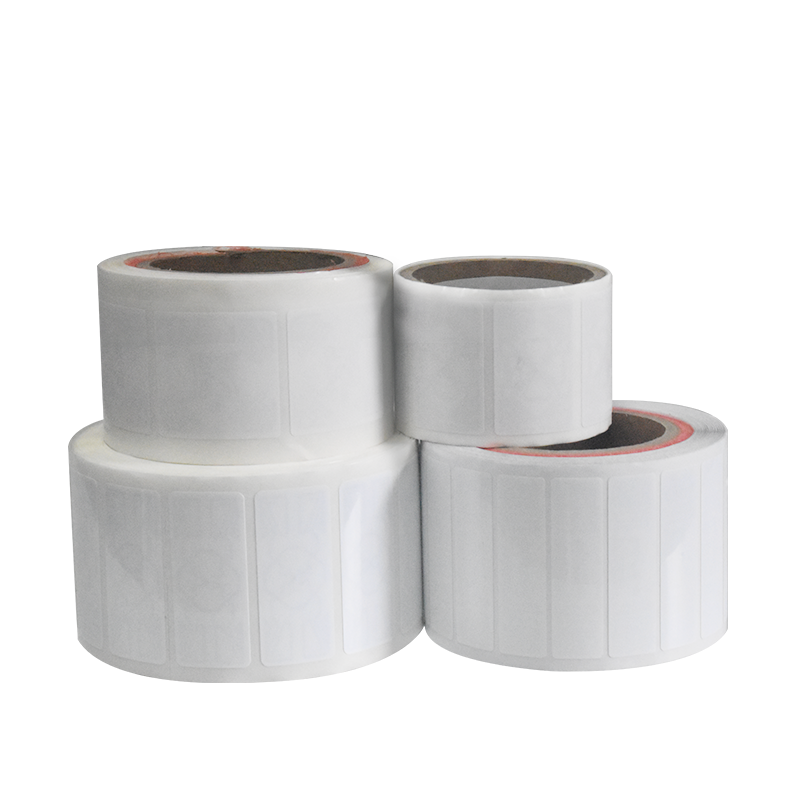
For example, attaching a conventional UHF RFID label directly to a steel equipment cabinet may produce significantly different results from installing the same label on cardboard or plastic packaging.
This is why RFID tag selection should always consider the material of the object being identified.
Why On-Metal RFID Tags Are Essential for Industrial Applications
On-metal RFID tags are specifically designed to operate when mounted on metallic surfaces. Unlike conventional RFID labels, these tags incorporate antenna structures and materials that help manage the effects of nearby metal.
Some designs use insulating layers, spacers, or specialized antenna configurations to improve performance when attached to metal objects.
These characteristics make on-metal RFID tags suitable for identifying and tracking:
Industrial machinery and production equipment.
Metal storage racks and warehouse containers.
Steel tools and manufacturing components.
Shipping containers and metal pallets.
Vehicles, trailers, and industrial transport assets.
Metal cabinets and electrical enclosures.
When selecting an on-metal RFID tag, businesses should evaluate more than its advertised reading distance. Tag dimensions, attachment methods, operating frequency, environmental resistance, and compatibility with existing RFID readers are equally important.
A tag that performs well on a flat metal panel may behave differently on a curved pipe, narrow metal component, or irregular equipment surface.
How Harsh Environmental Conditions Affect RFID Performance
Metal interference is only one part of the challenge. Industrial RFID systems often operate in environments where several environmental factors affect tag durability and reading consistency.
1. High and Low Temperatures
Industrial equipment may be exposed to high temperatures during manufacturing, welding, processing, or outdoor operation. In other applications, RFID tags must remain functional in refrigerated storage or freezing conditions.
Temperature extremes can affect tag materials, adhesives, antenna structures, and electronic components.
For long-term identification, it is important to select RFID tags with an operating temperature range suitable for the actual application.
Businesses should also distinguish between continuous operating temperature and short-term temperature exposure, as these specifications may differ.
2. Moisture and Water Exposure
Water exposure is common in outdoor storage areas, food processing facilities, transportation environments, and industrial cleaning operations.
Moisture can damage unsuitable tag materials, weaken adhesive bonds, and affect the durability of the tag structure.
For applications involving frequent washing, rain, humidity, or direct water exposure, waterproof RFID tags or tags with appropriate environmental protection should be considered.
An IP rating can help indicate resistance to dust and water ingress, but the required protection level depends on the installation environment.
3. Dust, Chemicals, and Industrial Contamination
Dust, oil, grease, cleaning agents, and industrial chemicals can gradually damage RFID tag surfaces or reduce label adhesion.
In manufacturing facilities, tags may also encounter solvents, lubricants, and other substances during normal operations.
A durable RFID tag should use materials compatible with the chemicals and contaminants present in its working environment.
For particularly demanding applications, industrial RFID tags with protective housings or specialized encapsulation may offer better long-term durability than standard adhesive labels.
4. Vibration, Impact, and Mechanical Stress
Heavy machinery, forklifts, transportation equipment, and automated production lines can expose RFID tags to continuous vibration and occasional impact.
If a tag is poorly attached, it may become loose, shift position, or detach completely.
Mechanical durability is therefore an important consideration when identifying equipment, tools, and reusable industrial containers.
Depending on the application, screw mounting, rivets, industrial adhesives, or other mechanical fastening methods may provide a more secure installation than ordinary label adhesive.

Choosing the Right RFID Tag for Challenging Environments
Selecting the right RFID tag requires an understanding of both the physical environment and the identification requirements.
The following factors can help businesses narrow down suitable options.
| Selection Factor | What to Consider |
|---|---|
| Mounting Surface | Metal, plastic, wood, glass, or composite materials |
| Operating Frequency | LF, HF, or UHF based on application requirements |
| Reading Distance | Required distance between the tag and reader |
| Temperature Resistance | Actual operating and exposure temperatures |
| Waterproof Protection | Exposure to rain, washing, humidity, or immersion |
| Chemical Resistance | Contact with oils, solvents, detergents, or industrial chemicals |
| Mechanical Durability | Vibration, impact, abrasion, and handling |
| Installation Method | Adhesive, screw, rivet, or other mounting options |
| Reader Compatibility | Frequency, protocol, antenna, and system configuration |
For example, a warehouse tracking system using metal storage racks may require compact on-metal UHF RFID tags. By comparison, outdoor equipment identification may require a more rugged tag with stronger environmental protection and a secure mechanical attachment.
The best solution is not necessarily the tag with the longest advertised reading distance. It is the tag that delivers consistent identification under real operating conditions.
The Importance of RFID Reader and Antenna Configuration
Even a well-designed RFID tag cannot guarantee reliable reading if the reader system is incorrectly configured.
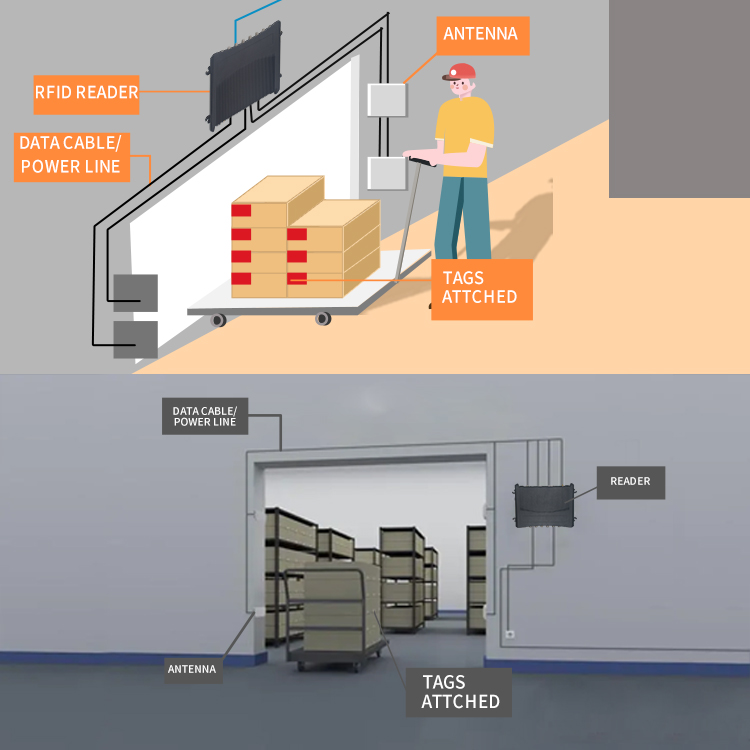
Reader power, antenna placement, polarization, antenna orientation, and surrounding materials all influence RFID performance.
For industrial installations, several practical considerations can improve system reliability.
Optimize antenna positioning. Position RFID antennas to provide suitable coverage of the target reading area. Avoid assuming that one antenna arrangement will work equally well for every installation.
Adjust reader power. Higher transmission power does not always produce better results. Excessive power may increase unwanted reads from nearby tags or create interference between overlapping reading zones.
Consider tag orientation. RFID tags have different antenna designs and polarization characteristics. Their orientation relative to the reader antenna can influence communication performance.
Reduce unwanted reads. In dense environments containing many RFID tags, reader configuration and antenna coverage should be optimized to identify the intended objects accurately.
Test under actual operating conditions. Testing should include the real mounting surface, tag orientation, surrounding equipment, and expected environmental conditions.
These steps help identify potential issues before an RFID system is deployed across an entire facility.
Common Industrial Applications of RFID Tags in Harsh Conditions
RFID technology supports a wide range of industrial identification and tracking applications. Its effectiveness depends on selecting tags that match the physical and environmental requirements of each use case.
Manufacturing Equipment Tracking
Manufacturing facilities often need to identify machinery, tools, fixtures, and production assets.
On-metal RFID tags can be attached to equipment surfaces to support automated identification, maintenance records, inspection schedules, and asset management.
Durable tag designs are particularly useful where equipment is exposed to vibration, oil, dust, and frequent handling.
Warehouse and Inventory Management
Metal shelving, steel containers, and industrial storage racks can make RFID installation more complicated.
Using suitable on-metal RFID tags helps businesses identify metal assets and improve inventory visibility.
When combined with properly positioned RFID readers, these tags can support stock identification, warehouse operations, and asset location management.
Outdoor Asset Tracking
Outdoor industrial assets may experience sunlight, rain, temperature fluctuations, dust, and mechanical impact.
For these applications, RFID tags should be selected according to their environmental protection, material durability, and attachment requirements.
Typical applications include construction equipment, transport containers, utility infrastructure, and outdoor storage assets.
Logistics and Transportation
RFID systems can help identify reusable containers, metal pallets, trailers, and transportation equipment throughout logistics operations.
In environments where assets move through loading areas, distribution centers, and outdoor facilities, reliable tag attachment and suitable reading zones are essential.
How to Improve RFID Reading Reliability: A Practical Checklist
Before deploying an RFID system in a challenging industrial environment, consider the following steps:
-
Identify the mounting material. Determine whether the tag will be installed on metal, plastic, wood, or another surface.
-
Define the environmental requirements. Evaluate temperature, moisture, dust, chemicals, vibration, and impact exposure.
-
Select an appropriate RFID tag. Choose a tag designed for the target material and operating environment.
-
Confirm reader compatibility. Check frequency, protocol, antenna characteristics, and system requirements.
-
Test reading performance. Measure read consistency at the intended distance and orientation.
-
Verify attachment durability. Ensure that the mounting method can withstand normal operating conditions.
-
Monitor performance after installation. Review missed reads, unexpected reads, and tag damage during regular operation.
A structured testing process helps reduce deployment risks and improves the long-term reliability of RFID identification systems.
Frequently Asked Questions About RFID Reading on Metal Surfaces
Can RFID tags work directly on metal?
Yes. On-metal RFID tags are specifically designed for installation on metallic surfaces. Their antenna structures and construction help reduce the performance problems associated with direct metal mounting.
Why do standard RFID tags fail on metal?
Metal can alter the electromagnetic field around an RFID antenna, affecting its impedance and radiation characteristics. This can reduce reading distance, cause unstable communication, or prevent successful tag identification.
What is the difference between standard RFID tags and on-metal RFID tags?
Standard RFID tags are generally designed for non-metallic surfaces or environments with suitable spacing from metal. On-metal RFID tags incorporate specialized designs to maintain more reliable performance when attached directly to metal objects.
Are on-metal RFID tags waterproof?
Some on-metal RFID tags offer waterproof protection, but not all models have the same environmental rating. Buyers should check the specified IP rating and confirm that it meets the requirements of the intended application.
Which RFID frequency is suitable for industrial asset tracking?
UHF RFID is commonly used for industrial asset tracking when longer reading distances and faster identification are required. HF and LF RFID may be more suitable for applications requiring shorter reading distances or specific identification characteristics. The right frequency depends on the application, environment, and reader system.
How can businesses improve RFID reading reliability in harsh environments?
Businesses should select tags suitable for the mounting material, operating temperature, moisture exposure, and mechanical conditions. Proper antenna positioning, reader configuration, secure tag installation, and real-world performance testing are also essential.
Reliable RFID reading in industrial environments requires more than choosing a tag with suitable specifications. Metal surfaces, extreme temperatures, moisture, chemicals, vibration, and other environmental factors can all influence identification performance.
On-metal RFID tags provide a practical solution for identifying metallic assets, while rugged industrial RFID tags help address demanding environmental conditions. Combined with appropriate reader configuration, antenna positioning, and application-specific testing, they can support more consistent RFID performance across manufacturing, warehousing, logistics, and outdoor operations.
The key is to evaluate the entire RFID installation rather than treating the tag as an isolated component. Matching the tag design to the mounting surface and working environment is essential for building a reliable long-term RFID tracking system.