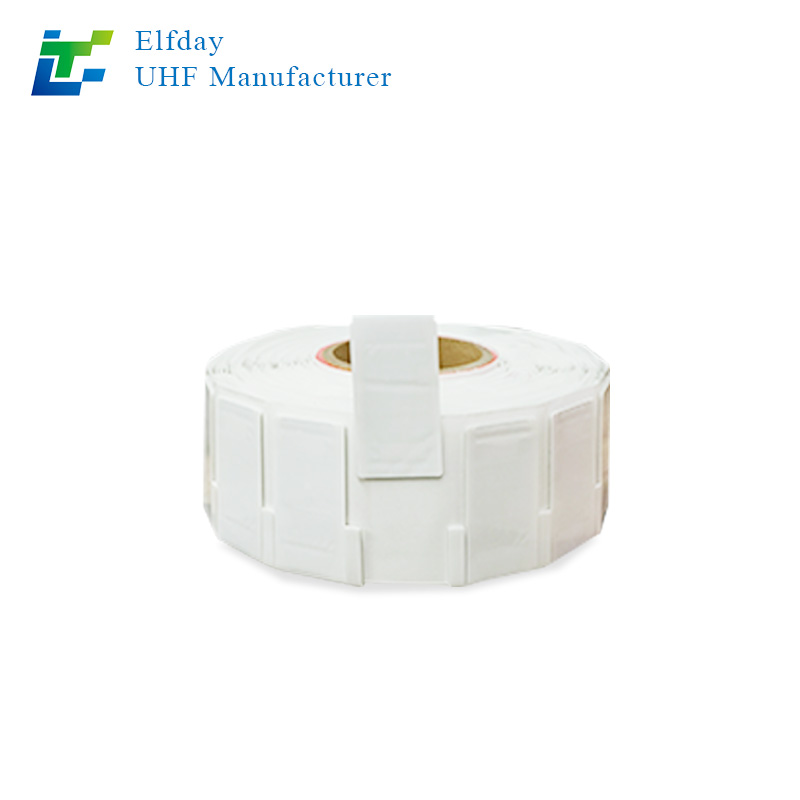




RFID Tags for Inventory Tracking for Products, Assets and Warehouse Management
RFID tags for inventory tracking provide an efficient solution for identifying, monitoring, and managing products, materials, assets, pallets, cartons, bins, and containers. By attaching RFID tags to individual items or inventory units, businesses can automate data collection and improve inventory visibility throughout their operations.
What Are RFID Tags for Inventory Tracking?
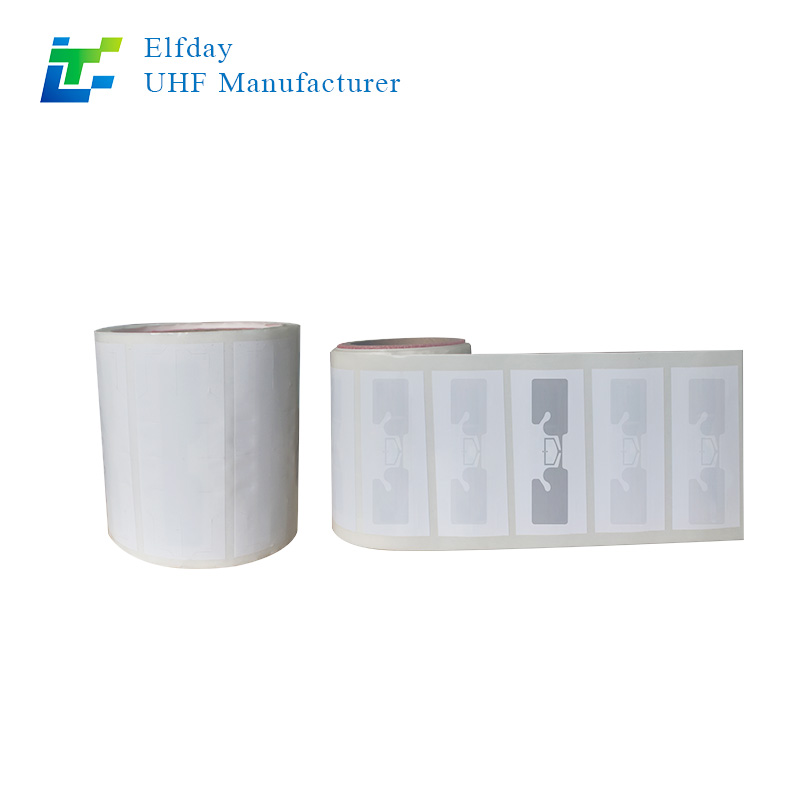
RFID tags for inventory tracking are electronic identification tags that use radio frequency technology to store and transmit information about an item. Unlike traditional barcode labels, RFID tags can be read wirelessly without requiring direct line of sight between the tag and reader.
RFID tags can be attached to individual products, raw materials, finished goods, pallets, cartons, storage bins, reusable containers, tools, equipment, and other assets. When an RFID reader detects a tagged item, its identification information can be captured and transferred to inventory management software.
This makes RFID technology suitable for businesses looking to improve inventory accuracy, automate repetitive identification tasks, and gain better visibility across warehouses, production facilities, retail stores, and supply chains.
How RFID Tags Improve Inventory Tracking
Traditional inventory management often relies on employees manually counting products or scanning individual barcodes. While these methods can work for smaller operations, they may become time consuming when businesses manage thousands or millions of inventory items.
RFID tags for inventory tracking can automate much of the identification process. Multiple tagged items can potentially be identified within a short period of time, reducing the need for employees to scan products one by one.
This can help businesses speed up inventory counts, reduce manual data entry, improve inventory accuracy, monitor inventory movement, reduce misplaced items, and improve overall warehouse efficiency.
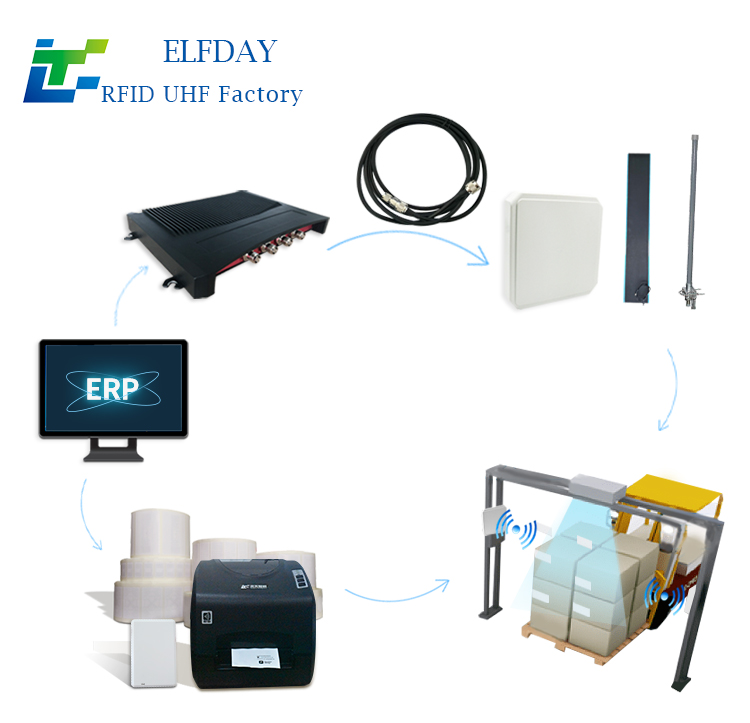
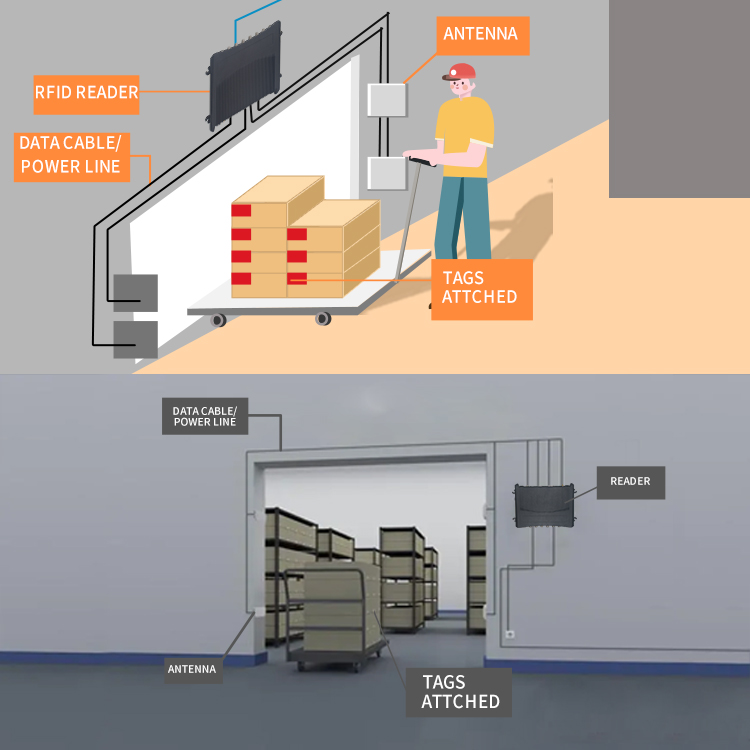
For example, a warehouse employee can use an RFID handheld reader to scan a storage area and identify multiple tagged products without physically handling every item. In a larger warehouse, fixed RFID readers can also be installed at key locations to automatically capture inventory movement.
RFID Tags for Warehouse Inventory Management
Warehouses are one of the most common applications for RFID inventory tracking. Products can move through multiple stages, including receiving, storage, picking, packing, and shipping.
During the receiving process, RFID readers can identify tagged products, cartons, or pallets as goods enter the warehouse. This can help warehouse teams verify incoming inventory more efficiently and reduce manual data entry.
During storage, RFID tags can help businesses associate inventory with specific locations. When employees need to locate a product, the inventory system can provide information that helps them identify where the item should be stored.
During picking and packing, RFID can help verify that the correct products are selected for an order. This can reduce picking mistakes and improve order accuracy.
Before products leave the warehouse, RFID readers can identify tagged cartons or pallets and compare the captured information with shipment records. This provides better visibility from receiving through dispatch.
RFID Tags for Product and Asset Management
RFID inventory tracking is not limited to products intended for sale. Businesses can also use RFID tags to manage valuable assets, equipment, tools, and reusable items.
For example, manufacturing facilities may use RFID tags to identify tools and production equipment. Warehouses may use RFID tags to manage reusable containers and storage bins. Businesses with multiple facilities can use RFID technology to maintain better records of equipment and assets across different locations.
Each RFID tag can be associated with a unique identification number. When connected to an inventory or asset management system, this information can provide a digital record of the item and support more efficient inventory checks.
RFID Tags for Pallets, Cartons, Bins and Containers
Pallets, cartons, bins, totes, and reusable containers are frequently moved between warehouses, factories, distribution centres, and customers. Keeping track of these items manually can be difficult, particularly when they are used repeatedly across a large supply chain.
RFID tags for inventory tracking can be attached to these logistics units to enable automated identification as they move through different operational areas.
For example, an RFID tag attached to a reusable container can be associated with information about the container, its current status, and its movement history. This can help businesses improve asset utilisation and reduce the risk of misplaced logistics equipment.
RFID Tags for Retail Inventory Tracking
Retail businesses can use RFID tags to improve inventory visibility at both store and warehouse level. Products such as clothing, footwear, accessories, electronics, and other merchandise can be individually tagged.
Instead of manually scanning every product, employees can use RFID technology to perform faster inventory checks. This can make it easier to identify products that are available, misplaced, or missing from expected locations.
Better inventory visibility can also support replenishment and help retailers maintain the right products in the right locations.
RFID Tags for Manufacturing Inventory Tracking
Manufacturers often need to track raw materials, components, work in progress, finished products, and production equipment.
RFID tags can provide each item with a unique digital identity, allowing inventory to be identified as it moves through different stages of production.
For example, RFID can help connect incoming materials with production orders, monitor work in progress, and identify finished goods before they are shipped to customers or distribution centres.
This can provide manufacturers with better visibility into material usage and production inventory.
RFID Tags for Supply Chain and Logistics
Modern supply chains often involve multiple warehouses, distribution centres, transportation providers, and customer locations. Inventory can change hands several times before reaching its final destination.
RFID tags for inventory tracking can help improve visibility as products and logistics units move through the supply chain.
When RFID readers are positioned at important checkpoints, businesses can automatically capture information about tagged inventory. This can provide more timely information about inventory movement and support better supply chain coordination.
RFID vs Barcode for Inventory Tracking
RFID and barcode technologies are both widely used for inventory management, but they operate differently.
Barcode systems generally require the scanner to be positioned so that it can read the printed barcode. RFID technology uses radio frequency communication, which allows suitable RFID readers to identify tags without direct line of sight.
RFID can also support the identification of multiple tags within a reading area, making it useful for applications where businesses need to process large quantities of inventory quickly.
However, RFID is not automatically the best choice for every application. Businesses should consider the type of inventory, reading environment, required read range, operating conditions, system requirements, and overall implementation cost when selecting a tracking technology.
How to Choose RFID Tags for Inventory Tracking
The right RFID tag depends on the application and the environment where the tag will be used.
The material of the tagged item is an important consideration. RFID tags designed for cardboard or plastic products may perform differently from tags designed for metal surfaces.
The required read distance is another factor. Warehouse portals, handheld inventory checks, and item-level tracking may require different tag configurations.
Environmental conditions should also be considered. If RFID tags will be exposed to moisture, high temperatures, chemicals, outdoor conditions, or frequent handling, the tag should be designed to withstand those conditions.
The size and shape of the inventory item can also affect tag selection. Small products may require compact RFID labels, while pallets, industrial equipment, and metal containers may require larger and more durable RFID tags.
Benefits of RFID Tags for Inventory Tracking
RFID technology can help businesses create a more automated approach to inventory management.
Faster inventory counting is one of the key advantages. Employees can potentially identify multiple tagged items within a reading area instead of scanning products individually.
Improved inventory visibility is another major benefit. RFID systems can provide businesses with more information about inventory movement and location.
RFID can also reduce repetitive manual work. Automated identification allows employees to spend less time on counting and scanning and more time on warehouse, production, or customer-facing activities.
For businesses with complex supply chains, RFID can also improve traceability by connecting physical inventory with digital records.
Common Applications of RFID Inventory Tracking
RFID tags for inventory tracking can be used across many industries and applications. Warehouses can use them to manage stock and logistics units. Retailers can use them for product-level inventory management. Manufacturers can use them to track materials and work in progress. Logistics companies can use them to monitor pallets and containers.
Healthcare organisations can use RFID technology to manage equipment and supplies. Automotive businesses can use RFID tags to identify components and reusable containers. E-commerce fulfilment centres can use RFID to support receiving, picking, packing, and shipping operations.
The flexibility of RFID technology makes it suitable for both item-level tracking and larger inventory units.
Frequently Asked Questions
What are RFID tags for inventory tracking used for?
RFID tags for inventory tracking are used to identify, monitor, and manage products, materials, assets, pallets, cartons, bins, containers, and other inventory items. They can help businesses automate identification and improve inventory visibility.
Can RFID tags track individual products?
Yes. RFID tags can be assigned unique identification numbers, allowing businesses to identify individual products when the RFID system is designed for item-level tracking.
Do RFID tags require line of sight?
No. Unlike traditional barcode scanning, RFID generally does not require direct line of sight between the reader and tag. This allows RFID systems to identify suitable tagged items more efficiently.
Can RFID tags be used in warehouses?
Yes. Warehouse inventory tracking is one of the most common RFID applications. RFID can support receiving, storage, inventory counting, picking, packing, and shipping.
Can RFID tags track pallets and containers?
Yes. RFID tags can be attached to pallets, cartons, bins, totes, and reusable containers to support automated identification and movement tracking.
Are RFID tags better than barcodes?
RFID and barcodes have different advantages. RFID can provide faster automated identification and can read multiple suitable tags, while barcodes are often a cost-effective solution for simpler tracking applications. The right technology depends on the specific requirements of the business.
RFID tags for inventory tracking provide a practical solution for businesses that need to manage growing volumes of products, materials, assets, pallets, cartons, bins, and containers.
From warehouse receiving and inventory counting to retail, manufacturing, logistics, asset management, and supply chain operations, RFID technology can reduce manual identification work and provide better inventory visibility.
With the right combination of RFID tags, readers, software, and inventory processes, businesses can build a more efficient and scalable inventory management system while gaining better visibility into where inventory is located and how it moves throughout the operation.