



RFID Tags vs Barcodes: What Is the Difference?
RFID tags and barcodes are two widely used technologies for identifying products, inventory, assets, and shipments.
Both technologies can connect physical items with digital information, but they work in very different ways.
Barcodes use printed patterns that are scanned optically by a barcode scanner. RFID tags use radio frequency communication between an RFID tag and an RFID reader.
This fundamental difference affects how items are identified, how quickly inventory can be processed, whether direct line of sight is required, and how many items can be captured at the same time.
For businesses evaluating inventory tracking technologies, understanding the differences between RFID tags vs barcodes can help determine which solution is more suitable for a specific application.
What Is an RFID Tag?
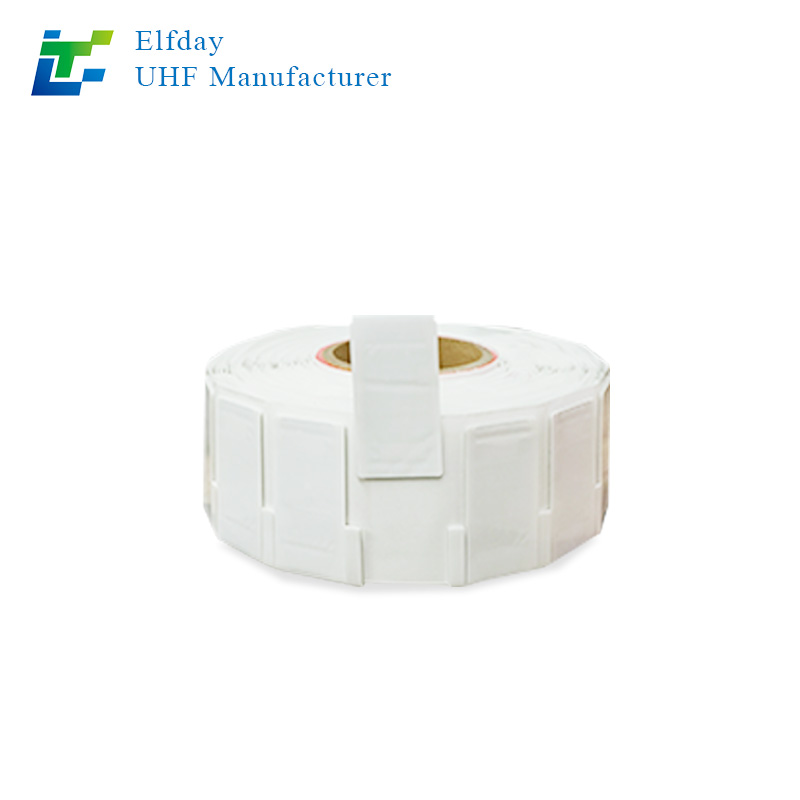
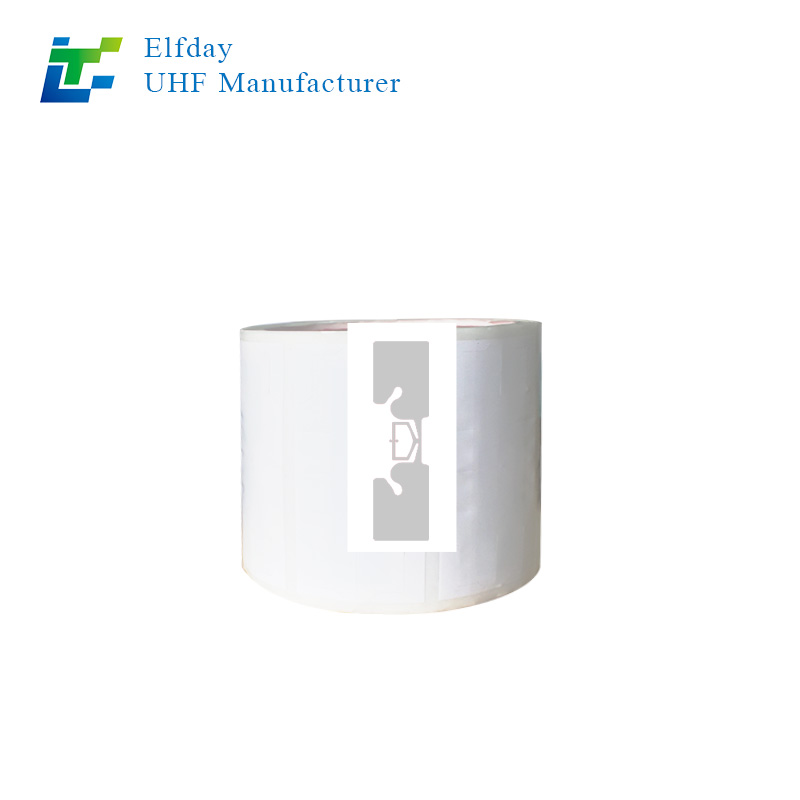
An RFID tag is an electronic identification device that uses radio frequency communication to transmit information to an RFID reader.
A typical RFID tag contains:
-
RFID chip
-
Antenna
-
Substrate or inlay
-
Label or protective housing
RFID tags are available in different technologies and form factors.
For inventory and logistics applications, passive UHF RFID tags are commonly used because they can support relatively long read ranges and multi-tag identification.
What Is a Barcode?
A barcode is a visual representation of information using lines, spaces, or other machine-readable patterns.
A barcode scanner uses light or an imaging system to capture the code and convert it into digital information.
Common barcode formats include:
-
UPC
-
EAN
-
Code 128
-
QR codes
-
Data Matrix
Barcodes are widely used in retail, shipping, manufacturing, healthcare, and inventory management.
RFID Tags vs Barcodes: Key Differences
The most important differences can be summarized as follows:
| Feature | RFID Tags | Barcodes |
|---|---|---|
| Communication method | Radio frequency | Optical scanning |
| Direct line of sight | Generally not required | Usually required |
| Multiple-item reading | Possible | Typically individual |
| Reading distance | Can be relatively long | Usually short |
| Data storage | Electronic memory may be available | Information encoded visually |
| Item orientation | More flexible | Scanner needs suitable visibility |
| Durability | Can be designed for harsh environments | Printed labels may be damaged |
| Reusability | Some tags are reusable | Usually disposable |
| Cost per item | Generally higher | Generally lower |
| Automation | Strong capability | Requires scanning |
| Inventory counting | Fast automated identification possible | Usually manual scanning |
Neither technology is universally better.
The appropriate choice depends on the application, budget, workflow, environment, and required level of automation.
How Do RFID Tags Work?
RFID uses radio frequency communication.
A reader sends an RF signal through an antenna. When a compatible RFID tag enters the reader's operating area, the tag can respond with its stored identification information.
For passive RFID tags, the reader's RF field provides the energy needed to activate the tag.
The basic process is:
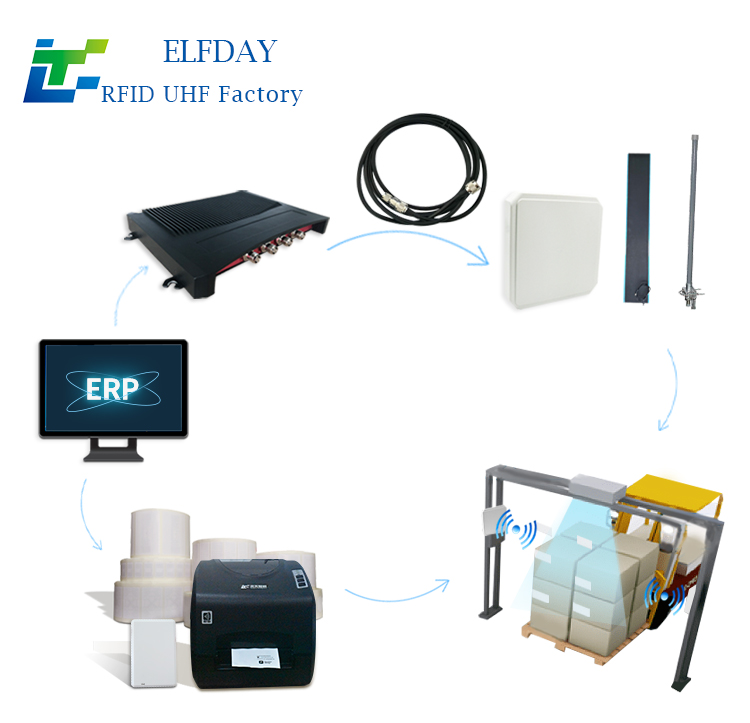
RFID Reader → RF Signal → RFID Tag → Data Response → RFID Reader
The captured information can then be sent to inventory software, warehouse management systems, enterprise systems, or other databases.
How Do Barcodes Work?
Barcodes use optical scanning.
The scanner must capture the visual pattern of the barcode and decode the information.
The typical process is:
Barcode → Scanner → Image Capture → Data Decoding → Software System
Because the scanner needs to see the barcode, positioning and visibility are important.
Does RFID Require Line of Sight?
Generally, RFID tags do not require direct line of sight.
An RFID reader can communicate with a tag without visually seeing the tag.
For example, a reader may identify an RFID-tagged carton without requiring an employee to locate the printed label.
However, RFID signals can still be affected by materials such as metal and liquids.
This means that although RFID does not require visual line of sight, tag placement and the surrounding environment remain important.
Do Barcodes Require Line of Sight?
In most conventional barcode applications, yes.
The scanner must be able to capture the barcode visually.
If the barcode is:
-
Covered
-
Damaged
-
Facing away from the scanner
-
Dirty
-
Poorly printed
the scanner may have difficulty reading it.
This is one reason RFID can be advantageous in certain automated inventory applications.
Can RFID Read Multiple Items at Once?
Yes.
One of the most important advantages of UHF RFID is its ability to identify multiple RFID tags within a reader's operating area.
For example, a warehouse employee may use an RFID handheld reader to identify several tagged products without scanning each product individually.
This can be useful for:
-
Inventory counting
-
Goods receiving
-
Shipping
-
Stock checks
-
Pallet tracking
-
Carton tracking
The number of tags that can be reliably read depends on the reader, tag design, tag density, product arrangement, and environment.
Can a Barcode Scanner Read Multiple Barcodes at Once?
Traditional barcode scanning is generally designed around individual barcode capture.
A scanner typically reads one visible barcode at a time.
Some camera-based systems can capture multiple barcodes under certain conditions, but this is different from the multi-tag identification capabilities commonly associated with UHF RFID.
For high-volume inventory operations, RFID can therefore offer a different workflow from conventional barcode scanning.
RFID Tags vs Barcodes for Inventory Management
Inventory management is one of the most important areas where RFID and barcodes are compared.
Barcode Inventory Management
A typical barcode inventory process may involve:
-
Finding an item
-
Positioning the barcode
-
Scanning the barcode
-
Recording the information
-
Moving to the next item
This approach can work very well for many businesses.
Barcodes are inexpensive, widely supported, and familiar to employees.
RFID Inventory Management
An RFID inventory process can involve:
-
RFID reader enters the inventory area
-
Reader sends an RF signal
-
Multiple RFID tags respond
-
Tag IDs are captured
-
Inventory software processes the data
This can reduce the amount of manual scanning required.
For large inventories, the difference in workflow can become significant.
RFID Tags vs Barcodes for Warehouses
Warehouses often contain large numbers of products, cartons, pallets, and reusable containers.
Barcodes can work well when workers already have established scanning processes.
RFID may provide additional benefits when businesses need:
-
Faster inventory counts
-
Automated item identification
-
Reduced manual scanning
-
Better item visibility
-
Portal-based reading
-
High-volume tracking
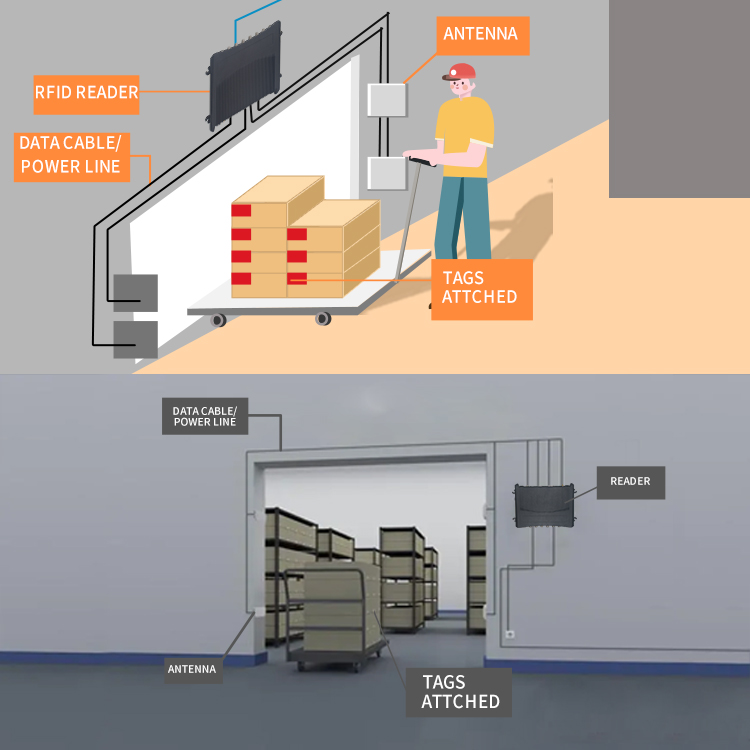
For example, RFID readers can be installed at warehouse entry and exit points to automatically identify tagged items as they pass through defined areas.
RFID Tags vs Barcodes for Retail
Retail businesses can use both technologies.
Barcodes remain common for point-of-sale operations because they are inexpensive and widely supported.
RFID can be useful for:
-
Inventory counting
-
Product location
-
Stock replenishment
-
Goods receiving
-
Inventory audits
A retailer may therefore use barcodes for checkout while using RFID for inventory management.
The technologies do not necessarily need to replace one another.
RFID Tags vs Barcodes for Logistics
Logistics operations often involve cartons, pallets, containers, and shipments moving through multiple locations.
Barcodes require scanners to capture visible codes.
RFID can provide automated identification as tagged items move through a reader's operating area.
Potential applications include:
-
Shipment identification
-
Pallet tracking
-
Carton tracking
-
Warehouse receiving
-
Distribution center operations
-
Returnable transport item tracking
The choice depends on the required automation level and operating environment.
RFID Tags vs Barcodes for Asset Tracking
Asset tracking is another area where RFID can provide advantages.
RFID tags can be attached to:
-
Tools
-
Equipment
-
Machinery
-
Carts
-
Containers
-
IT equipment
-
Industrial assets
For metal assets, specialized on-metal RFID tags can be used.
Barcodes can also identify these assets, but employees generally need to visually locate and scan the barcode.
RFID can allow assets to be identified wirelessly, depending on the system design.
RFID Tag Cost vs Barcode Cost
Cost is an important consideration.
In general:
Barcode labels are less expensive per item than RFID tags.
A barcode can be printed using relatively inexpensive materials and equipment.
An RFID tag contains an electronic chip and antenna, which makes it more complex to manufacture.
However, the cost per label is only one part of the total cost.
Businesses should also consider:
-
Labor
-
Inventory counting time
-
Scanning speed
-
Error rates
-
Reader equipment
-
Infrastructure
-
Software
-
Maintenance
-
Automation requirements
For a small inventory, the lower cost of barcodes may be more important.
For a large inventory with frequent counting, RFID's automation capabilities may provide greater operational value.
RFID Tags vs Barcodes: Which Is More Durable?
Durability depends on the design.
Standard printed barcode labels can become unreadable if they are:
-
Scratched
-
Torn
-
Wet
-
Dirty
-
Faded
RFID tags can be manufactured with protective materials for demanding environments.
For example, rugged RFID tags can be designed for:
-
Outdoor use
-
Industrial equipment
-
Metal assets
-
High temperatures
-
Moisture
-
Chemical exposure
-
Repeated handling
However, not every RFID tag is rugged.
The tag construction must be selected according to the environment.
RFID Tags vs Barcodes for Automation
RFID is generally better suited to highly automated identification workflows.
Fixed RFID readers can be installed at:
-
Warehouse doors
-
Conveyor lines
-
Production areas
-
Storage locations
-
Checkpoints
The system can automatically capture tag information as items enter or leave a defined reading zone.
Barcode systems can also be automated using cameras and scanners, but they typically require the barcode to be visible to the scanning system.
RFID Tags vs Barcodes for Data Storage
Barcodes primarily store information through their visual pattern.
RFID tags can contain electronic memory depending on the RFID chip.
Some RFID chips can store additional information beyond a basic identification number.
The exact memory capacity depends on the selected RFID chip.
However, RFID does not necessarily mean that large amounts of data should be stored directly on the tag.
Many RFID systems use the tag ID as a key that connects the physical item to detailed information stored in a database.
RFID Tags vs Barcodes: Which Is More Accurate?
Both technologies can provide high identification accuracy when properly implemented.
Barcode accuracy depends on:
-
Print quality
-
Scanner quality
-
Barcode visibility
-
Operator handling
-
Correct scanning
RFID accuracy depends on:
-
Tag placement
-
Reader configuration
-
Antenna position
-
RF environment
-
Tagged materials
-
Tag density
-
System configuration
RFID can reduce some manual scanning errors because the reader can automatically capture tag IDs.
However, RFID systems require proper RF design and testing.
Can RFID and Barcodes Be Used Together?
Yes.
In many real-world applications, RFID and barcodes are complementary technologies.
For example, a product could have:
-
A printed barcode for point-of-sale scanning
-
An RFID tag for automated inventory management
This approach allows a business to use the strengths of both technologies.
Barcodes can remain useful for low-cost identification and checkout, while RFID can support inventory visibility and automation.
When Should You Choose RFID Tags?
RFID may be a good option when a business needs:
-
Faster inventory counting
-
Multi-item identification
-
Reduced manual scanning
-
Longer reading distances
-
Automated tracking
-
Better inventory visibility
-
Identification without direct line of sight
RFID can be particularly attractive for large inventories and frequently repeated tracking processes.
When Should You Choose Barcodes?
Barcodes may be the better choice when:
-
Low-cost labels are important
-
Items are scanned individually
-
Direct line of sight is not a problem
-
Existing barcode infrastructure is already in place
-
The inventory volume is relatively manageable
-
Automation requirements are limited
Barcodes remain a practical and mature identification technology.
RFID Tags or Barcodes: Which Is Better?
The answer depends on the application.
Choose RFID when:
-
Many items need to be identified quickly
-
Manual scanning takes too much time
-
Items move through automated checkpoints
-
Direct line of sight is inconvenient
-
Inventory visibility is a major priority
-
The business wants to automate tracking
Choose barcodes when:
-
Low tag cost is the priority
-
Items are scanned individually
-
Existing barcode infrastructure works well
-
Manual scanning is acceptable
-
The operating environment is straightforward
Consider using both when:
-
Barcodes are required for point-of-sale operations
-
RFID is needed for inventory management
-
Different departments have different identification requirements
Frequently Asked Questions About RFID Tags vs Barcodes
What is the main difference between RFID and barcodes?
RFID uses radio frequency communication, while barcodes use optical scanning. RFID generally does not require direct line of sight and can identify multiple tags, while traditional barcode scanning typically requires individual visual scanning.
Are RFID tags better than barcodes?
Not necessarily. RFID can provide advantages in automation, multi-item reading, and inventory visibility, while barcodes are generally cheaper and widely supported.
Are RFID tags more expensive than barcodes?
Yes, RFID tags generally cost more than printed barcode labels because they contain electronic components.
Can RFID replace barcodes?
In some applications, RFID can replace barcode-based identification. However, many businesses use RFID and barcodes together because they serve different operational purposes.
Can RFID tags be scanned without seeing them?
Yes. RFID generally does not require direct visual line of sight between the reader and tag.
Can RFID read multiple products at the same time?
Yes. UHF RFID systems can identify multiple tagged products within the reader's operating area.
Which is better for warehouse inventory, RFID or barcode?
RFID can be advantageous for large warehouses that need fast inventory counting, automated identification, and reduced manual scanning. Barcodes may remain suitable for lower-volume or cost-sensitive operations.
Which is cheaper, RFID or barcode?
Barcode labels are generally cheaper than RFID tags. However, the total operational cost should also include labor, equipment, scanning time, and automation requirements.
Can RFID and barcode be used on the same product?
Yes. A product can have both a barcode and an RFID tag, allowing the business to use each technology for different processes.
RFID tags and barcodes are both effective identification technologies, but they are designed around different workflows.
Barcodes are inexpensive, widely supported, and effective when individual items can be visually scanned.
RFID tags use wireless communication and can provide advantages such as no direct line of sight, longer potential read distances, multi-item identification, and greater automation.
For warehouses, retail operations, logistics, manufacturing, and asset tracking, RFID can be particularly useful when businesses need to process large numbers of items efficiently.
However, RFID is not automatically the better choice for every application.
The right technology depends on inventory volume, workflow, budget, required automation, operating environment, reading distance, and existing infrastructure.
In many cases, the most practical approach is not RFID versus barcode, but RFID and barcode working together to provide efficient identification across different business processes.