




What Are the Best RFID Tags for Outdoor Use? A Practical Guide
The best RFID tags for outdoor use are tags designed to withstand moisture, rain, sunlight, temperature changes, dust, chemicals, and physical wear. Unlike standard indoor RFID labels, outdoor RFID tags need a durable construction that protects the RFID inlay while maintaining reliable communication with the reader.
Outdoor RFID tags can be used for construction equipment, vehicles, tools, storage containers, industrial assets, pallets, utility equipment, and other items that remain outside for extended periods.
However, there is no single RFID tag that is best for every outdoor application. The right choice depends on the environment, mounting surface, expected exposure, required read distance, and how long the tag needs to remain functional.
What Makes an RFID Tag Suitable for Outdoor Use?
An outdoor RFID tag needs to perform reliably in conditions that can be much harsher than a typical warehouse or retail environment.
Important characteristics include:
-
Weather resistance
-
Water and moisture resistance
-
UV resistance
-
Temperature resistance
-
Dust protection
-
Physical durability
-
Chemical resistance when required
-
Suitable mounting options
-
Reliable RFID read performance
A typical outdoor RFID tag may use a protected inlay inside a durable housing or encapsulated structure.
The basic design can be viewed as:
RFID chip + antenna → protective material → adhesive or mounting system → outdoor asset
The protective layer helps shield the RFID components from environmental exposure while allowing the tag to communicate with the RFID reader.
Are Outdoor RFID Tags Waterproof?
Some outdoor RFID tags are designed to be waterproof or highly water-resistant, but not every RFID tag can be considered waterproof.
Outdoor assets may be exposed to:
-
Rain
-
Snow
-
Sprinklers
-
High humidity
-
Standing water
-
Pressure washing
-
Mud
-
Condensation
If an RFID tag will regularly encounter water, it is important to select a tag with a suitable protective construction.
For example, a simple paper RFID label may be suitable for a dry warehouse but may not survive prolonged outdoor exposure.
A rugged encapsulated RFID tag can provide a much more durable solution for assets exposed to rain and moisture.
How Does Sunlight Affect Outdoor RFID Tags?
Long-term exposure to sunlight can affect RFID tag materials.
Ultraviolet radiation can gradually cause some plastics, adhesives, labels, and protective materials to deteriorate.
Potential problems include:
-
Fading
-
Cracking
-
Brittleness
-
Adhesive degradation
-
Surface deterioration
-
Reduced physical protection
For outdoor applications that remain in direct sunlight for months or years, UV resistance should therefore be considered when selecting an RFID tag.
This is particularly relevant for:
-
Construction equipment
-
Vehicles
-
Outdoor storage containers
-
Agricultural equipment
-
Utility assets
-
Industrial machinery
An RFID tag may continue to communicate electronically while its outer material deteriorates. For long-term tracking, both RF performance and physical durability matter.
Do Temperature Changes Affect Outdoor RFID Tags?
Outdoor assets can experience significant temperature changes between day and night or between different seasons.
Depending on the location and application, an RFID tag may encounter:
-
Very high temperatures
-
Freezing temperatures
-
Rapid temperature changes
-
Condensation
-
Repeated heating and cooling
Temperature can affect the tag's materials, adhesive, protective housing, and overall mechanical durability.
When an RFID tag is expected to remain outdoors for a long time, check its specified operating and storage temperature range.
This is particularly important for assets located in:
-
Open construction sites
-
Outdoor warehouses
-
Transport yards
-
Industrial facilities
-
Agricultural fields
-
Parking areas
What Are the Best RFID Tags for Outdoor Metal Assets?
Metal creates a different RFID challenge from ordinary outdoor exposure.
Many outdoor assets are made from or contain metal, including:
-
Excavators
-
Cranes
-
Trucks
-
Trailers
-
Steel containers
-
Industrial machinery
-
Metal tools
-
Pipes
-
Storage racks
A conventional RFID tag attached directly to metal may experience reduced read performance because metal can interfere with the tag antenna.
For these applications, an on-metal RFID tag or other RFID tag specifically designed for metal surfaces may be more suitable.
The important distinction is:
Outdoor environment → requires environmental durability
Metal mounting surface → may require an RFID design suitable for metal
When both conditions exist, the tag needs to address both requirements.
What Are the Best RFID Tags for Outdoor Plastic Assets?
Plastic is generally easier for RFID communication than metal, but outdoor plastic assets still need suitable protection.
Examples include:
-
Plastic bins
-
Outdoor storage boxes
-
Waste containers
-
Totes
-
Water tanks
-
Agricultural containers
-
Plastic equipment housings
For these applications, a rugged RFID tag with weather-resistant construction can provide durable identification.
The tag should also be tested on the actual plastic surface because different materials, shapes, thicknesses, and mounting positions can influence RFID performance.
Do Outdoor RFID Tags Need to Be UV Resistant?
For long-term outdoor applications, UV resistance can be important.
An asset that stays outdoors every day may receive substantial sunlight exposure. Over time, unsuitable tag materials can deteriorate even when the RFID chip itself remains functional.
UV-resistant construction can help protect the tag from long-term sunlight exposure.
If the application involves only temporary outdoor use, UV resistance may be less important than it is for assets expected to remain outside for several years.
The expected service life should therefore be considered when selecting an outdoor RFID tag.
How Long Do Outdoor RFID Tags Last?
The service life of an outdoor RFID tag depends on the tag construction and environmental conditions.
Factors include:
-
Sunlight exposure
-
Rain and humidity
-
Temperature
-
Chemicals
-
Abrasion
-
Impact
-
Cleaning procedures
-
Mounting surface
-
Adhesive performance
-
Installation quality
A tag used on a protected outdoor asset may last much longer than a tag exposed directly to heavy rain, strong sunlight, chemicals, and mechanical impact.
For long-term outdoor tracking, it is useful to think about tag life in terms of the complete application rather than simply the RFID chip.
Outdoor RFID Tag Materials
Different tag constructions are suitable for different environments.
| Tag Construction | Typical Outdoor Suitability | Common Considerations |
|---|---|---|
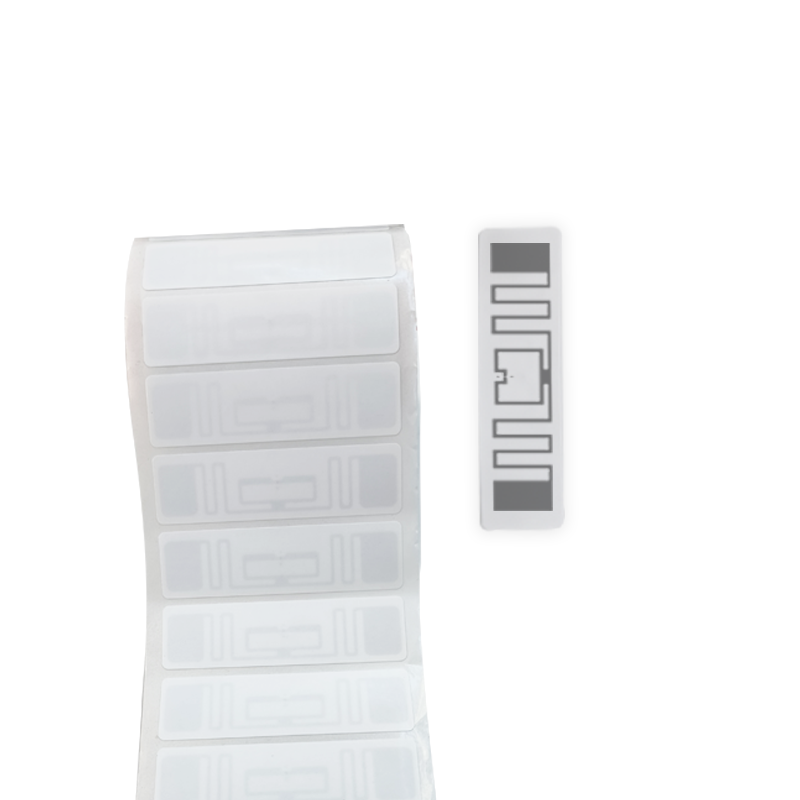
| Paper RFID label | Limited | Better for temporary or protected environments |
| Synthetic RFID label | Moderate | More resistant to moisture and handling |
| Plastic RFID tag | Good | Suitable for many outdoor applications |
| Encapsulated RFID tag | High | Provides strong environmental protection |
| Rugged hard-shell RFID tag | High | Useful for demanding industrial environments |
| On-metal RFID tag | High for metal assets | Designed to maintain performance on metal |
The exact performance depends on the tag design rather than the material name alone.
Which RFID Frequency Is Best for Outdoor Use?
Outdoor RFID applications can use different RFID frequencies, but UHF RFID is commonly considered when longer read distances and fast identification are required.
UHF RFID
UHF RFID is useful for applications such as:
-
Outdoor inventory
-
Vehicle tracking
-
Equipment tracking
-
Construction asset tracking
-
Yard management
-
Logistics
-
Industrial asset management
UHF RFID can support relatively long reading distances and can identify multiple tags efficiently.
HF RFID
HF RFID generally operates at a shorter reading distance and can be useful when assets are identified at close range.
LF RFID
LF RFID can be suitable for certain specialized identification applications where longer read distance is not the primary requirement.
The best frequency depends on the application. Outdoor exposure itself does not automatically determine the RFID frequency.
How Does Mounting Location Affect Outdoor RFID Performance?
Where an RFID tag is installed can affect both durability and reading performance.
For example, avoid placing a tag where it is likely to experience:
-
Direct mechanical impact
-
Constant abrasion
-
Sharp edges
-
Heavy mud accumulation
-
Excessive heat
-
Frequent pressure washing
-
Contact with moving components
At the same time, the tag should be positioned where the RFID reader can interact with it effectively.
This creates two requirements:
Protect the tag physically + maintain good RF performance
The strongest mounting position is therefore not always the best reading position, and the best reading position may not always provide the best physical protection.
Testing helps find the right balance.
What Are the Best RFID Tags for Construction Equipment?
Construction equipment is a common example of a demanding outdoor RFID application.
Equipment such as excavators, loaders, cranes, compactors, and generators may be exposed to:
-
Rain
-
Mud
-
Dust
-
Direct sunlight
-
Temperature changes
-
Vibration
-
Impacts
-
Oils and other contaminants
A durable RFID tag with suitable environmental protection can help identify individual machines and connect each asset with digital records.
For metal construction equipment, an RFID tag designed for metal surfaces may also be necessary.
A practical setup could look like:
Rugged RFID tag → construction machine → RFID reader → asset record
This can support equipment identification during inspections, inventory checks, maintenance activities, and site management.
Can RFID Tags Be Used on Outdoor Vehicles?
Yes. RFID tags can be used to identify and track many types of outdoor vehicles.
Possible applications include:
-
Fleet management
-
Trailer identification
-
Vehicle yard tracking
-
Rental equipment tracking
-
Delivery asset management
-
Maintenance records
Vehicle surfaces can include painted metal, bare metal, plastic, and glass, so tag selection should take the mounting surface into account.
For metal surfaces, a suitable on-metal RFID tag may provide more reliable performance than a conventional label.
Can RFID Tags Be Used in Outdoor Warehouses?
Yes. RFID can support inventory and asset tracking in outdoor storage yards and warehouse areas.
Outdoor environments can introduce additional challenges such as:
-
Weather
-
Larger reading areas
-
Metal structures
-
Moving vehicles
-
Outdoor storage racks
-
Variable tag orientations
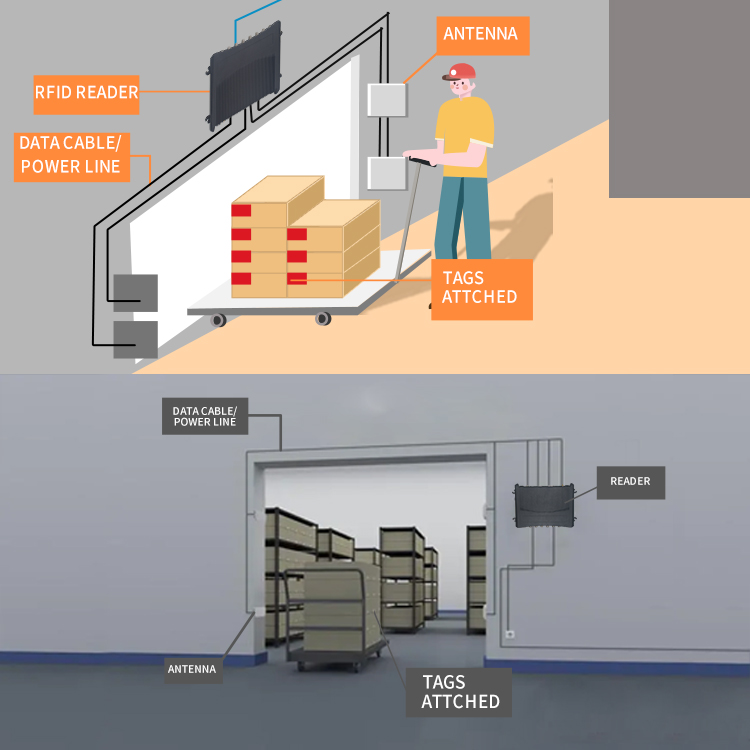
Reader antenna placement becomes particularly important in these environments.
For example:
Receiving area → RFID reading zone → storage yard → shipping area
RFID can help automate identification as assets move between these locations.
Outdoor RFID Tags vs. Standard RFID Labels
The main difference is usually environmental durability rather than the basic RFID communication principle.
| Feature | Standard RFID Label | Outdoor RFID Tag |
|---|---|---|
| Indoor use | Suitable | Suitable |
| Moisture exposure | Limited depending on construction | Designed for greater exposure |
| Rain | Usually not ideal | Suitable when properly rated |
| UV exposure | May be limited | Can be designed for UV resistance |
| Physical impact | Limited | Generally more durable |
| Long-term outdoor use | Application dependent | Better suited |
| Metal mounting | Usually requires consideration | Specialized options available |
| Harsh environments | Limited | Designed for demanding applications |
A standard label may be sufficient for a protected outdoor environment, while a rugged RFID tag is more appropriate for long-term exposure.
How Should You Choose an RFID Tag for Outdoor Use?
Before selecting an outdoor RFID tag, consider these questions:
1. How Long Will the Tag Stay Outdoors?
Temporary applications may require less environmental protection than permanent asset tracking.
2. Will the Tag Be Exposed to Rain?
If yes, choose a tag with appropriate water resistance.
3. Will It Receive Direct Sunlight?
Long-term direct sunlight makes UV resistance more important.
4. What Temperature Range Will It Experience?
Check the expected environmental temperature against the tag's specifications.
5. Is the Asset Made of Metal?
If yes, evaluate an RFID tag designed for metal mounting.
6. Will the Tag Experience Physical Impact?
For construction and industrial equipment, a rugged protective housing may be more appropriate.
7. Will Chemicals or Oils Be Present?
If the tag may contact chemicals, fuel, oils, or cleaning agents, evaluate its material and adhesive resistance.
8. How Far Does the RFID Tag Need to Be Read?
A tag used for close-range identification may have different requirements from one that must be detected across a warehouse or yard.
9. How Will the Tag Be Attached?
Consider:
-
Adhesive mounting
-
Screws
-
Rivets
-
Cable ties
-
Embedded installation
-
Other mechanical mounting methods
The attachment method can be just as important as the RFID tag itself.
How Can You Improve Outdoor RFID Read Performance?
Environmental durability does not automatically guarantee good RFID reading performance.
To improve outdoor RFID performance:
Choose the Right Tag for the Surface
Select a tag designed for the mounting material, particularly when the asset contains metal.
Optimize Tag Position
Test different positions to find one that provides reliable communication with the reader.
Consider Tag Orientation
The angle of the tag relative to the reader antenna can affect performance.
Use Suitable Reader Antennas
Outdoor reading areas may require carefully positioned antennas to cover the required zone.
Keep the Tag Away From Problem Areas
Avoid locations that create unnecessary RF interference or expose the tag to excessive mechanical damage.
Test Under Real Conditions
Outdoor RFID testing should ideally include actual:
-
Weather exposure
-
Asset materials
-
Tag mounting
-
Reader position
-
Reading distance
-
Asset movement
-
Environmental conditions
A tag that performs well in a laboratory may behave differently on an actual outdoor asset.
A Practical Outdoor RFID Testing Process
Before deploying an outdoor RFID system, consider the following process:
Step 1: Identify the outdoor environment
Determine exposure to rain, sunlight, temperature, dust, chemicals, and physical impact.
Step 2: Identify the mounting surface
Determine whether the asset is made from metal, plastic, glass, wood, or another material.
Step 3: Select several suitable RFID tags
Compare different tag constructions and antenna designs.
Step 4: Test tag placement
Try multiple mounting locations.
Step 5: Test reading performance
Measure read consistency at the required distance and orientation.
Step 6: Test durability
Evaluate the tag under realistic environmental conditions when possible.
Step 7: Confirm long-term attachment
Make sure the adhesive or mechanical mounting method is appropriate for the outdoor environment.
Step 8: Test the complete system
Evaluate the tag, reader, antenna, asset, mounting position, and environment together.
This process can help prevent a common problem: choosing a physically durable RFID tag that does not provide the required reading performance.
Common Mistakes When Choosing Outdoor RFID Tags
Choosing a Standard Paper Label for a Harsh Environment
A low-cost indoor label may not survive prolonged exposure to rain, sunlight, and abrasion.
Ignoring the Mounting Surface
A tag that works well on plastic may not perform the same way on metal.
Looking Only at Waterproofing
Outdoor durability involves more than water resistance. UV exposure, temperature, chemicals, impact, and adhesive performance can also matter.
Testing Only Indoors
Indoor testing cannot always reproduce the RF and environmental conditions of an outdoor yard or construction site.
Focusing Only on Read Range
Maximum read distance is not the only performance metric. Reliable identification is often more important than achieving the longest possible range.
Frequently Asked Questions
What are the best RFID tags for outdoor use?
The best outdoor RFID tags are generally durable tags designed to withstand the specific environmental conditions of the application. For harsh environments, rugged or encapsulated RFID tags may be more suitable than standard paper labels.
Are RFID tags waterproof?
Some RFID tags are designed to be waterproof or highly water-resistant, but not all RFID tags have the same level of protection. The tag's construction and environmental rating should be checked for the intended application.
Can RFID tags survive rain?
Yes, RFID tags designed for outdoor environments can be used in rainy conditions. The level of protection required depends on how frequently and intensely the tag will be exposed to water.
Can RFID tags be used in direct sunlight?
Yes. For long-term outdoor use, tags with UV-resistant materials can help withstand prolonged sunlight exposure.
What RFID tags are best for outdoor metal equipment?
RFID tags specifically designed for metal surfaces are often more suitable for outdoor metal equipment. The tag should also have sufficient environmental protection for the expected outdoor conditions.
Can outdoor RFID tags survive extreme temperatures?
Some RFID tags are designed for wide temperature ranges. The appropriate tag should be selected according to the actual operating and storage temperatures of the application.
How long can an outdoor RFID tag last?
There is no universal service life. Tag longevity depends on construction, UV exposure, moisture, temperature, chemicals, abrasion, impact, installation, and other environmental factors.
The best RFID tags for outdoor use are not necessarily the largest or most expensive tags. They are tags that match the actual environmental and RFID requirements of the application.
For outdoor asset tracking, consider:
Weather resistance + UV resistance + temperature range + physical durability + mounting surface + RFID performance
A rugged outdoor RFID tag can be useful for construction equipment, vehicles, containers, tools, industrial machinery, outdoor inventory, and other assets exposed to demanding conditions.
Most importantly, evaluate the tag and the environment together. A tag may be physically durable but perform poorly on metal, while another tag may provide excellent read performance but lack sufficient protection from long-term outdoor exposure.
The most reliable approach is to define the outdoor conditions, select tags designed for those conditions, and test them on the actual assets under realistic operating conditions.