




Are RFID Tags Waterproof? What You Need to Know
Yes, some RFID tags are waterproof or highly water-resistant, but not all RFID tags are waterproof.
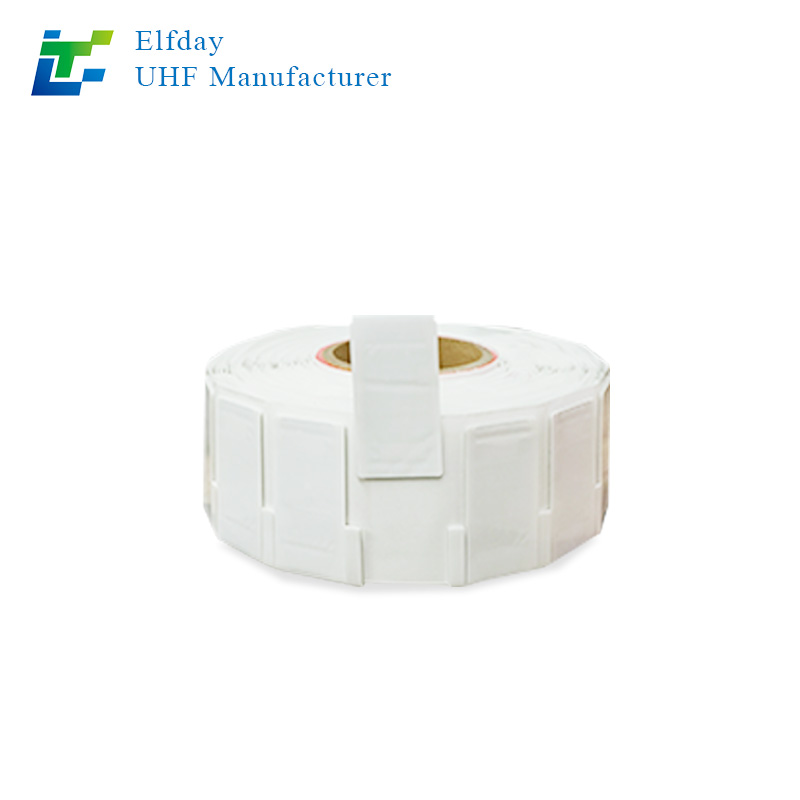
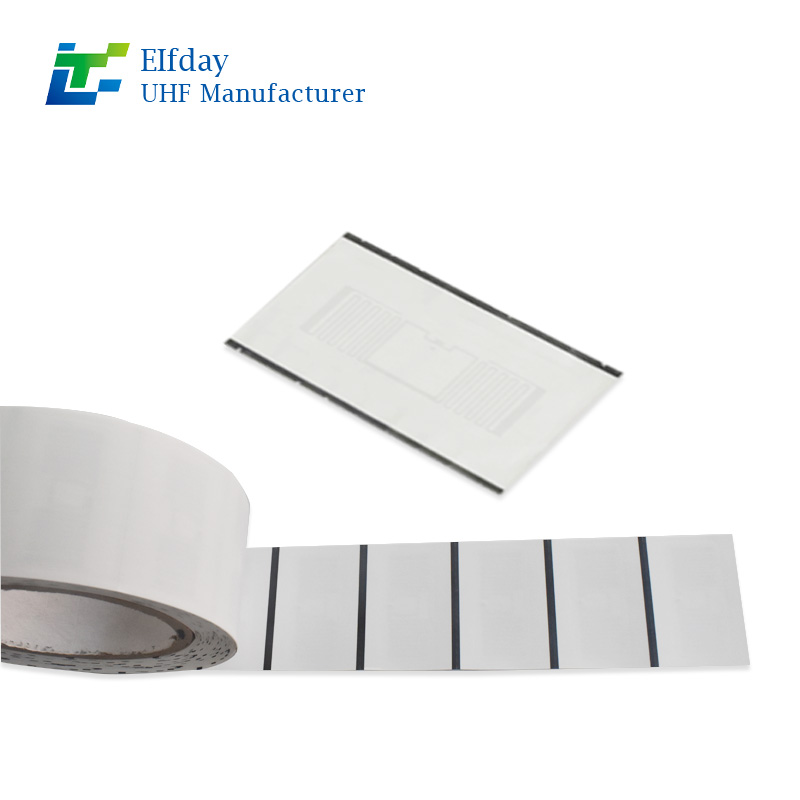
A standard RFID label may contain a thin inlay covered by paper or another lightweight material. This type of tag can work well in dry indoor environments but may not be suitable for prolonged exposure to rain, water, humidity, washing, or immersion.
For demanding environments, RFID tags can be manufactured with sealed, encapsulated, or rugged constructions that protect the RFID chip and antenna from moisture and water.
The right RFID tag depends on how much water exposure the application involves.
What Makes an RFID Tag Waterproof?
An RFID tag is not waterproof simply because it contains an RFID chip and antenna. The protective construction around these components plays an important role.
A typical RFID tag contains:
-
RFID chip
-
Antenna
-
Substrate or inlay
-
Protective layer
-
Adhesive or mounting structure
For applications exposed to water, the tag may use additional protection around the electronic components.
A simplified structure is:
RFID chip + antenna → protective material → sealed construction → waterproof RFID tag
The protective housing or encapsulation can help prevent water from reaching the RFID components.
Are All RFID Tags Waterproof?
No.
RFID tags come in many different constructions, and their resistance to water can vary significantly.
| RFID Tag Type | Water Exposure Suitability | Typical Application |
|---|---|---|
| Paper RFID label | Limited | Dry indoor products |
| Synthetic RFID label | Moderate | Moisture-prone environments |
| Plastic RFID tag | Good | General outdoor applications |
| Encapsulated RFID tag | High | Wet and demanding environments |
| Rugged RFID tag | High | Industrial and outdoor assets |
| Fully sealed RFID tag | Very high | Applications involving significant water exposure |
These categories are general guidelines. Actual water resistance depends on the tag's construction and specifications.
What Is the Difference Between Waterproof and Water-Resistant RFID Tags?
The terms water-resistant and waterproof are often used differently by manufacturers.
Water-Resistant RFID Tags
A water-resistant tag can tolerate some exposure to moisture or water.
It may be suitable for:
-
Humidity
-
Occasional splashes
-
Light rain
-
Damp warehouses
-
Short-term outdoor exposure
However, it may not be designed for continuous water exposure or immersion.
Waterproof RFID Tags
A waterproof RFID tag is designed with stronger protection against water entering the tag structure.
Depending on its construction and specified rating, it may be suitable for:
-
Heavy rain
-
Repeated washing
-
Wet industrial environments
-
Outdoor equipment
-
Temporary immersion
-
Other demanding applications
The exact level of protection should always be checked against the intended use.
Can RFID Tags Be Used in the Rain?
Yes. RFID tags designed for outdoor environments can be used in rainy conditions.
Rain itself does not automatically make RFID unusable. The main issue is whether the tag can physically withstand prolonged exposure to water.
For example:
Standard paper RFID label + heavy rain → potential material and adhesive damage
Sealed outdoor RFID tag + heavy rain → better protection
Outdoor applications should therefore consider both RF performance and environmental durability.
Can RFID Tags Be Completely Submerged in Water?
Some RFID tags can be designed for applications involving temporary or prolonged immersion, but this should not be assumed for every tag.
If a tag will be submerged, consider:
-
Depth of immersion
-
Duration
-
Water temperature
-
Frequency of exposure
-
Fresh water or salt water
-
Pressure
-
Tag housing
-
Adhesive or mounting method
A tag that survives occasional splashing may not be suitable for continuous underwater use.
The expected operating conditions should match the tag's specified environmental protection.
Does Water Affect RFID Signals?
Water can affect RFID communication, particularly with UHF RFID systems.
The effect depends on the amount of water, the tag design, the antenna, the distance, and the surrounding environment.
Water can interact with RF energy around the tag antenna. As a result, a UHF RFID tag attached directly to a water-filled container may have different reading performance from the same tag tested in a dry environment.
Possible effects include:
-
Reduced read range
-
Lower signal strength
-
Less consistent tag detection
-
Changes in antenna performance
This means that making an RFID tag waterproof and making an RFID system perform well around water are two different requirements.
The tag needs to survive the environment, while the RFID system also needs to maintain reliable communication.
Are Waterproof RFID Tags Suitable for Outdoor Use?
Yes. Waterproof or highly water-resistant RFID tags can be useful for many outdoor applications.
Outdoor assets may experience:
-
Rain
-
Snow
-
Humidity
-
Mud
-
Water spray
-
Condensation
-
Cleaning
-
Direct sunlight
A suitable outdoor RFID tag may combine water resistance with other environmental protections.
For long-term outdoor applications, also consider:
Water resistance + UV resistance + temperature resistance + physical durability
A tag that is waterproof but not resistant to sunlight or mechanical impact may still have a limited service life outdoors.
Can RFID Tags Survive Pressure Washing?
Some rugged RFID tags can be designed for environments where equipment is regularly cleaned or washed.
However, pressure washing is more demanding than normal rain.
The tag may experience:
-
High-pressure water
-
Repeated cleaning
-
Detergents
-
Temperature changes
-
Mechanical force
For equipment that is frequently pressure-washed, the entire tag construction should be evaluated, including the housing, seal, adhesive, and mounting method.
It is also useful to test the tag after repeated cleaning cycles rather than checking it only once.
Does Humidity Affect RFID Tags?
High humidity can affect RFID tags differently from direct water exposure.
A tag may never be submerged but could remain in a high-humidity environment for months or years.
High humidity can potentially contribute to:
-
Material degradation
-
Adhesive failure
-
Corrosion in poorly protected components
-
Moisture penetration
-
Reduced physical durability
For applications such as cold storage, outdoor warehouses, agricultural environments, and industrial facilities, humidity resistance may therefore be important.
Are Waterproof RFID Tags Suitable for Cold Storage?
Water-resistant RFID tags can be useful in refrigerated and cold-storage environments, but temperature should be considered together with moisture.
Cold environments may involve:
-
Low temperatures
-
Condensation
-
Frost
-
Repeated temperature changes
-
Wet surfaces
For example, a tag may move from a cold warehouse into a warmer environment and develop condensation on its surface.
A suitable tag should therefore be evaluated for both its temperature range and moisture exposure.
Can Waterproof RFID Tags Be Used on Metal?
Yes, but waterproofing and metal compatibility are separate considerations.
A waterproof RFID tag may survive exposure to water but still have reduced RFID performance when attached directly to metal.
Examples include:
-
Metal equipment
-
Steel containers
-
Vehicles
-
Industrial machinery
-
Outdoor storage racks
-
Metal tools
For these applications, an on-metal RFID tag with suitable environmental protection may be more appropriate.
In other words:
Waterproof requirement → protect the tag from water
On-metal requirement → maintain RFID performance on metal
If both conditions exist, the tag needs to address both.
What Types of Products Can Use Waterproof RFID Tags?
Water-resistant and waterproof RFID tags can be used across many industries.
Outdoor Equipment
Construction equipment, generators, agricultural machinery, and industrial equipment may remain outdoors for long periods.
Vehicles and Trailers
RFID tags can help identify vehicles, trailers, and other mobile assets exposed to rain and road conditions.
Waste Containers
Outdoor waste bins and reusable containers may encounter rain, moisture, dirt, and repeated cleaning.
Industrial Containers
Tanks, drums, totes, and other reusable containers can benefit from durable RFID identification.
Laundry and Textile Tracking
RFID tags used for reusable textiles may encounter repeated washing and moisture. In these applications, tags need to be designed specifically for laundering conditions rather than simply being labelled “waterproof.”
Food and Beverage Packaging
Bottles, containers, and other products may be exposed to condensation, refrigeration, or washing during processing and logistics.
How Should You Choose a Waterproof RFID Tag?
Start by identifying the actual environmental conditions.
1. How Much Water Will the Tag Encounter?
Determine whether the tag will experience:
-
Occasional splashes
-
Rain
-
Continuous moisture
-
Water spray
-
Washing
-
Pressure washing
-
Temporary immersion
-
Long-term immersion
2. How Long Will the Tag Remain Exposed?
A short-term application has different requirements from a tag expected to remain outdoors for several years.
3. What Is the Mounting Surface?
Check whether the tag will be attached to:
-
Plastic
-
Glass
-
Metal
-
Rubber
-
Painted surfaces
-
Wood
-
Composite materials
4. What Temperature Will the Tag Experience?
Consider both operating temperature and storage temperature.
5. Will the Tag Receive Direct Sunlight?
If the tag remains outdoors, UV resistance may be important.
6. Will the Tag Be Exposed to Chemicals?
Cleaning chemicals, oils, fuels, and industrial substances can affect the tag housing or adhesive.
7. How Will the Tag Be Attached?
Water can sometimes reach the tag through damaged edges or failed adhesive.
Depending on the application, consider:
-
Industrial adhesive
-
Screws
-
Rivets
-
Cable ties
-
Embedded mounting
-
Mechanical fasteners
Does Waterproofing Affect RFID Read Range?
The waterproof construction itself does not necessarily mean that the RFID tag will have a longer or shorter read range.
However, the materials and housing used to protect the RFID antenna can influence its RF characteristics.
The final reading performance depends on several factors:
-
Antenna design
-
Tag size
-
Protective material
-
Mounting surface
-
Tag orientation
-
Reader power
-
Reader antenna
-
Frequency
-
Distance
-
Nearby metal
-
Nearby liquids
This is why waterproofing should not be evaluated separately from RFID performance.
How Can You Test a Waterproof RFID Tag?
Testing the actual tag in the intended environment is one of the best ways to evaluate performance.
A practical process can include:
Step 1: Test the tag in a dry condition
Establish a baseline reading performance.
Step 2: Expose the tag to the expected water conditions
For example, test under rain, spraying, washing, or another realistic condition.
Step 3: Check physical condition
Look for swelling, cracking, peeling, water penetration, or adhesive failure.
Step 4: Test RFID performance again
Check whether the tag still reads consistently.
Step 5: Repeat the exposure
If the tag will experience repeated washing or outdoor exposure, perform repeated cycles.
Step 6: Test the actual mounting surface
A waterproof tag on plastic may behave differently from the same tag mounted on metal.
Step 7: Evaluate long-term requirements
Consider UV, temperature, chemicals, abrasion, and other environmental factors.
The goal is not simply to prove that the tag can survive water once. The goal is to determine whether it can remain functional throughout its expected service life.
Common Mistakes When Choosing Waterproof RFID Tags
Mistake 1: Assuming Every RFID Tag Is Waterproof
Standard RFID labels are not automatically suitable for wet environments.
Mistake 2: Focusing Only on Water Resistance
Outdoor applications may also involve UV exposure, temperature changes, chemicals, dust, and physical impact.
Mistake 3: Ignoring the Adhesive
A durable RFID housing does not help if the tag repeatedly peels away from the asset.
Mistake 4: Testing Only the RFID Read
A tag may still communicate while its outer material or adhesive is deteriorating.
Both physical durability and RF performance should be evaluated.
Mistake 5: Confusing Waterproofing With Underwater RFID Performance
A tag that can survive water exposure is not automatically optimized for reliable RF communication underwater.
The operating environment and reading method need to be considered together.
Waterproof RFID Tags vs. Barcode Labels
Water resistance can also be an important consideration when comparing RFID with barcode identification.
| Feature | Waterproof RFID Tag | Waterproof Barcode Label |
|---|---|---|
| Electronic identification | Yes | No |
| Line of sight | Usually not required | Usually required |
| Multiple-item reading | Possible | Typically one at a time |
| Wet environment | Suitable with proper construction | Suitable with suitable label |
| Read distance | Can be relatively long | Usually shorter |
| Automatic identification | Highly suitable | Suitable with optical scanning |
| Metal compatibility | May require specialized tag | Label remains optically readable if visible |
For wet environments, both technologies can work, but RFID provides additional capabilities such as non-line-of-sight identification and multi-tag reading.
Frequently Asked Questions
Are RFID tags waterproof?
Some RFID tags are waterproof or highly water-resistant, but standard RFID labels may not be. The appropriate tag depends on the level and duration of water exposure.
Can RFID tags get wet?
Yes. RFID tags designed for wet environments can be exposed to water. However, ordinary paper RFID labels may be damaged by prolonged moisture.
Can RFID tags be used outdoors?
Yes. Outdoor RFID tags can be designed to withstand rain, moisture, sunlight, temperature changes, and physical wear.
Can RFID tags be submerged in water?
Some specialized RFID tags can withstand immersion, but this depends on their construction and environmental specifications. Water resistance should not automatically be interpreted as suitability for continuous underwater use.
Does water stop UHF RFID tags from working?
Not necessarily. Water can affect UHF RFID communication and may reduce read range or consistency, particularly when the tag is close to a large amount of water. The actual effect depends on the tag, liquid, reader, and environment.
Are waterproof RFID tags suitable for metal surfaces?
They can be, but a waterproof tag is not automatically optimized for metal. If the tag will be mounted directly on metal, an appropriately designed on-metal RFID tag may be required.
Can RFID tags survive pressure washing?
Some rugged RFID tags can be designed for repeated washing or high-pressure cleaning. The tag's housing, seal, adhesive, and mounting method should be tested under the actual cleaning conditions.
Are waterproof RFID tags suitable for cold environments?
Some are. For refrigerated or freezing environments, select a tag designed for the required temperature range and consider condensation and repeated temperature changes.
RFID tags can be waterproof, but not every RFID tag is designed to withstand water.
Standard RFID labels may be suitable for dry environments, while synthetic, encapsulated, sealed, or rugged RFID tags can provide better protection for applications involving rain, moisture, washing, or immersion.
When choosing an RFID tag for a wet environment, consider:
Water exposure + temperature + UV + chemicals + physical wear + mounting surface + RFID performance
For outdoor equipment, vehicles, industrial containers, reusable assets, refrigerated products, and other moisture-prone applications, the most reliable approach is to test the complete RFID solution under realistic conditions.
A waterproof RFID tag should not only survive the environment—it should continue to provide reliable identification throughout its expected service life.