




Can RFID Tags Withstand Chemicals and Harsh Environments?
Yes, some RFID tags can withstand chemicals and harsh environments, but not every RFID tag is designed for demanding industrial conditions. Standard paper RFID labels may work well in clean, dry environments, while chemical-resistant or rugged RFID tags are better suited to applications involving solvents, oils, cleaning agents, moisture, heat, abrasion, and outdoor exposure.
The level of resistance depends on the complete tag construction, including the RFID chip, antenna, substrate, adhesive, protective layer, and housing. The chemical itself, concentration, exposure time, temperature, and mounting surface can also affect long-term performance.
What Makes an RFID Tag Suitable for Harsh Environments?
An RFID tag used in a harsh environment needs to withstand more than just physical impact. Its materials must remain stable while the tag is exposed to the conditions found in its intended application.
Important factors include:
-
Chemical resistance
-
Water and moisture resistance
-
Temperature resistance
-
UV resistance
-
Dust protection
-
Abrasion resistance
-
Impact resistance
-
Adhesive durability
-
Resistance to repeated environmental changes
For example, an RFID tag used on manufacturing equipment may encounter oil, grease, cleaning chemicals, heat, and mechanical wear. A tag used outdoors may instead need protection from rain, sunlight, temperature changes, dirt, and physical damage.
Can Chemicals Damage RFID Tags?
Yes. Chemical exposure can affect different parts of an RFID tag.
Depending on the chemical and tag construction, exposure may cause:
-
Surface degradation
-
Adhesive failure
-
Cracking or swelling
-
Discoloration
-
Protective coating deterioration
-
Antenna damage
-
Housing deformation
-
Loss of attachment to the mounting surface
-
Reduced tag reliability
The RFID chip itself may remain functional while the material surrounding it deteriorates. This is why chemical resistance should be evaluated as a property of the complete RFID tag, rather than the chip alone.
Which Chemicals Can RFID Tags Encounter?
Industrial RFID applications can involve many different chemicals. Common examples include:
| Chemical or substance | Potential concern |
|---|---|
| Oils and lubricants | Surface contamination and adhesive stress |
| Fuels | Material compatibility and swelling |
| Cleaning agents | Coating or adhesive degradation |
| Solvents | Damage to plastics, coatings, or adhesives |
| Detergents | Repeated chemical exposure |
| Acids | Corrosion or material degradation |
| Alkaline solutions | Surface and adhesive damage |
| Industrial chemicals | Compatibility depends on the specific substance |
There is no universal statement that an RFID tag is resistant to "chemicals." Chemical resistance should be evaluated against the specific chemical, concentration, temperature, and exposure conditions.
What Are Chemical-Resistant RFID Tags?
Chemical-resistant RFID tags are designed with materials and construction methods intended to maintain their physical integrity and RFID performance when exposed to specific chemicals.
Depending on the application, they may use:
-
Durable plastic substrates
-
Protective polymer layers
-
Sealed housings
-
Encapsulated construction
-
Specialized adhesives
-
Rugged antenna structures
-
Industrial-grade materials
These features can provide greater protection than conventional paper-based RFID labels.
However, chemical resistance is application-specific. A tag that performs well with cleaning agents may not have the same performance when exposed to strong solvents or concentrated acids.
Can RFID Tags Work in Wet and Humid Environments?
Yes. RFID tags can be designed for wet environments, but the construction needs to match the expected level of exposure.
Harsh wet environments may include:
-
Outdoor storage
-
Vehicle washing
-
Industrial cleaning
-
Food processing
-
Waste management
-
Marine environments
-
Laundry operations
-
Manufacturing facilities
For occasional moisture or rain, a durable label may be sufficient. For repeated washing, immersion, or high-pressure cleaning, a sealed or encapsulated RFID tag may be more appropriate.
Water resistance and chemical resistance should also be considered separately. A tag can be waterproof without necessarily being resistant to a particular chemical.
Can RFID Tags Withstand High Temperatures?
Some RFID tags are specifically designed for high-temperature environments.
Temperature can affect:
-
RFID chip operation
-
Antenna materials
-
Adhesives
-
Plastic housings
-
Protective coatings
-
Substrates
For applications involving ovens, heat treatment, automotive manufacturing, metal processing, or industrial heating, the tag should be selected according to the actual temperature profile.
The important factors are not only the maximum temperature, but also:
-
How long the tag is exposed
-
Whether the tag is heated repeatedly
-
How quickly the temperature changes
-
Whether the tag must be readable while hot
-
Whether the tag must survive the process and be read afterward
A tag designed to survive a short high-temperature process is not necessarily designed for continuous operation at that temperature.
Do Harsh Environments Affect RFID Read Performance?
Yes. Environmental conditions can affect both the physical condition of the tag and its RF performance.
For example, read performance may change because of:
-
Metal surfaces
-
Liquids
-
Tag orientation
-
Temperature
-
Damaged antennas
-
Protective materials
-
Tag deformation
-
Reader distance
-
Nearby equipment or structures
This means a tag may remain physically intact but still experience reduced read range.
For metal assets, an on-metal RFID tag may be required because conventional RFID labels can perform poorly when attached directly to conductive surfaces.
Similarly, products containing liquids may require careful tag placement because liquids can affect UHF RFID communication.
What Types of Industries Use RFID Tags in Harsh Environments?
RFID tags designed for demanding environments can be useful in many industrial applications.
Manufacturing
Manufacturing equipment can be exposed to oil, lubricants, cleaning agents, heat, dust, and repeated handling. Rugged RFID tags can help identify machines, components, tools, containers, and work-in-process items.
Automotive
Automotive manufacturing environments may involve heat, oils, solvents, paint, cleaning processes, and metal surfaces. RFID tags may be used to identify components, racks, tools, and reusable containers.
Chemical Processing
Chemical facilities require careful material selection because tags may come into contact with specific chemicals or cleaning solutions.
Construction
Construction equipment and assets can experience mud, rain, dust, sunlight, vibration, impacts, and mechanical wear. Durable RFID tags can help maintain identification as equipment moves between locations.
Outdoor Asset Tracking
Outdoor assets can be exposed to UV radiation, rain, temperature changes, dirt, and physical abrasion. Rugged RFID tags can provide a more durable identification method than standard paper labels.
Food and Industrial Cleaning
Equipment may be repeatedly exposed to water, detergents, cleaning chemicals, and pressure washing. In these applications, the tag's housing and adhesive can be just as important as its RFID electronics.
Chemical Resistance and Adhesive Performance
The adhesive is often an overlooked part of RFID tag durability.
A tag may have a chemically resistant outer surface, but if the adhesive loses strength, the entire tag can detach from the asset.
Chemical exposure can cause an adhesive to:
-
Soften
-
Lose bonding strength
-
Become brittle
-
Swell
-
Separate from the substrate
The mounting surface also matters. Painted metal, bare metal, plastic, rubber, glass, and composite materials can require different attachment methods.
For long-term industrial tracking, both chemical resistance and attachment reliability should be tested.
Does a Protective Housing Improve RFID Tag Durability?
A protective housing can provide an additional layer of protection around the RFID electronics.
Depending on the design, a rugged housing can help protect against:
-
Chemical splashes
-
Water
-
Dust
-
Mechanical impact
-
Abrasion
-
Temperature changes
-
Outdoor exposure
Encapsulation can also reduce the chance of direct contact between environmental contaminants and sensitive components.
However, adding protective material can change the RF characteristics of the tag. The finished tag should therefore be tested in its actual housing and on its intended mounting surface.
What Should You Check Before Choosing RFID Tags for Harsh Environments?
Before selecting an RFID tag, identify the actual environmental conditions.
1. Identify the Chemicals
Do not simply specify "chemical resistant." List the chemicals the tag will encounter.
For example:
-
Oil
-
Fuel
-
Alcohol
-
Solvent
-
Detergent
-
Acid
-
Alkaline solution
2. Determine Exposure Time
A brief chemical splash is very different from continuous immersion.
Consider whether exposure is:
-
Occasional
-
Daily
-
Continuous
-
Repeated
-
During cleaning cycles
3. Check Temperature
Record both the minimum and maximum temperatures.
Also consider whether the tag experiences repeated heating and cooling.
4. Identify the Mounting Surface
Determine whether the RFID tag will be attached to:
-
Metal
-
Plastic
-
Glass
-
Painted surfaces
-
Rubber
-
Composite materials
If the target is metal, an on-metal RFID design may be necessary.
5. Consider Physical Wear
Ask whether the tag will experience:
-
Scratches
-
Impacts
-
Vibration
-
Friction
-
Pressure washing
-
Repeated handling
6. Define the Required Read Performance
A durable tag still needs to provide the required RFID read performance.
Consider:
-
Reading distance
-
Reader type
-
RFID frequency
-
Tag orientation
-
Number of tags being read
-
Surrounding materials
How to Test RFID Tags in Harsh Environments
Real-world testing is one of the most useful ways to determine whether an RFID tag is suitable.
A practical test can follow this process:
Select candidate tag → Record initial read performance → Apply actual environmental exposure → Inspect the tag → Test RFID performance again → Repeat for required cycles
For chemical testing, use the actual chemical whenever possible rather than assuming that performance with one substance represents performance with another.
Measure:
-
Physical appearance
-
Adhesive condition
-
Housing condition
-
Antenna condition
-
Read range
-
Read consistency
-
Tag retention
Testing should ideally use the same mounting surface, temperature, exposure duration, and cleaning process expected in real operation.
Common Mistakes When Choosing RFID Tags for Harsh Environments
Choosing a Standard Paper RFID Label
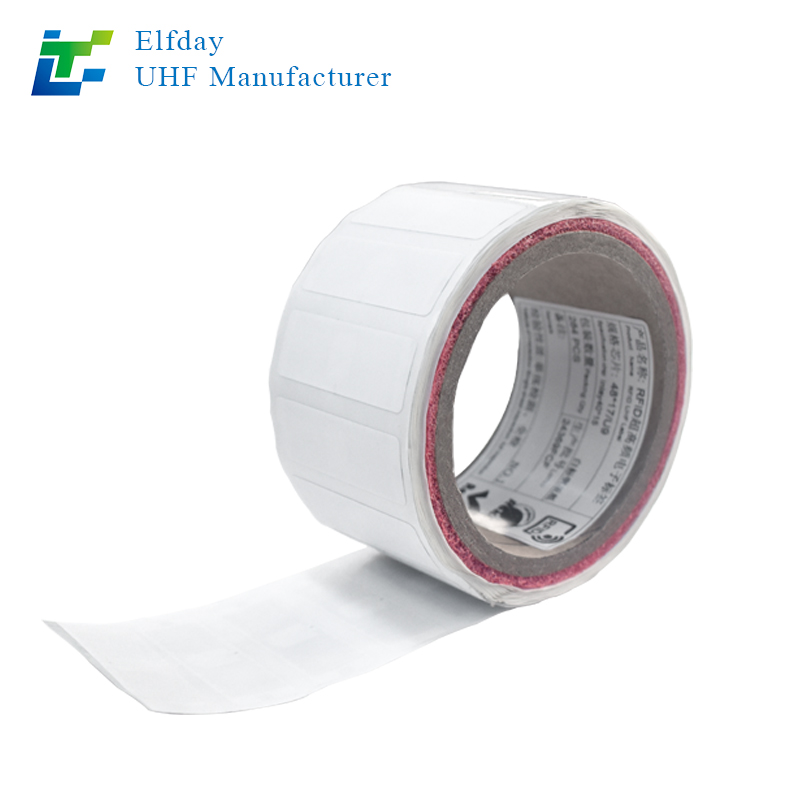
A standard paper label may be inexpensive and effective in a warehouse, but it may not survive industrial chemicals, moisture, abrasion, or outdoor exposure.
Assuming Waterproof Means Chemical Resistant
Water resistance does not automatically mean resistance to solvents, oils, acids, or cleaning chemicals.
Testing Only the RFID Chip
The chip may survive while the adhesive, substrate, antenna, or housing fails.
Ignoring the Mounting Surface
RFID performance can change significantly when a tag is installed on metal, liquid-containing products, or other challenging materials.
Testing Only Once
A tag may survive one exposure but fail after repeated chemical or temperature cycles.
Focusing Only on Physical Durability
A tag can remain physically intact while its read performance decreases. Both durability and RFID performance should be tested.
Chemical-Resistant RFID Tags vs Standard RFID Labels
| Feature | Standard RFID Label | Chemical-Resistant RFID Tag |
|---|---|---|
| Dry indoor use | Suitable for many applications | Suitable |
| Light moisture | May be suitable | Generally better suited |
| Chemical exposure | Limited | Designed for specific chemical conditions |
| Abrasion resistance | Limited | Typically higher |
| Outdoor use | Application dependent | Better suited to demanding conditions |
| High-temperature exposure | Limited | Specific high-temperature designs available |
| Protective housing | Usually minimal | May use sealed or rugged construction |
| Industrial environments | Application dependent | Designed for demanding applications |
The exact performance still depends on the specific tag design and environmental conditions.
Frequently Asked Questions
Can RFID tags withstand oil and grease?
Some rugged RFID tags can be designed for exposure to oils and grease. The actual chemical composition, temperature, exposure duration, and tag materials should be considered before deployment.
Can RFID tags withstand solvents?
Some RFID tags can resist specific solvents, but solvent resistance is not universal. The exact solvent and concentration should be tested with the finished tag.
Can RFID tags be used in chemical plants?
Yes, RFID tags can be used in chemical-processing environments when the tag construction is matched to the chemicals, temperature, moisture, mounting surface, and physical conditions present.
Are rugged RFID tags waterproof?
Some rugged RFID tags are designed to be water-resistant or waterproof, but this depends on their construction and intended application. Water resistance should be verified separately from chemical resistance.
Can RFID tags survive pressure washing?
Some rugged and sealed RFID tags can be designed for repeated washing or pressure-washing conditions. Testing should use the actual water pressure, temperature, cleaning chemicals, distance, and exposure time expected in operation.
Do chemicals affect RFID read range?
They can. Chemicals may damage the tag materials, change the tag's physical structure, or affect the surrounding RF environment. A tag that remains readable under normal conditions may perform differently after prolonged environmental exposure.
RFID tags can withstand chemicals and harsh environments when they are specifically designed and tested for those conditions. Chemical-resistant and rugged RFID tags can use durable materials, protective housings, specialized adhesives, and sealed construction to improve resistance to chemicals, moisture, heat, abrasion, and outdoor exposure.
However, there is no single RFID tag that is automatically suitable for every harsh environment. The right choice depends on the specific chemical, concentration, exposure time, temperature, mounting surface, physical wear, and required RFID read performance.
For demanding applications, testing the complete RFID tag under real operating conditions is the most reliable way to determine whether it can provide the required durability and identification performance over its expected service life.