



How to Build an RFID Tag Specification Checklist for Your Business
Choosing an RFID tag involves more than comparing prices, reading distances, or product dimensions. A tag that works well in one application may deliver inconsistent results in another because of differences in materials, installation methods, environmental conditions, and reader configurations.
For businesses planning a new RFID deployment or expanding an existing tracking program, a clear specification checklist can make the selection process more systematic. It helps purchasing teams, engineers, operations managers, and system integrators work from the same requirements instead of relying on assumptions.
An effective RFID tag specification checklist should document what needs to be tracked, where the tag will operate, how it will be attached, what performance is expected, and how the finished solution will be validated.
This guide explains how to build that checklist, which details to include, and how to use it to compare RFID tag options before committing to a large-scale purchase.
Why Your Business Needs an RFID Tag Specification Checklist
RFID tag selection often involves several departments, each with different priorities. Operations teams may focus on reading speed, engineers may be concerned about physical integration, and procurement teams may prioritize unit cost and supply availability.
Without a shared specification, these priorities can become disconnected.
A documented checklist helps businesses:
-
Define requirements clearly: Everyone understands the intended application and expected performance.
-
Compare products consistently: Different RFID tag options can be evaluated against the same criteria.
-
Identify compatibility issues early: Frequency, protocols, reader settings, and software requirements can be reviewed before deployment.
-
Reduce testing and replacement costs: Potential problems can be identified before tags are purchased in large quantities.
-
Support future expansion: Standardized specifications make it easier to maintain consistent requirements across departments or facilities.
The goal is not to create the longest possible document. It is to capture the information that determines whether an RFID tag can perform reliably in its intended application.
Step 1: Define the Tracking Application
Start by documenting exactly what the RFID tags will identify and how the tracking process will work.
The requirements for tracking reusable plastic containers may differ significantly from those for identifying metal equipment, garments, tools, or products moving through a warehouse.
Record the following information:
| Requirement | Questions to Answer |
| Tracking target | What item, asset, product, or container will be tagged? |
| Application | Is the goal inventory management, asset tracking, work-in-process monitoring, or returnable asset management? |
| Tracking volume | How many tagged items will be handled daily or monthly? |
| Reading process | Will tags be scanned manually, read at a fixed portal, or detected by handheld readers? |
| Movement | Will tagged items remain stationary or move through a reading zone? |
| Deployment scale | Is this a pilot, a single-site project, or a multi-location rollout? |
Also identify the business problem the RFID system is expected to solve. For example, a warehouse may want to reduce manual counting, while a manufacturing facility may need to identify components as they move between production stages.
This context helps determine which specifications are essential and which are optional.
Step 2: Document the Tag Type and Technical Requirements
Once the application is defined, record the technical characteristics required for compatibility with the RFID system.
Frequency and Protocol
Specify the RFID frequency band and communication protocol supported by the intended readers and system.
Common RFID frequency categories include:
-
LF (Low Frequency): Often used in applications such as animal identification and certain access or industrial systems.
-
HF (High Frequency): Used in applications including library management, smart cards, and some item-identification systems.
-
UHF (Ultra-High Frequency): Common in supply chains, warehouses, retail inventory, and logistics applications where multiple items may need to be identified efficiently.
These categories are not interchangeable. The appropriate choice depends on the application, reader infrastructure, required reading behaviour, and applicable regional regulations.
For UHF deployments, document the relevant air-interface protocol, such as EPC Gen2 / ISO 18000-63, where applicable.
Chip and Memory Requirements
Record the required chip family or approved alternatives, if known, along with the necessary memory capacity.
Consider whether the application needs:
-
A unique identifier for each tagged item.
-
An EPC or equivalent identifier used by the tracking system.
-
Additional user memory for application-specific data.
-
Access or security features supported by the selected chip.
-
A defined identifier structure for integration with existing databases.
Many RFID applications do not need extensive on-tag data storage. The tag may carry an identifier while detailed product information remains in a connected database. Avoid specifying unnecessary memory if it adds cost without improving the workflow.
Physical Dimensions and Form Factor
Document the maximum and minimum acceptable tag dimensions, thickness, weight, and overall shape.
Also specify any restrictions related to mounting space, product appearance, packaging design, or mechanical integration.
For example, a compact tag may be required for a small tool, while a larger industrial tag may be acceptable for a reusable container or heavy asset.
Checklist items:
-
Required frequency and protocol
-
Chip or approved chip alternatives
-
Memory requirements
-
Tag dimensions and thickness
-
Antenna or form-factor constraints
-
Required identification format
Step 3: Specify the Material and Installation Surface
The material on which an RFID tag is installed can significantly affect its performance.
Metal may detune or interfere with a conventional RFID antenna. Liquids can affect radio-frequency performance, particularly in some UHF applications. Plastic, cardboard, glass, fabric, and composite materials can also produce different results depending on their properties and the tag design.
Describe the actual installation surface rather than simply recording the general product category.
For example, specify whether a tag will be attached to painted steel, bare aluminum, a plastic enclosure, a cardboard carton, or a textile item.
| Installation Surface | What to Specify |
| Metal | Metal type, mounting position, air gap, and whether a purpose-designed on-metal tag is required |
| Plastic | Plastic type, surface curvature, available space, and mounting method |
| Cardboard | Surface condition, packaging structure, and exposure to moisture |
| Glass | Surface curvature, attachment method, and proximity to liquids or metal |
| Fabric | Flexibility, washing requirements, stitching or encapsulation, and abrasion exposure |
| Composite materials | Material composition, thickness, and installation geometry |
Include a requirement to test the tag on the actual item or a representative sample. Testing a tag in open air does not necessarily demonstrate how it will perform after installation.
Step 4: Define Read Performance Requirements
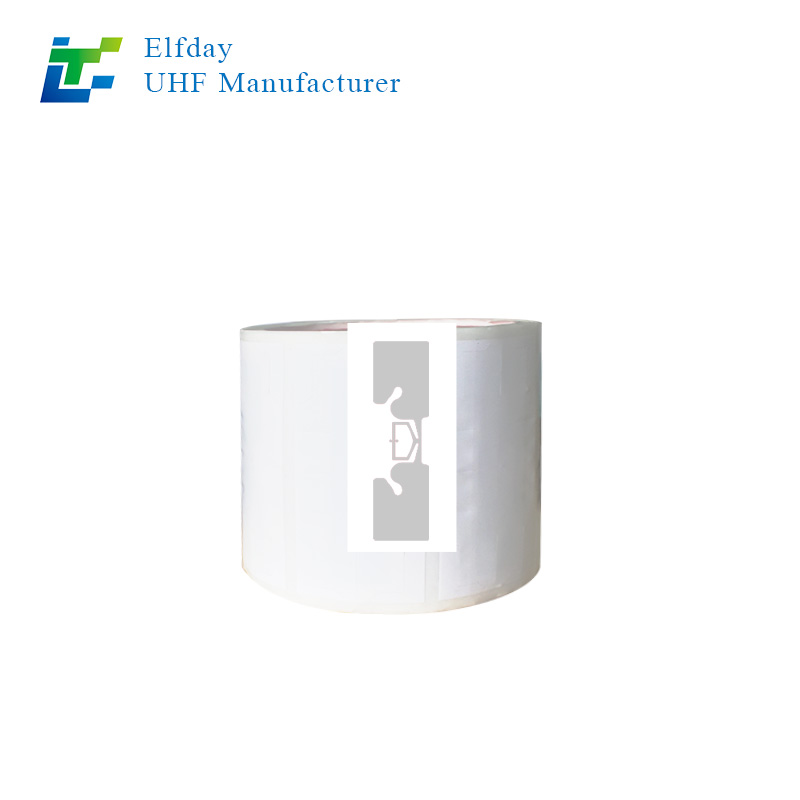
A specification should describe the required reading behaviour under real operating conditions, not simply request the longest possible read range.
A long read range may be useful in some applications but undesirable in others, such as a tightly controlled identification zone.
Document the following:
Required read distance: Define the expected distance between the tag and reader or antenna.
Reading method: Specify whether the application uses handheld scanning, fixed readers, conveyor systems, portals, or another configuration.
Read consistency: State the acceptable identification performance during normal operation.
Item movement: Record typical speeds, directions, spacing, and orientation changes.
Tag population: Estimate how many tags may be present in the reading zone at the same time.
Reading zone boundaries: Identify where tags should be detected and where unwanted reads should be avoided.
Where possible, define measurable acceptance criteria. For example, a pilot may require at least 99% of expected tag reads to be captured during a defined test, with a specified number of trials and operating conditions. This is an illustrative target, not a universal RFID performance standard.
For reliable comparisons, test all candidate tags using the intended reader configuration and a consistent measurement method.
Step 5: Set Environmental and Durability Requirements
The operating environment determines which materials, encapsulation methods, and protection features are necessary.
A tag used inside a climate-controlled warehouse may have very different requirements from one exposed to outdoor weather, cleaning chemicals, vibration, or repeated mechanical handling.
Record the actual conditions the tag must tolerate.
| Environmental Factor | Information to Record |
| Temperature | Normal operating range, minimum and maximum exposure, and duration of temperature extremes |
| Moisture | Rain, condensation, humidity, washing, or temporary immersion |
| Chemicals | Cleaning agents, oils, solvents, or process chemicals that may contact the tag |
| Mechanical stress | Impact, vibration, abrasion, bending, or compression |
| Outdoor exposure | UV radiation, weather changes, and prolonged environmental exposure |
| Repeated use | Expected service cycles, handling frequency, and replacement expectations |
Avoid relying on broad descriptions such as "industrial grade" or "waterproof." Specify the actual exposure and request supporting test information where appropriate.
If the tag must withstand repeated washing, high temperatures, or chemical exposure, clarify whether these conditions occur continuously or only during short cycles. Duration and frequency can be as important as the maximum exposure level.
Step 6: Choose the Attachment Method
An RFID tag must remain attached and functional for as long as the tracking process requires.
The attachment method should suit both the tagged item and its operating environment.
Common options include:
-
Adhesive mounting: Suitable for compatible, relatively smooth surfaces when the adhesive can withstand the operating conditions.
-
Screw or rivet mounting: Often considered for durable industrial tags on equipment or reusable assets.
-
Cable ties or straps: Useful for some containers, tools, and items that cannot be drilled or permanently modified.
-
Sewing or textile integration: Appropriate for certain garments, linens, and fabric-based assets.
-
Embedded integration: Useful when the tag can be incorporated into a product or component during manufacturing.
Record whether the attachment must be permanent, removable, tamper-evident, or replaceable.
Also consider surface preparation, available mounting space, installation labour, maintenance access, and the possibility of damage during removal.
A tag with suitable radio performance may still be a poor choice if it becomes detached during normal handling.
Step 7: Confirm Reader and System Compatibility
RFID tags operate as part of a wider system. A suitable tag must work with the reader hardware, software, data structure, and operating procedures used by the business.
Before approving a specification, document:
-
Reader frequency and supported protocols.
-
Required tag and chip compatibility.
-
Antenna configuration and expected tag orientation.
-
Identifier format and database mapping.
-
Data collection and event-processing requirements.
-
Integration with inventory, warehouse, manufacturing, or asset-management software.
-
Applicable standards and regional radio-frequency requirements.
Clarify which requirements are mandatory and which allow alternatives. If a project depends on existing reader hardware, compatibility should be confirmed before selecting a tag solely on the basis of price or physical design.
For multi-site deployments, document any regional differences in permitted frequency bands or equipment configurations.
Step 8: Establish Quality, Testing, and Documentation Requirements
A complete specification checklist should explain how a candidate tag will be evaluated and what evidence is required before approval.
Request relevant documentation from the manufacturer or supplier, such as:
-
Product datasheets and technical drawings.
-
Supported frequency and protocol information.
-
Environmental and durability test results.
-
Installation instructions.
-
Applicable compliance documentation.
-
Sample identification or traceability information.
-
Quality-control and batch-consistency information, where available.
The documentation required will depend on the application and the level of risk associated with a failure.
Create a Practical Validation Plan
Test candidate tags using representative products, installation methods, readers, and operating conditions.
A useful validation plan can include:
-
Physical fit test: Confirm that the tag fits the available space and can be installed correctly.
-
Read-performance test: Measure identification performance using the intended reader and antenna setup.
-
Environmental test: Expose samples to the relevant temperature, moisture, chemicals, or mechanical stress.
-
Workflow test: Confirm that tag reads produce the correct records and actions in the business system.
-
Repeatability test: Check whether results remain consistent across multiple samples and test runs.
-
Acceptance review: Compare the results against documented pass/fail criteria before approving bulk procurement.
Testing should be proportionate to the application. A low-risk indoor inventory project may require a simpler validation process than an industrial system where missed identification can interrupt production or create significant asset-control problems.
Step 9: Include Lifecycle Cost and Supply Requirements
The lowest unit price does not always represent the lowest total cost.
A tag that requires frequent replacement, specialised installation, or extensive troubleshooting can increase operating expenses over time.
Your checklist should cover:
-
Unit price at the expected order quantity.
-
Sample and qualification costs.
-
Installation labour and mounting materials.
-
Reader or system changes required for compatibility.
-
Expected service life and replacement frequency.
-
Maintenance and inspection requirements.
-
Lead times and production capacity.
-
Availability of future replenishment orders.
-
Consistency of specifications across batches.
-
Customisation costs, if applicable.
Also document the expected annual demand and any requirements for packaging, labelling, delivery scheduling, or traceability.
For long-term deployments, establish a process for reviewing specification changes. A change in chip, antenna design, material, or manufacturing process may affect performance even if the product name remains the same.
Step 10: Build the Final RFID Tag Specification Checklist
Once the requirements have been collected, consolidate them into a single document that can be shared with suppliers, engineers, procurement teams, and project stakeholders.
The following template can be adapted to most business RFID projects.
| Specification Category | Required Information | Status |
| Application | Tracking target, workflow, deployment scale | To be completed |
| Frequency and protocol | Required band, protocol, regional requirements | To be completed |
| Chip and memory | Chip requirements, identifier format, memory needs | To be completed |
| Physical design | Dimensions, thickness, shape, mounting space | To be completed |
| Surface compatibility | Item material, curvature, metal or liquid proximity | To be completed |
| Read performance | Distance, reading method, consistency, tag population | To be completed |
| Environment | Temperature, moisture, chemicals, impact, UV exposure | To be completed |
| Attachment | Adhesive, screws, ties, sewing, or embedding | To be completed |
| System integration | Reader, antenna, software, database compatibility | To be completed |
| Quality and testing | Samples, documentation, test plan, acceptance criteria | To be completed |
| Lifecycle cost | Unit cost, installation, maintenance, replacement | To be completed |
| Supply requirements | Quantity, lead time, replenishment, batch consistency | To be completed |
For each line, add an owner, a target value or requirement, and a validation method. Use a clear status such as Required, Preferred, Optional, or Not Applicable.
This prevents optional preferences from being mistaken for mandatory specifications and makes it easier to compare supplier responses.
Common Mistakes to Avoid
Even a detailed checklist can be ineffective if it focuses on the wrong information.
Choosing a Tag Before Defining the Workflow
Starting with a product catalogue can lead to selecting a tag that performs well in isolation but does not suit the actual tracking process.
Define the application and reading method first.
Specifying Only Maximum Read Range
Maximum range alone does not indicate whether a tag will be identified consistently in a crowded warehouse, near metal, or while moving.
Include read consistency and operating conditions in the acceptance criteria.
Using General Environmental Descriptions
Terms such as "heavy-duty," "outdoor," and "water-resistant" can mean different things to different suppliers.
Document measurable exposure conditions and request relevant evidence.
Ignoring Installation Details
A tag's performance can change after it is mounted on the target item. The checklist should specify the surface, attachment method, and installation position.
Leaving Acceptance Criteria Undefined
Without agreed testing methods and pass/fail thresholds, teams may disagree about whether a tag is suitable.
Define how performance will be measured before testing begins.
Over-Specifying Unnecessary Features
Requirements that do not support the application can increase cost and limit the available options.
Separate essential requirements from preferences and review the cost-benefit of specialised features.
Frequently Asked Questions
What should an RFID tag specification checklist include?
It should cover the tracking application, frequency and protocol, chip and memory requirements, physical dimensions, surface compatibility, read performance, environmental durability, attachment method, system compatibility, testing criteria, lifecycle cost, and supply requirements.
Who should create the RFID tag specification checklist?
The checklist should be developed collaboratively. Operations teams define the workflow, engineering teams assess technical and installation requirements, IT or system integrators confirm compatibility, and procurement teams document commercial and supply conditions.
Should businesses request RFID tag samples before bulk ordering?
Yes, whenever practical. Samples allow teams to validate physical fit, reading behaviour, attachment, and environmental suitability under representative conditions before committing to a large order.
How detailed should the specification be?
The level of detail should reflect the project's complexity and the consequences of failure. A basic inventory application may need a relatively short checklist, while a multi-site industrial deployment may require detailed technical limits, test procedures, documentation, and change-control requirements.
Can one RFID tag specification work across multiple applications?
Sometimes, but not always. Standardisation can simplify procurement and maintenance, yet different surfaces, environments, and reading methods may require different tag designs. Validate each intended application before adopting a common specification.
How can businesses compare RFID tag suppliers fairly?
Provide each supplier with the same checklist and request responses in a consistent format. Compare mandatory requirements first, then evaluate performance evidence, lifecycle costs, supply reliability, and results from a common test plan.
Building an RFID tag specification checklist is a practical way to turn a broad tracking objective into clear, testable requirements.
By documenting the application, technical parameters, installation surface, read performance, environmental conditions, system compatibility, validation criteria, and lifecycle costs, businesses can make more informed selection decisions and reduce avoidable problems during deployment.
The most effective checklist is not necessarily the most complicated one. It is the one that captures the requirements that matter, distinguishes mandatory criteria from preferences, and provides a reliable basis for testing and approval before large-scale purchasing.
Before finalising your specification, review it with the teams responsible for installation, daily operations, system integration, and procurement. Their combined input helps ensure that the selected RFID tag is suitable not only on paper, but also in the environment where it will be used.