

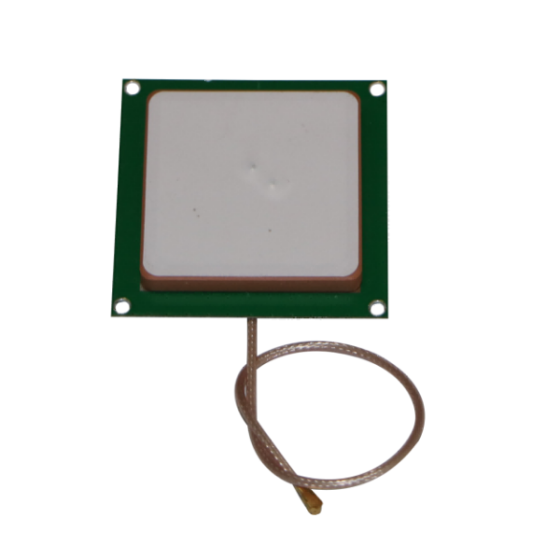
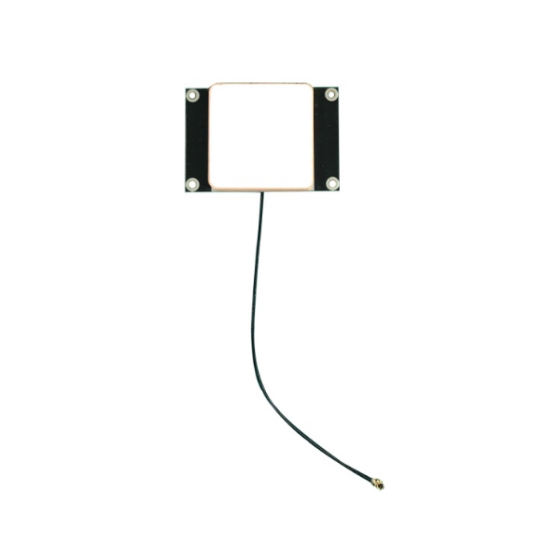
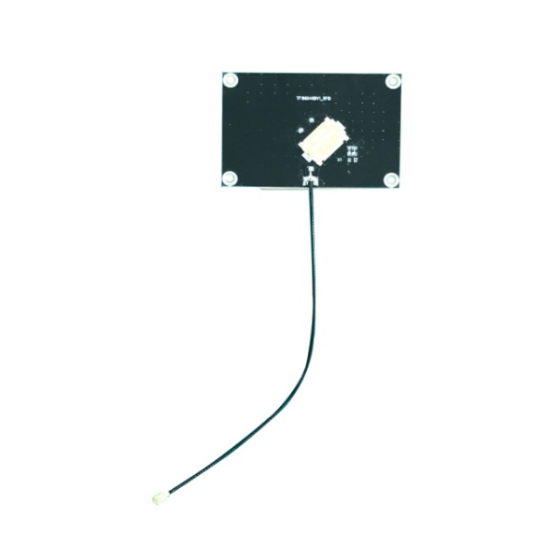


What Should an RFID Tag Evaluation Process Include?
Selecting an RFID tag is not simply a matter of finding a product with the right frequency, read range, or price. A tag may meet its published specifications but still fail to perform as expected when installed on an actual asset, used with a specific reader, or exposed to everyday operating conditions.
For businesses planning an RFID deployment, a structured evaluation process helps turn technical requirements into informed purchasing and implementation decisions. It provides a consistent way to screen potential tags, test samples, compare results, and determine whether a candidate is ready for production use.
An effective RFID tag evaluation process should include requirement definition, candidate screening, sample inspection, compatibility testing, performance validation, environmental assessment, cost analysis, and final approval.
This guide explains what each stage should involve, how to document the results, and how to avoid common evaluation mistakes before committing to a large-scale deployment.
Why Is an RFID Tag Evaluation Process Important?
RFID tags operate as part of a larger identification system. Their performance depends on the tag design, installation surface, reader configuration, antenna placement, surrounding materials, and the workflow in which the tags are used.
Choosing a tag based on a datasheet alone can leave important questions unanswered. Will it work on the intended material? Can it be read consistently at the required distance? Will its attachment remain secure? Can the tracking software process its identifier correctly?
A formal evaluation process helps businesses answer these questions before purchasing large quantities.
Key benefits include:
-
Lower selection risk: Identify unsuitable tag designs before deployment.
-
More consistent comparisons: Evaluate different candidates using the same criteria.
-
Better system compatibility: Confirm that tags work with existing readers and software.
-
Fewer operational disruptions: Detect potential read failures and installation problems early.
-
Improved cost control: Consider installation, replacement, and maintenance costs alongside unit price.
-
Clearer approval decisions: Use documented evidence instead of subjective preferences.
The evaluation process should be proportionate to the application. A basic indoor inventory project may require a relatively simple test plan, while a critical industrial tracking system may need more extensive validation and formal acceptance criteria.
Step 1: Define the Application and Business Requirements
The first stage is to establish what the RFID tag must accomplish.
Before comparing products, document the tracking objective, the target items, the operating environment, and the expected workflow. These details determine which technical specifications matter and which tests are necessary.
Start with the following questions:
-
What items or assets will be tagged?
-
Where will the tags be installed and used?
-
How will the tags be read: handheld, fixed-reader, portal, or automated equipment?
-
What read distance and identification behaviour are required?
-
Will items remain stationary or move through reading zones?
-
How many tagged items may be present simultaneously?
-
How long must the tags remain functional?
-
What are the consequences of a missed or incorrect identification?
-
What readers, software, and databases are already in use?
Translate the answers into clear requirements.
For example, a warehouse inventory project may prioritise reliable bulk identification, while a manufacturing application may require tags that remain readable on metal components during repeated handling.
At this stage, separate requirements into three categories:
| Requirement Category | Meaning | Example |
| Mandatory | Must be satisfied for the tag to be considered | Compatible frequency and protocol |
| Preferred | Provides an advantage but is not essential | Smaller dimensions or easier installation |
| Optional | Useful only if the application needs it | Additional user memory or a custom housing |
This distinction prevents unnecessary features from becoming purchasing requirements and helps keep the evaluation focused.
Step 2: Screen Candidate RFID Tags Against the Requirements
Once the application requirements are documented, create a shortlist of candidate tags.
The purpose of initial screening is to eliminate products that clearly do not meet the basic requirements before spending time and resources on detailed testing.
Review each candidate's technical documentation and compare the following:
Frequency and protocol: Confirm compatibility with the intended reader infrastructure and applicable regional requirements.
Physical dimensions: Check whether the tag fits the available mounting area without interfering with the asset's normal use.
Chip and memory: Determine whether the identifier format and memory capabilities meet the application's needs.
Surface compatibility: Identify whether the tag is suitable for the target material, particularly when metal or liquids are nearby.
Environmental limits: Review the specified temperature range, moisture resistance, chemical compatibility, and mechanical durability.
Attachment options: Confirm whether the tag can be installed using the intended adhesive, fastener, strap, sewing method, or integration process.
Availability: Consider sample availability, expected production quantities, lead times, and future replenishment.
A candidate that fails a mandatory requirement should normally be removed from consideration unless the requirement can be revised for a justified technical or operational reason.
Do not shortlist tags based on product descriptions alone. Use technical specifications and supporting documentation to determine whether a candidate deserves further evaluation.
Step 3: Inspect Samples Before Performance Testing
After narrowing the candidate list, obtain samples and inspect their physical condition.
Sample inspection is a simple but important step. It can reveal issues that may not be obvious from product photographs or specification sheets.
Check:
-
Overall dimensions and thickness.
-
Housing or substrate construction.
-
Antenna and chip protection.
-
Surface finish and visible manufacturing defects.
-
Adhesive quality, where applicable.
-
Mounting holes, slots, or attachment features.
-
Label readability and identifier consistency.
-
Compatibility with the intended installation space.
Where possible, test multiple samples rather than relying on a single unit. Differences in physical construction or manufacturing quality may affect installation and performance.
If the project requires custom RFID tags, confirm that the samples represent the proposed design closely enough to support meaningful evaluation.
Record sample identifiers, product versions, and relevant supplier documentation. This creates a traceable link between the tested product and the tag eventually approved for purchase.
Step 4: Verify Compatibility With Readers and Software
An RFID tag should be evaluated as part of the intended system, not as an isolated component.
Before running extensive performance tests, confirm that each candidate can communicate with the available reader hardware and that the resulting identifier can be processed correctly.
The compatibility review should cover:
-
Supported frequency band and air-interface protocol.
-
Reader and antenna configuration.
-
Tag identification format.
-
Identifier mapping to the correct asset record.
-
Software handling of repeated reads.
-
Data transmission to the relevant business system.
-
Regional radio-frequency and equipment requirements.
A tag may be detected successfully by a reader while still causing problems in the wider workflow. For example, the tracking application may interpret the identifier incorrectly or create duplicate asset events.
Separate tag-level compatibility from system-level integration. This makes troubleshooting more efficient and prevents software or configuration problems from being incorrectly attributed to the tag itself.
Whenever possible, use the intended production reader and software configuration during evaluation. If the configuration must change between candidates, document the changes and account for them when comparing results.
Step 5: Test Read Performance Under Representative Conditions
Performance testing determines whether the shortlisted tags can meet the application's actual identification requirements.
A single successful read is not sufficient evidence of suitability. The evaluation should reproduce normal operating conditions and include the variables most likely to influence results.
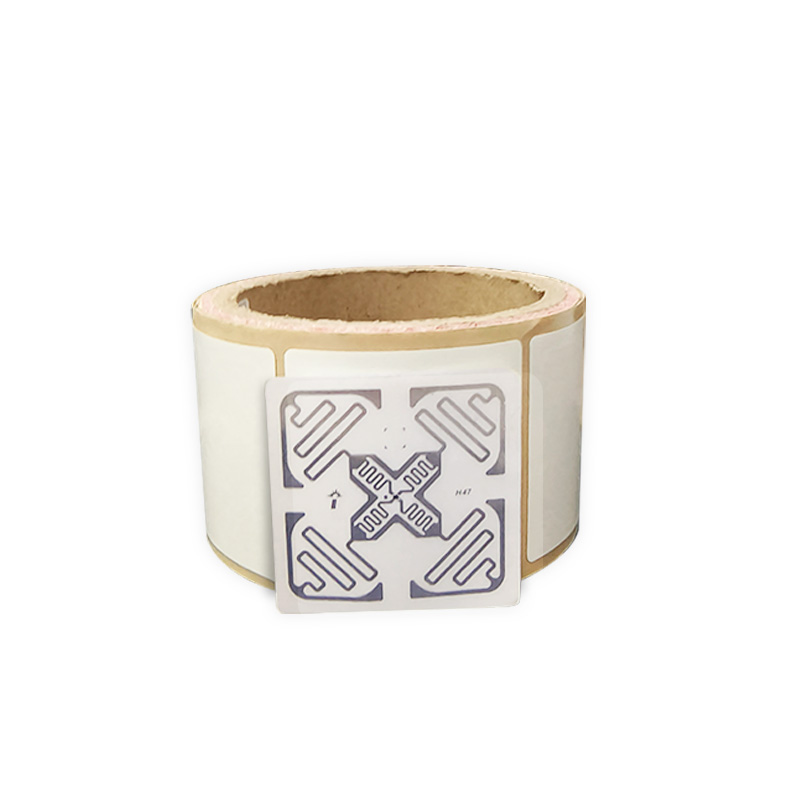
Measure Relevant Performance Indicators
Depending on the application, assess:
-
Read success rate: The percentage of defined expected read opportunities that result in successful identification.
-
Missed-read rate: The percentage of expected opportunities that do not produce a successful read.
-
Unwanted reads: Detection of tags outside the intended reading zone.
-
Read latency: The time needed to obtain a usable identification result.
-
Repeatability: The consistency of results across repeated trials.
-
Identification accuracy: Whether the detected identifier is associated with the correct item or asset.
Define how each metric will be measured before testing begins. In particular, establish what counts as an expected read opportunity and how repeated interrogations of the same tag will be handled.
Test More Than One Operating Condition
Depending on the workflow, include:
-
Stationary tags at their intended mounting positions.
-
Different tag orientations and approach directions.
-
Required reading distances.
-
Items moving at representative speeds.
-
Multiple tags present in the reading zone.
-
Tags installed near relevant materials or structures.
-
Normal variations in item positioning and spacing.
Record results using a consistent test procedure. This makes it easier to identify whether performance changes because of the tag design, installation position, reader configuration, or operating environment.
Avoid relying exclusively on maximum read range. A tag that reads over a long distance may still be unsuitable if the application requires a tightly controlled reading zone or consistent identification during movement.
Step 6: Validate the Tag on the Actual Installation Surface
A tag's performance can change after installation, so testing should reproduce the physical conditions of the intended deployment.
For example, conventional RFID labels may work well on cardboard but experience reduced performance when mounted directly on metal. Curved surfaces, liquid-containing products, protective covers, and nearby structures can also affect the result.
Use representative assets or material samples that reproduce the actual installation.
Document:
-
Surface material and finish.
-
Mounting location and orientation.
-
Distance from nearby metal or liquids.
-
Attachment method.
-
Available mounting space.
-
Any protective cover or enclosure.
-
Reading performance after installation.
If different asset types require different mounting arrangements, evaluate each relevant configuration separately.
A tag suitable for a plastic enclosure should not automatically be approved for a steel housing, even when the two assets use the same reader system.
When a standard tag fails to meet the requirements, consider a purpose-designed alternative, such as an on-metal tag. However, the alternative must pass the same application-specific tests before approval.
Step 7: Evaluate Environmental Resistance and Physical Durability
The next stage is to determine whether the tag can withstand the conditions it will encounter throughout its intended service life.
The required tests depend on the application. A controlled indoor environment may need limited environmental validation, while an industrial or outdoor application may require more extensive assessment.
Consider the following factors:
| Factor | What to Evaluate |
| Temperature | Performance across expected operating conditions and relevant temperature cycles |
| Moisture | Suitability for humidity, rain, condensation, or washing |
| Chemicals | Compatibility with cleaning agents, oils, solvents, or process chemicals |
| Vibration | Attachment stability and continued readability during operation |
| Impact and abrasion | Resistance to damage from handling or contact with surrounding objects |
| UV exposure | Suitability for prolonged outdoor exposure |
| Repeated use | Performance after relevant handling, cleaning, or service cycles |
Do not assume that terms such as "industrial," "rugged," or "waterproof" guarantee suitability. Request relevant test evidence and verify that the tested conditions match the intended application.
After environmental exposure, repeat the relevant read tests and inspect the tag for damage, deformation, or detachment.
Physical appearance alone cannot confirm continued RFID functionality. A tag may look intact but no longer provide acceptable reading performance.
Step 8: Assess Installation and Maintenance Requirements
A technically suitable tag can still be impractical if it is difficult to install, easy to detach, or expensive to maintain.
Evaluate the complete installation process, including surface preparation, tools, labour, mounting materials, and any production changes required.
Consider whether the tag must be:
-
Permanently attached.
-
Removable for maintenance.
-
Tamper-evident.
-
Integrated during manufacturing.
-
Replaced without damaging the asset.
-
Installed in a restricted or difficult-to-access location.
Then examine the maintenance implications.
Estimate how the tag will be inspected, how damage will be detected, and how replacements will be associated with the correct asset records.
For reusable assets, repeated handling and cleaning may make attachment security especially important. For high-value equipment, the cost of finding an asset and replacing an unreadable tag may exceed the original tag price.
Include these practical considerations in the evaluation rather than treating installation as a separate purchasing decision.
Step 9: Compare Total Cost and Supply Considerations
After the technical tests, compare the candidates that meet the mandatory requirements.
A useful comparison includes more than the quoted price per tag. The total cost may include:
-
Unit purchase price.
-
Sample and qualification costs.
-
Installation labour and mounting materials.
-
Reader or software changes.
-
Inspection and maintenance.
-
Replacement and reinstallation.
-
Troubleshooting and manual identification.
-
Operational disruption caused by tag failures.
-
Future replenishment and supply continuity.
Use the same assumptions and evaluation period for every candidate.
For example, a more expensive tag may be justified if it reduces replacement work on frequently reused assets. However, if a standard label meets the requirements and delivers similar service life, the more specialised option may offer little additional value.
Also confirm that the approved tag can be supplied consistently. Changes to chip, antenna, materials, or construction may affect performance even when the product's general description remains unchanged.
Document any requirements for product-change notification, batch traceability, or revalidation.
Step 10: Establish Acceptance Criteria and Make the Approval Decision
Before approving a candidate, compare its test results with the requirements established at the beginning of the evaluation.
A practical acceptance plan should specify:
-
Minimum read success rate.
-
Maximum acceptable missed-read and unwanted-read rates.
-
Required identification latency, where relevant.
-
Correct asset identification and database mapping.
-
Performance on all approved mounting configurations.
-
Acceptable results after relevant environmental tests.
-
Physical integrity and attachment requirements.
-
Installation and maintenance feasibility.
-
Acceptable lifecycle cost.
The thresholds should reflect the application's risk and operating needs. There is no single read success rate that is appropriate for every RFID project.
For example, a business might require a minimum 99.5% read success rate at a defined checkpoint. This is an illustrative target, not a universal industry standard. The test method, sample size, operating conditions, and consequences of failure must be considered when deciding whether the result is sufficient.
Use a formal decision category for each candidate:
-
Approved: Meets all mandatory requirements and has sufficient supporting evidence.
-
Conditionally approved: Meets core requirements but needs a defined corrective action, additional test, or limited-use restriction.
-
Rejected: Fails a mandatory requirement or presents an unresolved risk.
-
Further testing required: Available evidence is insufficient for a defensible decision.
For critical applications, unresolved failures should not be overlooked simply because a candidate performs well in other categories.
Document the final decision, test evidence, approved product version, installation conditions, and any restrictions on use. This creates a reference point for procurement, deployment, and future change management.
RFID Tag Evaluation Checklist
The following checklist summarises the main stages of the process.
| Evaluation Stage | Required Output | Complete? |
| Application definition | Documented tracking objectives and operating conditions | Yes / No |
| Requirement definition | Mandatory, preferred, and optional criteria | Yes / No |
| Candidate screening | Shortlist of technically suitable tags | Yes / No |
| Sample inspection | Physical inspection records and sample identification | Yes / No |
| System compatibility | Confirmed reader, protocol, and software compatibility | Yes / No |
| Read-performance testing | Recorded results using a consistent test procedure | Yes / No |
| Installation validation | Test results on representative assets and surfaces | Yes / No |
| Environmental validation | Relevant durability and post-exposure results | Yes / No |
| Installation assessment | Documented mounting and maintenance requirements | Yes / No |
| Cost comparison | Consistent lifecycle cost estimates | Yes / No |
| Final approval | Decision, evidence, and approved product configuration | Yes / No |
The checklist can be adapted to the complexity of the project. Not every application requires every possible environmental test, but any omitted test should be a deliberate decision based on the actual requirements.
Common Mistakes in the RFID Tag Evaluation Process
Comparing Tags Without a Shared Test Method
Different reader settings, mounting positions, and test conditions can produce misleading comparisons. Use a consistent procedure and document any necessary deviations.
Testing Only Unmounted Samples
Open-air performance does not necessarily represent installed performance. Validate tags on the actual asset or a representative sample.
Focusing Only on Technical Specifications
A tag may meet the basic radio-frequency requirements but be difficult to install, maintain, or replace. Include practical operating considerations.
Leaving Acceptance Criteria Until the End
Defining thresholds after seeing the results can introduce bias. Establish requirements and pass/fail criteria before the main evaluation begins.
Treating All Failure Types the Same
A missed read, an unwanted read, a software mapping error, and a physically detached tag have different causes. Record them separately so the corrective action addresses the actual problem.
Skipping Supply and Change-Control Reviews
A successful sample does not guarantee that future batches will remain identical. Document the approved configuration and establish a process for reviewing material or design changes.
Overcomplicating Low-Risk Applications
An evaluation process should be rigorous enough to control risk without creating unnecessary work. Focus on the conditions and failure modes that matter to the application.
Frequently Asked Questions
What is the first step in an RFID tag evaluation process?
The first step is to define the tracking application and its requirements. Document the target assets, reading method, operating environment, system compatibility needs, expected service life, and consequences of identification failures before screening candidate tags.
How many RFID tag samples should be evaluated?
The required sample size depends on project risk, expected variation between units, manufacturing consistency, and the number of installation configurations. A small pilot may be sufficient for a straightforward application, while a critical deployment may require more samples, repeated trials, and a statistically justified test plan.
Should RFID tag evaluation include field testing?
Yes, when practical. Field testing helps determine whether tags meet requirements under real operating conditions, including actual asset materials, movement, reader placement, and environmental exposure. Laboratory testing can complement field testing when controlled or specialised conditions are needed.
What is the difference between RFID tag testing and validation?
Testing measures a specific characteristic, such as read performance or environmental resistance. Validation determines whether the tag and its implementation meet the intended business requirements. A complete evaluation process usually includes both.
When should a candidate RFID tag be rejected?
A candidate should normally be rejected if it fails a mandatory requirement, cannot achieve the required performance under representative conditions, is incompatible with the intended system, or presents an unacceptable operational risk. Additional testing may be appropriate when the evidence is incomplete rather than clearly negative.
How often should an approved RFID tag be re-evaluated?
Re-evaluation may be needed when the tag design, chip, antenna, materials, supplier, reader configuration, installation method, or operating environment changes. Businesses should also review performance when recurring failures indicate that the original evaluation no longer reflects actual conditions.
An effective RFID tag evaluation process is a structured sequence of decisions, tests, and documented approvals.
It begins with clear business requirements, screens unsuitable candidates early, verifies physical and system compatibility, tests performance under representative conditions, and assesses environmental durability, installation effort, and lifecycle cost.
The final approval should be based on predefined acceptance criteria and sufficient evidence that the selected tag meets the intended application's requirements.
By following a repeatable evaluation process, businesses can reduce selection uncertainty, improve deployment readiness, and establish a stronger foundation for reliable RFID tracking over the long term.