




How to Identify RFID Tag Compatibility Issues Before Deployment
Identifying RFID tag compatibility issues before deployment is essential to ensuring a successful RFID tracking project. Even if an RFID reader and antenna have excellent technical specifications, the system may not perform reliably if the selected RFID tags are incompatible with the hardware, operating environment, or application requirements.
For example, an RFID tag may work perfectly in a laboratory but fail when attached to metal equipment, liquid containers, warehouse pallets, or moving vehicles.
The best approach is to evaluate compatibility across five areas: frequency, protocol, hardware, physical environment, and application requirements.
Here is a practical guide to identifying potential problems before full-scale deployment.
Verify RFID Frequency Compatibility
Common RFID frequency ranges include:
|
RFID Technology |
Frequency Range |
Typical Applications |
|
LF RFID |
125–134.2 kHz |
Animal identification |
|
HF RFID |
13.56 MHz |
Access control, NFC, library management |
|
UHF RFID |
860–960 MHz |
Warehousing, logistics, asset tracking |
For UHF RFID projects, regional frequency regulations are particularly important.
For example:
United States: 902–928 MHz.
Europe: commonly 865–868 MHz.
Other regions: frequency allocations vary by country.
Potential compatibility issue: A tag designed for the European UHF band may not deliver optimal performance with a reader configured for the US frequency band.
How to check:
-
Confirm the tag's operating frequency.
-
Verify the reader's supported frequency range.
-
Check the antenna's frequency range.
-
Confirm regional regulatory requirements.
-
Test the complete system using the intended regional configuration.
Check RFID Protocol Compatibility
RFID devices must support compatible communication protocols.
For UHF RFID applications, the most common standard is EPC Class 1 Gen 2 (Gen2) / ISO/IEC 18000-63.
Before purchasing tags, verify:
Whether the RFID tag supports the reader's air-interface protocol.
Whether the reader supports the tag's memory structure.
Whether EPC, TID, and User Memory requirements are satisfied.
Whether the reader can access the required tag data.
Whether the software can correctly decode and process tag information.
Potential compatibility issue: A reader may successfully detect a tag but fail to retrieve the specific memory information required by the application.
How to check: Test tag identification, memory reading, writing, locking, and password operations before deployment.
Evaluate RFID Tag Compatibility with Materials
This is one of the most frequently overlooked compatibility issues in RFID projects.
RFID performance can be significantly affected by the material to which a tag is attached.
Metal Surfaces
Metal can detune the tag antenna and reduce reading performance.
Solution: Use specially designed on-metal RFID tags.
Plastic Products
Many standard RFID labels work well on plastic, but packaging shape, contents, and nearby materials can still affect performance.
Solution: Test the tag on the actual product packaging.
Liquid Containers
Water and other liquids can absorb or detune UHF RFID signals.
Solution: Select liquid-compatible tags and evaluate placement.
Textiles and Fabric
Washing, folding, compression, and repeated handling can affect tag durability and performance.
Solution: Use textile RFID tags designed for the intended washing conditions.
Important: Always test RFID tags on the actual materials and products used in the project, rather than relying exclusively on manufacturer specifications.
Verify RFID Tag and Antenna Compatibility
An RFID system depends on the combined performance of the tag, reader, and antenna.
Even when each component works independently, the overall system may not achieve the expected reading performance.
Check the following specifications:
|
Parameter |
What to Verify |
|
Frequency Range |
Tag, reader, and antenna frequency bands must overlap |
|
Polarization |
Match antenna polarization with tag orientation and design |
|
Antenna Gain |
Ensure sufficient coverage for the application |
|
Reading Distance |
Confirm the required distance is achievable |
|
Tag Sensitivity |
Verify the tag can operate at the required signal level |
|
Reader Power |
Confirm sufficient power within regulatory limits |
|
Antenna Impedance |
Verify proper RF system matching and connections |
Antenna gain alone does not guarantee reading distance. Tag sensitivity, mounting conditions, reader power, and environmental interference also matter.
Check RFID Tag Memory Capacity
Different RFID applications require different amounts of data storage.
Before deployment, determine how much information the tag needs to store.
|
Memory Type |
Typical Purpose |
|
EPC Memory |
Unique product or asset identification |
|
TID Memory |
Chip identification information |
|
User Memory |
Additional application-specific data |
|
Reserved Memory |
Access and kill passwords |
Potential issues include:
Insufficient EPC memory for the required identifier.
Insufficient User Memory for application data.
Incompatible EPC encoding formats.
Different memory configurations across tag models.
Insufficient access rights for reading or writing data.
Recommendation: If your system uses a central database, store only the essential identification information on the tag and maintain detailed product records in the backend.
This can reduce tag memory requirements and simplify system management.
Test RFID Tag Reading Performance in Real Environments

Laboratory testing is useful, but actual deployment conditions can reveal problems that are difficult to identify in advance.
Conduct pilot tests under the following conditions:
|
Test Scenario |
Potential Problem |
Evaluation Method |
|
Multiple tags together |
Missed or inconsistent reads |
Simultaneous tag reading |
|
Tags attached to metal |
Antenna detuning |
Compare reading performance |
|
Tags near liquids |
Signal absorption |
Test actual container contents |
|
Moving products |
Insufficient reading time |
Test at operational speed |
|
Different tag orientations |
Polarization mismatch |
Rotate tags during testing |
|
High-density environments |
RF interference |
Test multiple readers and antennas |
|
Long-term operation |
Tag damage or failure |
Environmental durability testing |
Measure the following indicators:
Tag read rate.
Reading distance.
Identification accuracy.
Reading response time.
Missed read frequency.
Duplicate read frequency.
For meaningful results, compare actual test results against predefined project benchmarks.
Evaluate Environmental and Physical Durability
RFID tags must withstand the environmental conditions in which they will operate.
Important factors include:
|
Environmental Factor |
What to Check |
|
Temperature |
Operating and storage temperature ranges |
|
Humidity |
Moisture resistance |
|
Water Exposure |
Waterproof rating and sealing |
|
Dust |
Dust protection |
|
UV Exposure |
Resistance to sunlight |
|
Mechanical Impact |
Resistance to vibration and physical damage |
|
Chemicals |
Compatibility with cleaning agents and industrial chemicals |
For outdoor logistics and vehicle management, also evaluate weather exposure, mounting stability, and long-term adhesive performance.
An IP rating should not be treated as proof of RFID performance under every environmental condition. Electrical performance and physical durability should be tested separately.
Conduct a Pre-Deployment RFID Compatibility Test
Before full deployment, establish a standardized testing procedure.
-
Select representative RFID tags
Choose samples from the actual tag models and batches being considered.
-
Verify hardware specifications
Check reader frequency, protocol, antenna specifications, and connection compatibility.
-
Test different mounting materials
Evaluate tags on metal, plastic, cardboard, liquid containers, or other actual products.
-
Measure reading performance
Record read rate, distance, response time, and identification accuracy.
-
Conduct environmental testing
Evaluate temperature, humidity, water exposure, and mechanical durability as applicable.
-
Validate software integration
Confirm that tag IDs and required memory data are correctly processed by the RFID management platform.
-
Approve or reject the tag model
Compare test results against predefined acceptance criteria before mass deployment.
RFID Tag Compatibility Pre-Deployment Checklist
Use the following checklist to evaluate whether an RFID tag is suitable for your project.
Compatibility assessment
Tag frequency matches the reader and antenna
RFID communication protocol is supported
Regional frequency regulations are satisfied
Tag is compatible with the mounting material
Reading distance meets project requirements
Tag polarization and orientation are suitable
EPC and User Memory capacity are sufficient
Reader can correctly read and write required data
Tag read rate meets the acceptance target
Tag withstands operating temperature and humidity
Waterproofing and mechanical durability are adequate
Software correctly identifies and processes tag data
Reset checklist
Common RFID Compatibility Issues and Solutions
|
Compatibility Issue |
Possible Cause |
Recommended Solution |
|
Short reading distance |
Tag detuning or low sensitivity |
Select a suitable tag |
|
Unstable reading |
Poor tag orientation |
Optimize tag positioning |
|
Tags cannot be detected |
Frequency mismatch |
Verify frequency compatibility |
|
Inconsistent identification |
RF interference |
Optimize antenna installation |
|
Data cannot be read |
Memory or protocol mismatch |
Verify tag memory configuration |
|
Poor performance on metal |
Standard tag used on metal |
Use on-metal RFID tags |
|
Poor performance near liquids |
Signal absorption |
Use liquid-compatible tags |
|
Frequent tag failures |
Environmental damage |
Select more durable tags |
Identifying RFID tag compatibility issues before deployment can significantly reduce installation costs, minimize system failures, and improve overall tracking accuracy.
The most important factors to evaluate are:
-
Frequency and protocol compatibility.
-
Tag compatibility with materials.
-
Reader and antenna compatibility.
-
Memory capacity and data requirements.
-
Reading performance in actual environments.
-
Environmental durability.
-
Software and system integration.
My recommendation: Never approve an RFID tag based solely on its datasheet. Test the complete RFID system using the actual reader, antenna, tag, mounting material, and operating environment before purchasing tags in bulk.
Practical application: RFID hardware selection
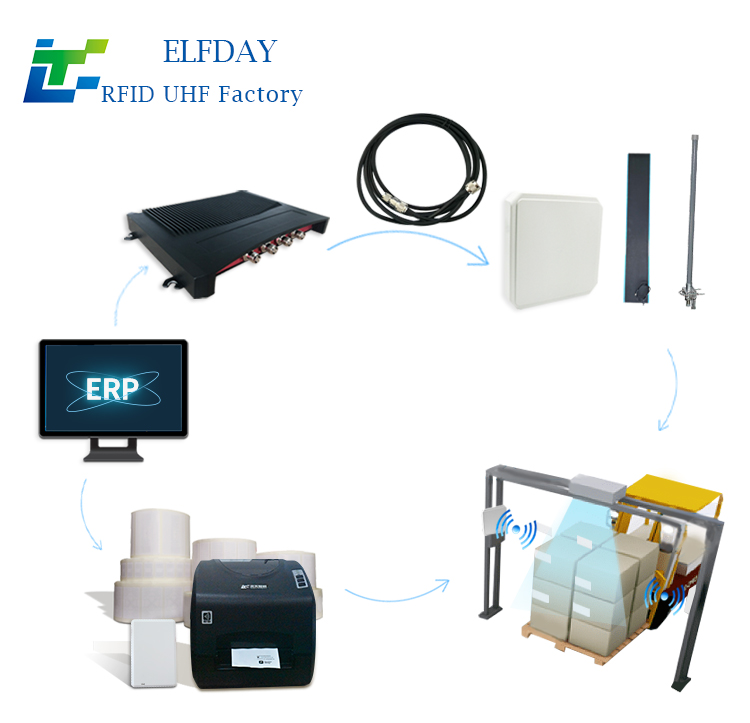
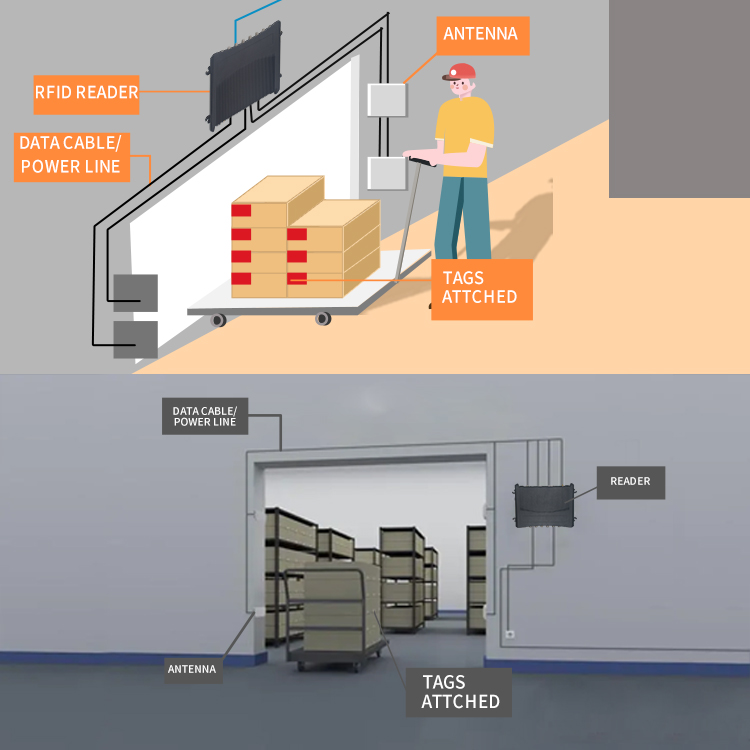
For an RFID tracking solution, the compatibility evaluation should cover all three major hardware components:
RFID Reader:Frequency, protocol, output power
RFID Antenna:Gain, polarization, beam width
RFID Tag:Chip, sensitivity, material compatibility
Evaluating these components together is the most reliable way to avoid RFID compatibility problems before deployment.