




Warehouse Apparel RFID Tags for Bulk Inventory Management
Managing apparel inventory in a warehouse can be challenging, especially when thousands of garments are stored, sorted, moved, and shipped every day. Traditional barcode scanning requires workers to identify and scan items individually, making large-scale inventory counting time-consuming and labor-intensive.
Warehouse apparel RFID tags provide a more efficient solution by enabling multiple garments to be identified simultaneously using radio frequency identification technology. With UHF RFID tags, warehouse operators can improve bulk inventory counting, track garment movements, verify shipments, and maintain more accurate stock records.
Whether managing a clothing distribution center, garment manufacturing facility, wholesale warehouse, or retail fulfillment operation, RFID technology helps transform manual inventory processes into a more automated and data-driven system.
What Are Warehouse Apparel RFID Tags?
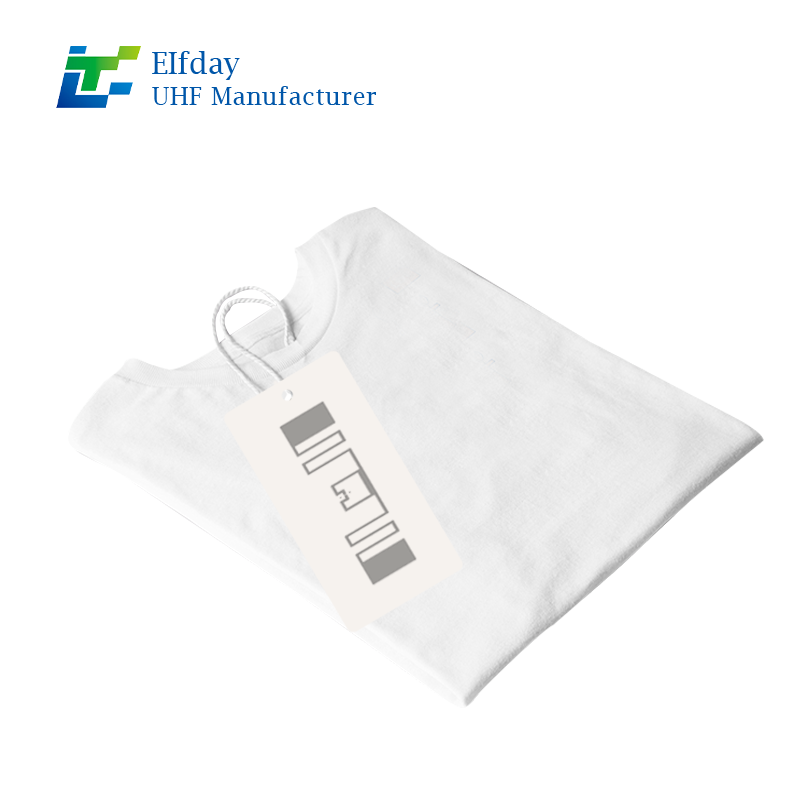
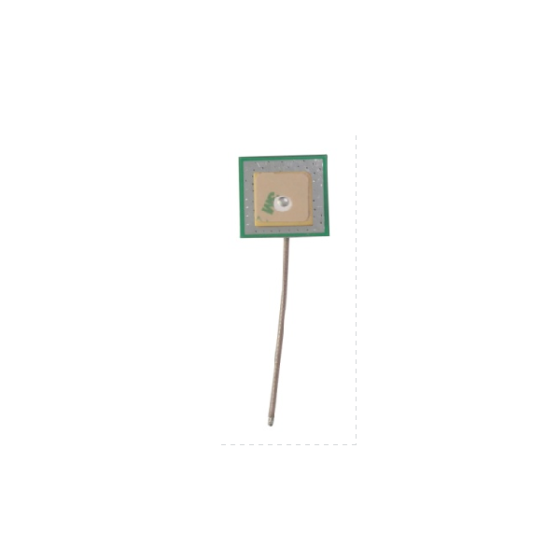
Warehouse apparel RFID tags are electronic identification tags attached to clothing items, garment labels, hangtags, or packaging. Each tag contains an RFID chip and antenna that communicate wirelessly with an RFID reader.
Unlike traditional barcodes, which require direct visual scanning, RFID tags can be detected without placing the tag directly in front of a scanner.
For apparel warehouse applications, passive UHF RFID tags are commonly used because they support fast item identification, bulk reading, and integration with inventory management systems.
An RFID apparel tag can be associated with important garment information, including:
Product ID or SKU
Product name and style number
Clothing size
Color and material
Batch or production number
Unique EPC identification number
Warehouse location
Inventory and shipment status
By connecting RFID identification data with a warehouse management system (WMS), businesses can maintain more detailed records of individual garments and their movements throughout the supply chain.
How Do RFID Tags Improve Bulk Apparel Inventory Management?
The biggest advantage of warehouse apparel RFID tags is their ability to identify multiple tagged garments in a single reading process.
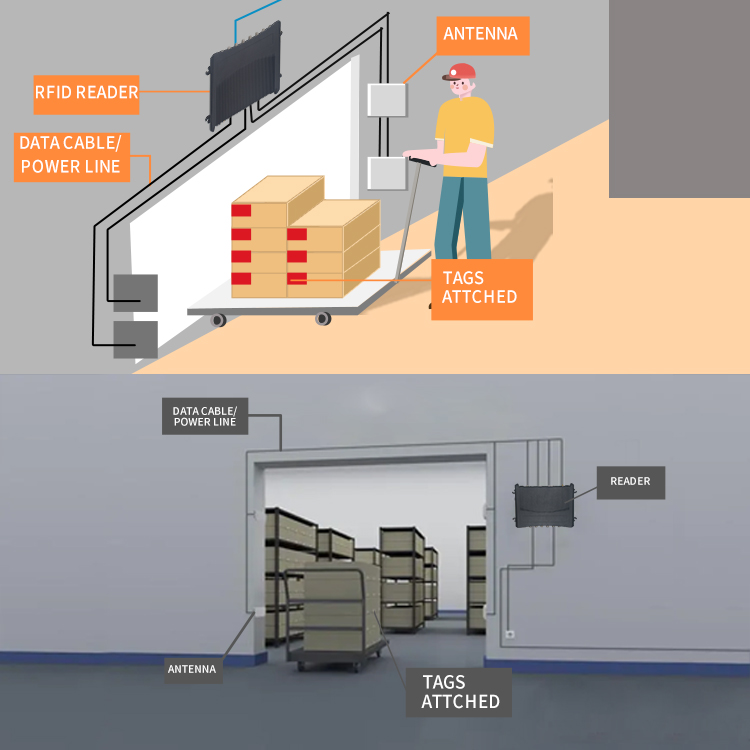
Instead of scanning every clothing barcode individually, warehouse employees can use handheld RFID readers or fixed RFID reading equipment to capture information from multiple tags within the reader's effective range.
This makes bulk inventory operations faster and more convenient.
1. Faster Bulk Clothing Inventory Counting
Manual clothing inventory counting often requires employees to open cartons, separate garments, check product labels, and record quantities one by one.
This process becomes increasingly difficult when warehouses handle large quantities of clothing in different styles, colors, and sizes.
With UHF RFID technology, employees can use handheld RFID readers to scan tagged garments across storage areas, racks, or designated inventory zones.
The system collects multiple tag identification numbers and compares them with existing warehouse inventory records.
This helps businesses:
Reduce repetitive manual barcode scanning.
Count large quantities of garments more efficiently.
Identify missing or unexpected inventory.
Compare physical stock with system records.
Perform regular inventory cycle counts.
The actual reading performance depends on tag placement, reader configuration, garment density, and warehouse conditions.
2. Accurate Inbound Goods Verification
When apparel shipments arrive at a warehouse, employees need to verify whether the received garments match the purchase order or shipping documents.
Traditional verification may require opening cartons and manually checking garment quantities, styles, and sizes.
RFID technology can simplify this process.
By using RFID readers at receiving stations or conveyor systems, warehouse operators can identify tagged garments as they enter the facility.
The inventory management system can compare the collected EPC data with expected shipment information.
If the system detects discrepancies, employees can investigate potential problems such as:
Missing garments.
Incorrect clothing sizes.
Wrong product styles or colors.
Unexpected items.
Differences between shipping records and received quantities.
This improves receiving efficiency and helps establish more reliable inventory records from the beginning.
3. Better Warehouse Stock Location Management
Knowing how many garments are in stock is important, but knowing where those garments are stored is equally essential.
RFID technology can help warehouse operators associate garment identification records with specific storage locations.
For example, when tagged clothing is moved into a designated storage area, employees can use handheld RFID readers or fixed reading stations to record the movement.
The WMS can then update the corresponding inventory location.
This helps warehouse teams:
Locate specific garment styles and sizes.
Identify stock stored in incorrect locations.
Reduce unnecessary searching.
Improve picking efficiency.
Maintain better visibility across warehouse storage areas.
RFID does not automatically provide precise indoor positioning with every setup. Location accuracy depends on the reading infrastructure and the warehouse management process.
4. Improved Order Picking and Packing Verification
Apparel warehouses often process orders containing multiple clothing styles, sizes, and colors.
Picking the wrong garment can lead to customer complaints, returns, additional shipping costs, and operational delays.
RFID technology helps improve order accuracy by comparing the garments collected by warehouse employees with the information in the order.
During picking and packing, RFID readers can identify tagged garments and verify whether the selected products match the required order details.
For example, an order may require:
20 black T-shirts, size M.
15 white T-shirts, size L.
10 blue jackets, size XL.
The RFID system can identify the corresponding tagged garments and help employees verify the order before shipment.
This reduces dependence on manual checking and supports more consistent order fulfillment.
5. Reliable Outbound Shipment Verification
Before apparel products leave the warehouse, businesses need to ensure that the shipment contains the correct items and quantities.
RFID reading stations can be installed near packing areas, conveyor systems, or warehouse loading zones.
As tagged garments pass through these reading points, the system collects their identification data and compares the results with the shipping order.
If unexpected items or missing products are detected, warehouse employees can investigate before the shipment leaves the facility.
This helps improve shipping accuracy, reduce fulfillment errors, and create more reliable shipment records.

What Types of RFID Tags Are Suitable for Apparel Warehouses?
Choosing the right RFID tag is essential for achieving reliable bulk inventory identification.
Different apparel products and warehouse environments may require different tag formats.
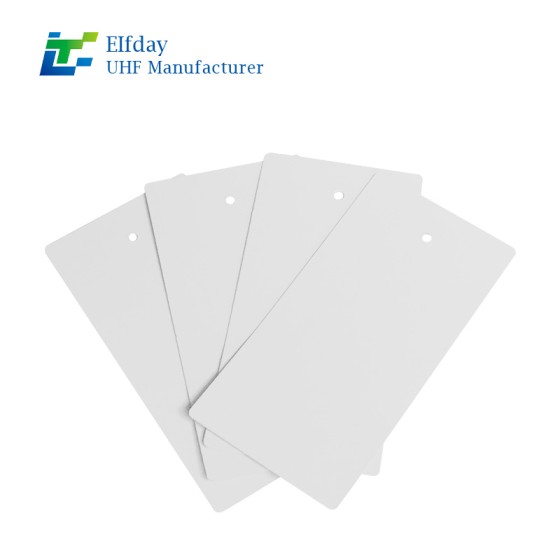
UHF RFID Clothing Hang Tags
UHF RFID clothing hang tags are commonly attached to garments using plastic fasteners or strings.
They can combine RFID technology with traditional product labels, barcodes, pricing information, and brand identification.
Suitable applications:
Clothing manufacturers.
Apparel distribution centers.
Fashion retail warehouses.
Wholesale garment inventory.
Finished garment tracking.
RFID Woven Labels
RFID woven labels integrate an RFID inlay into a textile label that can be sewn into clothing.
They are suitable for applications where RFID identification needs to remain attached to the garment throughout its lifecycle.
Suitable applications:
Uniform management.
Workwear tracking.
Reusable clothing management.
Garment rental operations.
Long-term apparel identification.
RFID Sticker Labels
RFID sticker labels combine an RFID chip and antenna with an adhesive backing.
They can be attached to garment packaging, polybags, cartons, or other suitable surfaces.
Suitable applications:
Garment packaging identification.
Warehouse receiving.
Carton tracking.
Bulk shipment verification.
Inventory labeling.
RFID Laundry Tags
For businesses handling reusable uniforms, hotel textiles, or industrial workwear, specialized textile RFID tags may be more appropriate.
These tags are designed for textile-related conditions and can support repeated washing and handling when the correct tag specification is selected.
They are particularly useful for organizations managing garments across multiple facilities.
UHF RFID Tags vs. Traditional Barcode Labels for Apparel Inventory
Both RFID and barcode technologies can support warehouse inventory management, but they work differently.
| Feature | UHF RFID Tags | Barcode Labels |
| Identification | Radio frequency | Optical scanning |
| Line of sight | Not required | Required |
| Bulk reading | Supported | Usually individual scanning |
| Reading speed | Multiple tags per reading cycle | Depends on individual scans |
| Manual operation | Reduced scanning effort | More manual scanning |
| Data identification | Unique EPC possible | Product barcode identification |
| Warehouse automation | Supports automated reading stations | Supports barcode scanning stations |
For warehouses processing large quantities of garments, UHF RFID can provide significant operational advantages.
However, barcode technology may still be useful for low-volume inventory operations or environments where RFID infrastructure is not necessary.
Many apparel businesses use both technologies together, allowing RFID to support warehouse identification while barcodes remain available for traditional scanning and point-of-sale operations.
How to Choose the Right Warehouse Apparel RFID Tags
Selecting RFID tags should involve more than comparing tag prices.
Businesses need to consider their garments, warehouse layout, reading equipment, inventory processes, and software requirements.
Here are five important factors to evaluate.
1. RFID Frequency and Protocol
UHF RFID is widely used for apparel inventory and supply chain applications because it supports bulk identification and relatively long reading distances.
For many international supply chain applications, passive UHF RFID tags based on the EPC Gen2 / ISO 18000-63 air interface are a common choice.
However, frequency regulations differ between countries and regions. Tags and readers should be selected according to the intended operating market.
2. Tag Size and Attachment Method
The RFID tag should fit the garment and its intended application.
For example:
Hang tags are suitable for finished clothing products.
Woven labels are appropriate for permanent garment identification.
Adhesive labels are useful for packaging and cartons.
Specialized textile tags are suitable for reusable garments.
The attachment method should also ensure that tags remain correctly positioned during storage, transportation, and handling.
3. RFID Chip and Read Performance
Different RFID chips and antenna designs provide different performance characteristics.
Businesses should evaluate reading consistency, tag sensitivity, and compatibility with their RFID readers.
A practical test using actual garments and packaging is recommended before purchasing large quantities.
4. Compatibility with Warehouse Management Systems
RFID tags should work with the company's existing inventory management infrastructure.
The RFID system should be able to associate each EPC with the relevant garment information in the WMS or ERP platform.
This allows warehouse operators to use RFID data for receiving, inventory counting, picking, packing, and shipping operations.
5. Bulk Purchasing and Customization
For large apparel operations, purchasing RFID tags in bulk can help simplify procurement and maintain consistent product specifications.
Depending on the manufacturer, customization options may include:
Custom tag dimensions.
Printed company logos.
Pre-encoded EPC numbers.
Custom product information.
Different label materials.
Various attachment options.
Before placing a large order, request samples and conduct real-world reading tests to confirm that the tags meet your application requirements.
Why Apparel Warehouses Are Adopting RFID Inventory Solutions
As clothing supply chains become more complex, businesses need better ways to manage large product volumes and maintain accurate inventory information.
RFID technology provides several practical benefits.
Faster inventory operations: Multiple tagged garments can be identified in one reading process, reducing the need for individual barcode scanning.
Improved inventory visibility: RFID data helps businesses monitor garment quantities and movements across different warehouse locations.
Fewer manual identification errors: Automated identification reduces dependence on repetitive manual scanning and recording.
Better shipment verification: RFID reading stations can help compare actual shipment contents with expected order information.
More efficient warehouse workflows: Employees can spend less time counting and searching for garments and more time handling important warehouse operations.
Improved supply chain traceability: Unique item-level identification can support product tracking and information sharing between manufacturers, distribution centers, and retailers.
These benefits depend on proper tag selection, RFID infrastructure, software integration, and well-designed warehouse procedures.
Frequently Asked Questions About Warehouse Apparel RFID Tags
1. Can RFID tags identify multiple clothing items at the same time?
Yes. UHF RFID technology supports multi-tag reading, allowing an RFID reader to identify multiple tagged garments within its effective reading area without scanning each barcode individually.
The actual number of readable tags depends on the reader, antenna configuration, tag design, garment arrangement, and surrounding environment.
2. What is the best RFID frequency for apparel warehouse inventory?
UHF RFID is generally a suitable choice for apparel warehouse inventory because it supports bulk identification, item-level tracking, and integration with automated warehouse reading systems.
The specific operating frequency should comply with the regulations of the country where the system will be used.
3. Can RFID tags read clothing inside cartons?
Yes. UHF RFID readers can often identify RFID-tagged garments inside cartons without opening them.
However, reading performance depends on carton materials, garment arrangement, tag orientation, carton density, and the reader configuration. Testing with actual packaging is recommended.
4. Can RFID tags track individual clothing items?
Yes. Each garment can be assigned a unique EPC number.
When the tag is read, the RFID system can retrieve the corresponding garment information, including its SKU, size, color, batch, and inventory status.
5. Are RFID clothing tags reusable?
Most passive UHF RFID clothing hang tags are designed for product identification and are typically used as disposable retail or logistics labels.
Some specialized RFID tags, particularly those designed for reusable textiles and workwear, can be used repeatedly.
Whether a tag is reusable depends on its construction, attachment method, and intended application.
6. Can RFID inventory systems integrate with existing WMS or ERP software?
Yes. RFID systems can integrate with warehouse management systems and enterprise resource planning platforms through middleware, APIs, or other data interfaces.
This enables businesses to connect RFID identification records with receiving, storage, inventory, order fulfillment, and shipping information.
7. How do I choose an RFID tag supplier for bulk apparel inventory?
Look for a supplier with experience in UHF RFID technology, apparel labeling, tag customization, encoding, and large-volume production.
It is also important to evaluate sample quality, reading performance, protocol compatibility, production consistency, and technical support.
Improve Apparel Warehouse Efficiency with RFID Technology
Warehouse apparel RFID tags offer a practical way to improve bulk clothing inventory management.
By enabling multiple garment identification, automated inventory verification, and better stock visibility, UHF RFID technology helps apparel warehouses reduce repetitive manual work and improve operational efficiency.
From garment receiving and storage to order picking and outbound shipment verification, RFID can support more accurate and connected warehouse processes.
If your business manages large volumes of clothing inventory, choosing the right UHF RFID tags is an important step toward building a more efficient warehouse management system.