




Can RFID Tags Be Used on Plastic? What You Need to Know
Yes, RFID tags can generally be used on plastic. In fact, plastic is one of the more common materials for RFID-tagged products, packaging, containers, bins, trays, and equipment.
Unlike metal, most ordinary plastics do not significantly interfere with RFID communication. This allows standard RFID tags to be attached directly to many plastic surfaces.
However, the plastic itself is not the only consideration.
The type of plastic, the contents of the container, tag position, RFID frequency, antenna design, and required read distance can all influence performance.
Understanding these factors can help you choose and position RFID tags more effectively on plastic products and assets.
Why Can RFID Tags Work on Plastic?
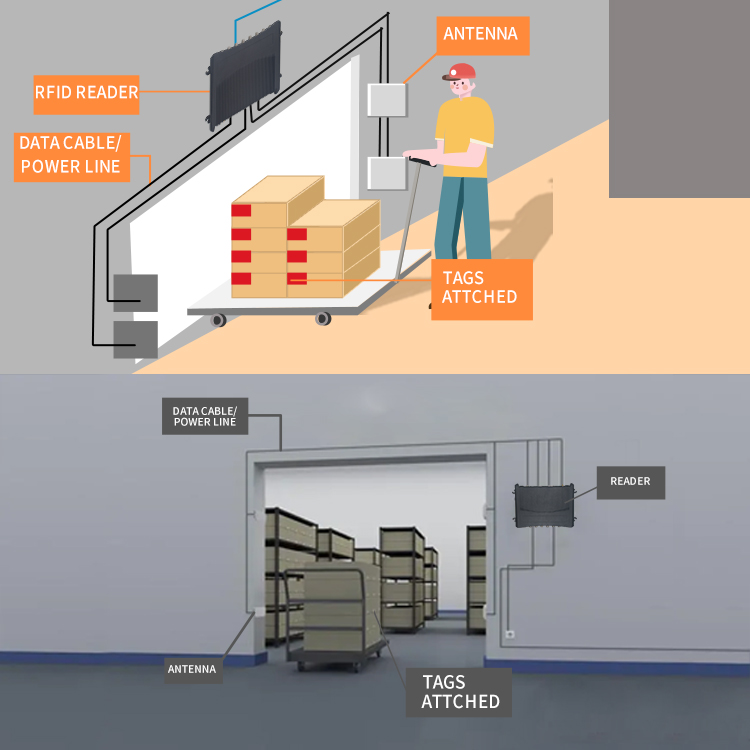
An RFID system communicates using radio-frequency signals rather than optical scanning.
A basic process is:
RFID reader → radio signal → RFID tag → tag response → reader
Most common plastics allow RF signals to interact with the RFID tag without the same level of interference associated with conductive materials such as metal.
This makes many plastic surfaces suitable for RFID applications.
Common examples include:
-
Plastic containers
-
Storage bins
-
Reusable totes
-
Plastic trays
-
Plastic pallets
-
Bottles
-
Packaging
-
Industrial components
-
Equipment housings
-
Waste containers
For many of these applications, an RFID label or hard RFID tag can be attached directly to the plastic surface.
Can RFID Tags Be Attached Directly to Plastic?
Yes.
RFID tags can often be attached directly to plastic using:
-
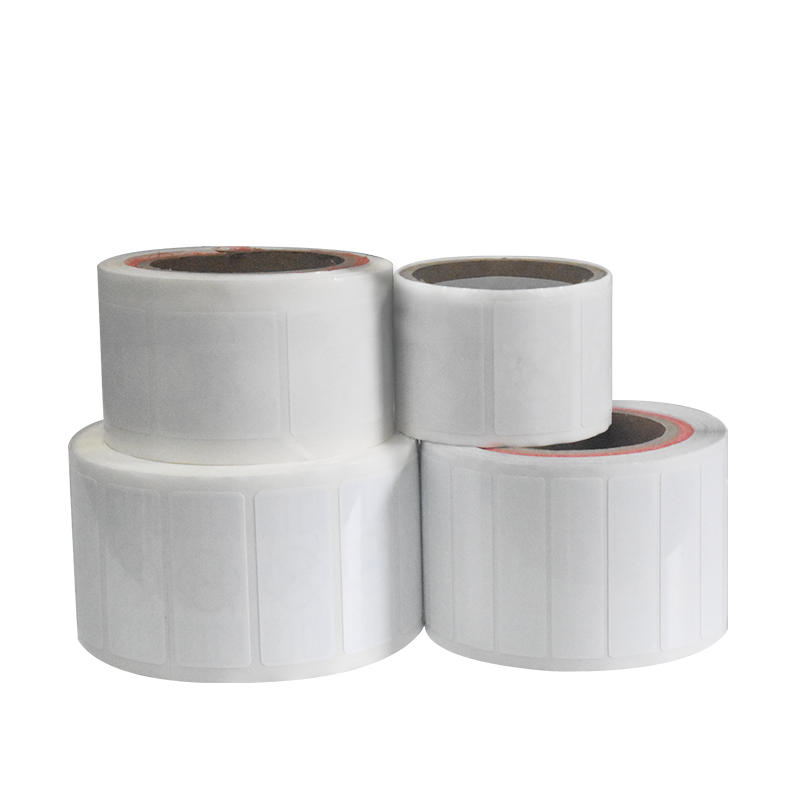
Adhesive labels
-
Self-adhesive inlays
-
Rivets
-
Screws
-
Cable ties
-
Mechanical mounting systems
-
Encapsulated tag housings
The best mounting method depends on how the plastic item is used.
For a disposable plastic package, an adhesive RFID label may be practical.
For a reusable plastic tote that is repeatedly washed and handled, a more durable embedded or mechanically attached RFID tag may be appropriate.
What Types of Plastic Can Be Used With RFID Tags?
Many commonly used plastics can work with RFID.
Examples include:
-
Polyethylene (PE)
-
High-density polyethylene (HDPE)
-
Low-density polyethylene (LDPE)
-
Polypropylene (PP)
-
Polyvinyl chloride (PVC)
-
Polyethylene terephthalate (PET)
-
Acrylonitrile butadiene styrene (ABS)
The exact result depends on the complete product design rather than the plastic name alone.
Plastic thickness, shape, additives, internal contents, and tag location can all affect the final RFID performance.
Therefore, a plastic material should not automatically be considered either "RFID-friendly" or "RFID-unfriendly" without testing the actual application.
Does Plastic Affect RFID Read Range?
Plastic usually has less impact on RFID reading than metal, but it can still influence performance in certain applications.
The bigger issue may be what is inside the plastic container.
For example, compare:
Empty plastic container
with:
Plastic container filled with liquid
The plastic itself may not create a major problem, while the liquid inside can significantly change the RF environment around the tag.
This is particularly important for UHF RFID systems.
Can RFID Tags Be Used on Plastic Bottles?
Yes.
Plastic bottles can be RFID tagged for applications such as:
-
Product identification
-
Inventory management
-
Supply chain tracking
-
Returnable packaging
-
Production tracking
-
Asset identification
However, bottle contents matter.
A dry product inside a plastic bottle may behave differently from a bottle filled with water, chemicals, beverages, or other liquids.
Tag position can therefore be important.
For some applications, placing the RFID tag away from the largest concentration of liquid can improve reading performance.
Can RFID Tags Be Used on Plastic Containers?
Plastic containers are particularly suitable for many RFID applications.
They are commonly used as:
-
Storage bins
-
Reusable totes
-
Distribution containers
-
Manufacturing trays
-
Parts containers
-
Warehouse containers
-
Transport boxes
A typical workflow might look like:
Plastic container
↓
RFID tag attached
↓
Unique tag identity assigned
↓
Container enters warehouse
↓
RFID reader detects tag
↓
System records movement
This allows the container to be identified without manually scanning a visible barcode.
Can RFID Tags Be Used on Plastic Pallets?
Yes.
Plastic pallets can be suitable for RFID tracking because the pallet itself is generally less problematic for RF communication than a metal pallet.
RFID tags can be used to identify:
-
Individual pallets
-
Pallet pools
-
Shipping units
-
Reusable transport assets
-
Warehouse handling equipment
However, pallet construction can vary.
A plastic pallet may contain different materials, structural components, or embedded features that influence the RF environment.
For this reason, testing the tag on the actual pallet design is still recommended.
Can RFID Tags Be Embedded Into Plastic?
Yes.
RFID tags can be integrated into some plastic products during manufacturing.
Instead of attaching a tag to the outside surface, the RFID component can be placed inside the plastic structure.
This approach can provide advantages such as:
-
Better protection from physical damage
-
Reduced risk of tag removal
-
Cleaner appearance
-
Improved durability
-
Better suitability for reusable assets
Embedded RFID is useful for products expected to experience repeated handling, washing, impact, or outdoor exposure.
However, the tag must be positioned and designed appropriately so that the surrounding material does not prevent reliable communication.
Does Plastic Thickness Affect RFID Performance?
Plastic thickness can influence RFID performance, but its effect depends on the specific material and RFID system.
A thin plastic wall is generally straightforward for many RFID applications.
A much thicker plastic structure may create different conditions for the RF field.
The effect also depends on what is behind the plastic.
For example:
RFID tag → thin plastic → air
may behave differently from:
RFID tag → thick plastic → liquid
Therefore, testing the actual product configuration is more useful than evaluating plastic thickness alone.
Does the Color of Plastic Affect RFID?
In most cases, ordinary plastic color is not the primary factor determining RFID performance.
RFID uses radio-frequency communication rather than visible light.
Therefore, a black plastic surface does not inherently create the same kind of problem that a dark surface can create for an optical scanning system.
However, plastic formulations can contain different additives, fillers, pigments, or conductive materials.
If a particular plastic formulation is unusual, RFID performance should be tested on the finished product.
What About Transparent Plastic?
Transparent plastic can also be used with RFID tags.
For example, RFID tags can be applied to or integrated with:
-
Clear containers
-
Plastic packaging
-
Transparent storage boxes
-
Bottles
-
Display packaging
The transparency of the plastic itself is generally not the primary RFID concern.
Instead, pay attention to the product contents and the construction surrounding the RFID antenna.
RFID Tags on Plastic vs. Metal
Plastic and metal create very different RFID environments.
| Factor | Plastic | Metal |
|---|---|---|
| RF environment | Generally easier | More challenging |
| Standard RFID tag | Often suitable | May perform poorly |
| On-metal tag | Usually unnecessary | Often required |
| Tag placement | Relatively flexible | More important |
| Liquid contents | Can affect performance | Can add complexity |
| Testing requirement | Recommended | Particularly important |
This is why an RFID tag designed for ordinary plastic packaging may not work properly when moved directly onto a metal asset.
Can RFID Tags Be Used on Plastic With Liquid Inside?
Yes, but additional testing may be necessary.
This is one of the most important considerations when using RFID on plastic containers.
Examples include:
-
Water bottles
-
Beverage containers
-
Cosmetic bottles
-
Chemical containers
-
Liquid food packaging
-
Pharmaceutical containers
The liquid can absorb or alter RF energy, particularly at UHF frequencies.
The result can be reduced read range or less consistent reading.
Possible solutions include:
Change the Tag Position
Moving the tag to a location with less liquid immediately behind it may improve performance.
Increase Separation
A suitable spacer or packaging structure can sometimes create additional distance between the RFID antenna and the liquid.
Select a Different Tag
Some RFID tags are designed for more challenging materials and applications.
Test Different Orientations
Changing tag orientation relative to the reader can also affect the final result.
What Type of RFID Tag Is Best for Plastic?
There is no single RFID tag that is best for every plastic application.
The right tag depends on:
-
Plastic type
-
Product size
-
Container shape
-
Product contents
-
Required read range
-
RFID frequency
-
Tag mounting method
-
Environmental conditions
-
Expected handling
-
Whether the item is reusable
For a simple plastic box in a dry warehouse, a standard RFID label may be sufficient.
For a reusable plastic tote exposed to moisture and repeated handling, a rugged RFID tag may be more appropriate.
For a plastic bottle containing liquid, tag placement and antenna design become more important.
How to Choose an RFID Tag for Plastic Products
A practical selection process can follow these steps.
Step 1: Identify the Plastic Surface
Determine what the tag will actually be attached to.
Is it:
-
Flexible plastic?
-
Rigid plastic?
-
Smooth plastic?
-
Textured plastic?
-
Thick plastic?
-
A plastic container?
Step 2: Identify the Contents
If the plastic item is a container, determine what is inside it.
Dry products and liquids can create very different RF conditions.
Step 3: Define the Required Read Distance
Decide whether the tag needs to be read from:
-
A few centimetres
-
A short fixed distance
-
Several metres
-
A conveyor
-
A warehouse portal
Step 4: Determine How the Item Moves
Will the item remain stationary?
Or will it:
-
Rotate?
-
Move quickly?
-
Be stacked?
-
Pass through a portal?
-
Be handled manually?
Step 5: Test the Actual Product
Apply the RFID tag to the real plastic item and test it using the intended reader.
This is more reliable than testing the tag separately from the finished product.
How to Improve RFID Performance on Plastic
If an RFID tag is not reading consistently on a plastic product, consider the following adjustments.
Optimize Tag Placement
Try different locations on the plastic surface.
A small change in position can sometimes improve the relationship between the tag and reader antenna.
Test Different Orientations
Rotate the tag and test its performance at different angles.
Check the Product Contents
If the plastic container holds liquid or another RF-sensitive material, test whether moving the tag changes the result.
Adjust Reader Antenna Position
The problem may not be the tag.
Reader antenna location, height, angle, and coverage can significantly affect performance.
Consider a Different Tag Design
If a standard RFID label does not provide the required performance, another antenna design or tag construction may be more suitable.
Common Plastic RFID Applications
RFID tags on plastic are used across many industries and workflows.
Warehousing
Plastic totes and bins can receive RFID tags for:
-
Container identification
-
Inventory movement
-
Picking operations
-
Returnable asset tracking
Manufacturing
Plastic trays and containers can identify:
-
Components
-
Work-in-process materials
-
Production batches
-
Reusable containers
Retail
Plastic packaging can carry RFID tags for:
-
Product identification
-
Inventory visibility
-
Stock management
-
Distribution tracking
Logistics
Reusable plastic transport containers can be tagged to track their movement through supply chains.
Healthcare
Plastic trays, containers, and equipment can be identified using RFID where the application and environment are suitable.
Plastic RFID Tags vs. Barcode Labels
RFID tags provide some advantages over traditional barcode labels for certain plastic applications.
| Feature | RFID | Barcode |
|---|---|---|
| Direct line of sight | Usually not required | Usually required |
| Multiple-item identification | Possible | Generally individual |
| Reading through packaging | Often possible | Not generally possible |
| Orientation tolerance | Often higher | More limited |
| Data capacity | Depends on tag | Usually limited to encoded data |
| Environmental considerations | RF-related | Optical-related |
RFID does not replace barcodes in every application, but it can provide useful automation when many plastic items need to be identified quickly.
Common Mistakes When Using RFID Tags on Plastic
Assuming All Plastic Is the Same
Different plastic products can create different RF conditions.
Always test the finished application.
Ignoring Liquid Contents
A plastic container may look ideal for RFID, but its contents can significantly influence performance.
Choosing a Tag Based Only on Size
A larger tag is not automatically better.
Antenna design, frequency, reader configuration, and placement all matter.
Testing Only One Tag Position
If products can move or rotate, test multiple positions and orientations.
Focusing Only on Maximum Read Range
Reliable identification is usually more important than achieving the longest possible theoretical reading distance.
FAQs
Can RFID tags be used on plastic?
Yes. RFID tags can generally be attached to or embedded in many plastic products, containers, packaging materials, and reusable assets.
Do RFID tags work through plastic?
In many cases, yes. Common plastics generally allow RFID signals to interact with the tag. However, the product contents and overall construction can affect performance.
Can RFID tags be attached directly to plastic?
Yes. Adhesive labels, hard tags, mechanical fasteners, and embedded RFID solutions can all be used depending on the application.
Can RFID tags be used on plastic bottles?
Yes. However, liquids inside the bottle can affect RFID performance, especially with UHF RFID. Tag placement and testing are important.
Can RFID tags be embedded in plastic?
Yes. RFID components can be integrated into some plastic products during manufacturing to provide a more durable and tamper-resistant identification solution.
Does plastic block RFID signals?
Most ordinary plastics do not block RFID signals in the same way that metal can. However, plastic thickness, additives, product contents, and the surrounding environment can still affect performance.
Do I need a special RFID tag for plastic?
Not necessarily. Standard RFID tags can work well on many plastic surfaces. A specialized tag may be appropriate when the plastic product contains liquid, requires high durability, or has other challenging conditions.
Can RFID tags work on black plastic?
Yes. RFID uses radio-frequency communication rather than visible light, so the color of ordinary plastic is generally not a major limitation. The plastic formulation and surrounding materials can still matter.
RFID tags can be used successfully on many types of plastic.
Plastic containers, bottles, totes, trays, pallets, packaging, and equipment can all be suitable RFID applications. In many cases, a standard RFID tag can be attached directly to the plastic surface without requiring a specialized on-metal design.
The most important consideration is that the complete product environment matters.
Plastic type, product contents, tag position, tag orientation, reader antenna configuration, operating frequency, and required read distance can all influence RFID performance.
For simple dry plastic products, RFID deployment is often relatively straightforward. For plastic containers holding liquids or for demanding industrial applications, additional testing and tag selection may be necessary.
The best approach is to evaluate the RFID tag on the actual plastic product and under the actual operating conditions rather than judging compatibility from the plastic material alone.