



Can RFID Tags Be Used on Products With Liquids? A Practical Guide
Yes, RFID tags can be used on products containing liquids. However, liquid-filled products can be more challenging for RFID systems than dry products because certain liquids can absorb or alter radio-frequency energy.
This does not mean RFID is unsuitable for bottles, jars, containers, or other liquid products. RFID is widely applicable to products such as beverages, cosmetics, pharmaceuticals, oils, and cleaning products.
The key is to select and position the RFID tag according to the product's actual material and contents.
For liquid products, factors such as RFID frequency, antenna design, tag placement, distance from the liquid, container material, tag orientation, and reader configuration can all affect reading performance.
Why Can Liquids Affect RFID Performance?
RFID tags communicate with readers using radio-frequency signals.
A simplified communication process is:
RFID reader → RF signal → RFID tag → tag response → RFID reader
When a tag is attached to a product containing liquid, the liquid becomes part of the RF environment surrounding the antenna.
Some liquids, particularly those with high water content, can absorb or alter RF energy. This can reduce the amount of energy available for communication or change the way the tag antenna operates.
As a result, a tag that performs well on an empty container may behave differently after the container is filled.
For example:
Empty bottle → RFID tag → relatively simple RF environment
compared with:
Liquid-filled bottle → RFID tag → more complex RF environment
This is why testing the actual filled product is important.
Can RFID Tags Be Used on Liquid Products?
Yes.
RFID tags can be used for many products containing liquids, including:
-
Bottled water
-
Soft drinks
-
Juice
-
Milk and dairy products
-
Cooking oil
-
Cosmetics
-
Shampoo
-
Skincare products
-
Pharmaceutical liquids
-
Cleaning products
-
Industrial chemicals
The specific RFID solution depends on the liquid, container, required reading distance, and operating environment.
A standard RFID label may work well for one liquid product but require a different tag design or placement for another.
Which RFID Frequency Is Most Affected by Liquids?
The effect of liquids depends partly on RFID frequency.
UHF RFID is particularly sensitive to the presence of water and other materials that interact strongly with RF energy.
This is important because UHF RFID is commonly used when businesses want longer reading distances and fast identification of multiple products.
HF and LF RFID operate differently and are typically used for shorter-range applications.
Therefore, the statement "liquids are bad for RFID" is too broad.
The actual effect depends on the RFID technology and the complete application.
Do Water-Based Products Affect RFID More?
They can.
Water-rich products can have a stronger effect on certain RFID systems, particularly UHF applications.
Examples include:
-
Bottled water
-
Soft drinks
-
Juice
-
Liquid food
-
Milk
-
Water-based cosmetics
However, this does not mean these products cannot be RFID tagged.
Instead, the tag may need to be positioned carefully or designed for the specific product environment.
Can RFID Tags Be Used on Plastic Bottles With Liquid?
Yes.
Plastic bottles are common candidates for RFID tagging.
The plastic itself is generally less challenging for RF communication than metal. However, the liquid inside the bottle can influence the tag's performance.
For example, consider a UHF RFID label attached directly to a bottle.
If the tag is very close to a large volume of liquid, the reading distance may be reduced.
Moving the tag to another position or creating additional separation between the antenna and liquid may improve performance.
The correct solution depends on the bottle design and application.
Can RFID Tags Be Used on Glass Bottles With Liquid?
Yes.
Glass is generally a suitable surface for RFID tags because it is non-metallic.
Glass bottles containing liquids can therefore be RFID tagged for:
-
Product identification
-
Inventory management
-
Production tracking
-
Distribution
-
Returnable packaging
-
Supply chain visibility
However, the same principle applies:
The glass may not be the main issue; the liquid inside the bottle can be more important.
Testing should therefore be performed using the actual filled glass bottle.
How Does Liquid Affect RFID Read Range?
Liquid can reduce the practical read range of an RFID tag in some applications.
The effect may appear as:
-
Shorter reading distance
-
Weaker tag response
-
More inconsistent reads
-
Greater sensitivity to tag orientation
-
Increased missed reads
However, there is no universal reduction in read range.
For example, one tag may work effectively on a particular liquid container while another tag with a different antenna design performs poorly.
This is why RFID read range should be evaluated as a system-level measurement rather than a fixed property of the tag alone.
Does the Type of Liquid Matter?
Yes.
Different liquids can interact with RF signals differently.
Potentially relevant properties include:
-
Water content
-
Electrical characteristics
-
Density
-
Conductivity
-
Chemical composition
For RFID applications, two containers that look almost identical may produce different results if they contain different liquids.
For example:
Empty container
and
water-filled container
may have noticeably different RFID performance.
Likewise, an oil-based product may behave differently from a water-based product.
This is another reason to test the actual product rather than relying solely on the container material.
Does the Container Material Matter?
Yes.
Liquid products can be packaged in:
-
Plastic
-
Glass
-
Metal
-
Composite packaging
Plastic and glass are generally easier environments for standard RFID tags than metal.
Metal containers can significantly alter the RF environment and may require RFID tags specifically designed for metal surfaces.
Therefore, when selecting an RFID tag for a liquid product, consider both:
What is the container made from?
and
What is inside the container?
Both can influence performance.
Where Should RFID Tags Be Placed on Liquid Products?
There is no universal placement position.
The best location depends on the product design, liquid level, tag construction, reader antenna, and required read distance.
Possible tag locations include:
-
Side of the container
-
Upper section
-
Lower section
-
Bottle neck
-
Cap or closure
-
Outer packaging
-
Secondary carton
For example, placing a tag higher on a bottle may create more separation from the liquid than placing it directly in the centre of the liquid-filled area.
However, the actual result must be tested.
Why Is Tag Placement Important?
RFID antennas interact with their surrounding environment.
Moving a tag even a relatively small distance can change its RF conditions.
For liquid products, this can mean the difference between:
Tag close to liquid → potentially weaker performance
and:
Tag positioned with greater separation → potentially better performance
The optimal position depends on the specific product.
Therefore, RFID installation should include placement testing rather than applying every tag in the same location without validation.
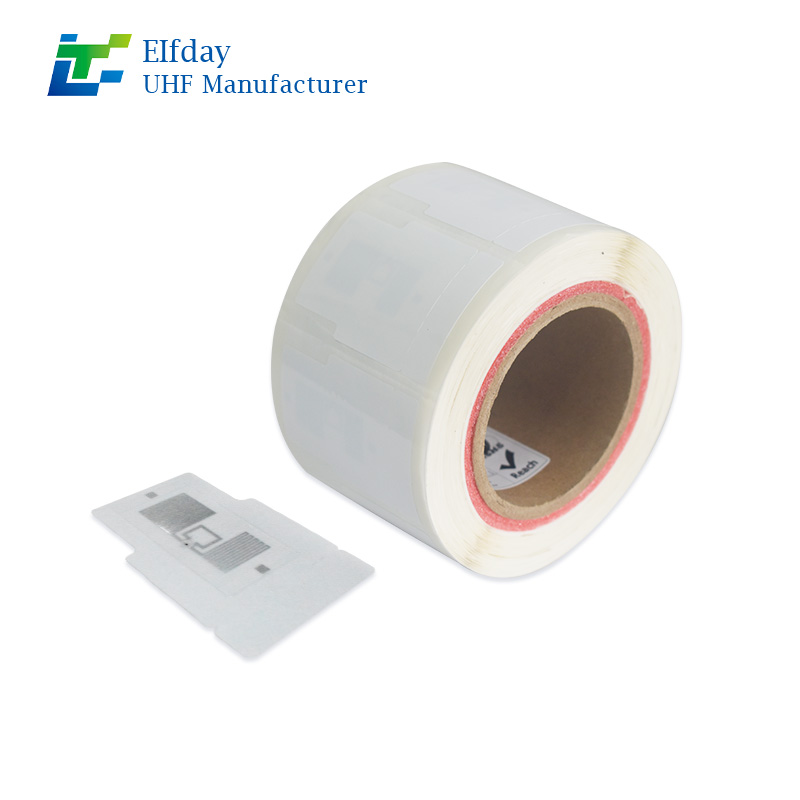
Can a Spacer Improve RFID Performance on Liquid Products?
In some applications, yes.
A spacer can create physical separation between the RFID antenna and the liquid-containing surface.
The basic concept is:
RFID antenna → separation → container wall → liquid
instead of:
RFID antenna → container wall → liquid
Additional spacing can sometimes improve the antenna's operating conditions.
The appropriate spacing depends on the tag design and application, so it should be validated through testing rather than treated as a universal specification.
Can RFID Tags Be Used on Liquid-Filled Containers in Warehouses?
Yes.
Warehouses can use RFID to identify liquid products during:
-
Receiving
-
Put-away
-
Inventory checks
-
Picking
-
Shipping
-
Returns
-
Stock reconciliation
For example:
Liquid products arrive
↓
RFID tags are identified
↓
Inventory system records the items
↓
Products are stored
↓
RFID reader identifies products during movement
↓
Shipment is updated
This can reduce the need for manual product-by-product barcode scanning in suitable applications.
Can RFID Tags Be Used for Beverage Tracking?
Yes.
Beverage products can carry RFID tags on bottles, cans, cases, or pallets depending on the tracking objective.
Potential applications include:
-
Inventory tracking
-
Production identification
-
Distribution
-
Returnable container management
-
Warehouse operations
-
Supply chain tracking
For beverages, the liquid content should be considered during RFID tag selection and testing.
For high-volume operations, it is especially important to evaluate how tags perform when products are packed closely together.
Can RFID Tags Be Used on Cosmetic Products?
Yes.
RFID can be used with liquid or semi-liquid cosmetic products such as:
-
Shampoo
-
Lotion
-
Skin cream
-
Liquid foundation
-
Perfume
-
Hair products
The container may be plastic, glass, or another material.
Because cosmetic products vary considerably in composition, the finished product should be tested rather than assuming that one RFID tag configuration will work across every product.
Can RFID Tags Be Used on Pharmaceutical Liquid Products?
Yes, where the RFID system is appropriate for the application.
RFID can provide individual identification for suitable pharmaceutical containers and packaging.
Potential uses include:
-
Product identification
-
Inventory management
-
Production tracking
-
Distribution tracking
-
Packaging identification
For pharmaceutical applications, RFID performance is only one consideration. The tag and adhesive construction should also be compatible with the required storage, handling, and environmental conditions.
Can RFID Tags Be Used on Chemical Liquids?
Potentially, yes.
Chemical containers can be RFID tagged for asset and inventory identification, but the tag must be suitable for the environment.
Important considerations include:
-
Chemical exposure
-
Temperature
-
Moisture
-
Container material
-
Required durability
-
Adhesive compatibility
-
Read distance
A standard paper RFID label may not be appropriate for a container exposed to aggressive chemicals or harsh industrial conditions.
In such cases, a rugged or encapsulated RFID tag may be more suitable.
How to Improve RFID Read Performance on Liquid Products
If RFID reading is inconsistent, several variables can be tested.
1. Change the Tag Position
Try different areas of the container.
Moving the tag away from the largest concentration of liquid may improve performance.
2. Increase Separation From the Liquid
Where possible, create additional space between the RFID antenna and liquid.
3. Try a Different Tag Design
Different antenna designs can respond differently to liquid-filled products.
4. Test Different Orientations
Rotate the tag and evaluate performance at different angles.
5. Optimize Reader Antenna Placement
The reader antenna should provide suitable RF coverage of the product's actual movement path.
6. Test Different Product Fill Levels
If the product volume changes, RFID performance may change as well.
For example:
Empty → Half Full → Full
may produce different reading results.
7. Test Products in Their Real Packaging
Do not stop at testing the individual bottle.
If bottles will eventually be packed into cartons, cases, or pallets, test the complete configuration.
Why Testing the Finished Product Matters
RFID performance can change as more materials are added around the tag.
Consider the following progression:
RFID tag alone
↓
RFID tag on empty container
↓
RFID tag on filled container
↓
Multiple filled containers together
↓
Case or carton
↓
Pallet
Each stage can create a different RF environment.
A tag that performs well individually may behave differently when dozens or hundreds of liquid products are packed together.
For commercial RFID deployments, testing should therefore reflect the actual operating conditions.
Liquid Products and RFID Read Accuracy
Read accuracy is often more important than maximum read distance.
For example, an RFID system that can theoretically read a tag from a long distance but frequently misses tags may be less useful than a system that provides consistent identification at a shorter distance.
For liquid products, evaluate:
-
Successful reads
-
Missed reads
-
Reading distance
-
Reading speed
-
Product orientation
-
Product density
-
Reader position
The goal should be reliable identification under normal operating conditions.
RFID Tags for Liquid Products vs. Barcodes
RFID can provide different capabilities from conventional barcode identification.
| Feature | RFID | Barcode |
|---|---|---|
| Direct line of sight | Usually not required | Generally required |
| Multiple-item identification | Possible | Usually individual |
| Reading through packaging | Often possible | Limited |
| Sensitivity to liquid environment | RF-related | Mainly optical |
| Reading orientation | Generally more flexible | More directional |
| Automated identification | Strong potential | Usually requires scanning |
RFID does not automatically replace barcodes, but it can provide advantages when large numbers of liquid products need to be identified quickly.
Common Mistakes When Using RFID on Liquid Products
Assuming All Liquids Behave the Same
Different liquids can create different RF conditions.
Testing Only Empty Containers
An empty bottle does not necessarily represent the RFID performance of a filled product.
Placing the Tag Directly Against the Liquid Without Testing
This may reduce performance in some applications.
Ignoring Container Shape
Curved bottles can affect tag positioning and orientation.
Testing One Product at a Time
A warehouse or retail environment may involve many liquid products close together.
Testing should reproduce realistic product density.
Focusing Only on Read Range
Reliable reads are generally more useful than the maximum theoretical distance.
A Practical RFID Testing Process for Liquid Products
A simple test process can look like this:
Step 1: Identify the Product
Record the container material, dimensions, liquid type, and fill level.
Step 2: Select Several RFID Tags
Test tags with different antenna designs where appropriate.
Step 3: Test Multiple Positions
Apply the tags at several locations on the product.
Step 4: Test Different Orientations
Rotate the product and tag to reproduce real-world movement.
Step 5: Test at Different Distances
Measure reading performance at the expected operating distances.
Step 6: Test Multiple Products
Place several tagged products together.
Step 7: Test the Final Packaging
If the products will be shipped in cases or pallets, test the final configuration.
Step 8: Record Read Reliability
Compare successful and missed reads rather than looking only at maximum range.
FAQs
Can RFID tags be used on products with liquids?
Yes. RFID tags can be used on many liquid products, including beverages, cosmetics, pharmaceutical liquids, oils, and cleaning products. However, liquids can affect RFID performance, especially in UHF applications.
Do liquids block RFID signals?
Not necessarily. Some liquids can absorb or alter RF energy and reduce RFID performance, but the effect depends on the liquid, RFID frequency, tag design, and overall application.
Can RFID tags be used on water bottles?
Yes. Water bottles can be RFID tagged, but water can affect UHF RFID performance. Tag position, antenna design, and separation from the liquid may need to be optimized.
Can RFID work through a liquid-filled plastic bottle?
It can, but performance depends on the bottle, liquid, RFID tag, and reader configuration. Testing the actual filled bottle is recommended.
Can RFID tags be used on glass bottles containing liquid?
Yes. Glass is generally compatible with RFID, but the liquid inside the bottle may affect reading performance.
How can I improve RFID reading on liquid products?
Try changing the tag position, increasing separation from the liquid, selecting a tag designed for the application, optimizing reader antenna placement, and testing different tag orientations.
Are special RFID tags required for liquid products?
Not always. Some liquid products can use standard RFID tags, while challenging applications may require a different antenna design or specialized tag construction.
Does liquid affect UHF RFID more than HF RFID?
The interaction is different across RFID frequencies. UHF RFID can be particularly sensitive to water-rich materials, while HF RFID uses a different coupling mechanism and is typically used at shorter distances.
Should RFID tags be placed directly on liquid containers?
They can be, but the position should be tested. In some applications, increasing the distance between the tag antenna and liquid can improve performance.
RFID tags can be used on products containing liquids, but the liquid must be considered during RFID system design and testing.
Beverages, cosmetics, pharmaceutical liquids, oils, cleaning products, and other liquid-containing products can all be potential RFID applications.
The main challenge is that liquids can change the RF environment around the RFID antenna. This can affect read range and consistency, particularly in UHF RFID applications.
The solution is not simply to avoid RFID.
Instead, evaluate the complete application:
Liquid + container + RFID tag + tag position + reader antenna + operating environment
Choosing an appropriate tag, optimizing its position, creating suitable separation where necessary, and testing the actual filled product can significantly improve the reliability of an RFID deployment.
For liquid products, real-world testing is the most reliable way to determine whether a particular RFID tag configuration will meet the required reading performance.