




Choosing RFID Tags for Harsh Industrial Environments
Industrial environments can be challenging for RFID technology. Manufacturing facilities, warehouses, maintenance workshops, and outdoor industrial sites may expose RFID tags to heat, moisture, dust, vibration, chemicals, abrasion, and metal interference. These conditions can affect tag readability, attachment strength, and long-term performance.
Choosing RFID tags for harsh industrial environments requires more than selecting a tag with a long advertised read range. Businesses need to consider the mounting surface, environmental exposure, operating frequency, reader compatibility, and expected service life.
The right RFID tag can help improve equipment identification, inventory management, and asset tracking when it is matched to the application and tested under realistic operating conditions.
1. Identify the Environmental Challenges First
Before comparing RFID tag models, identify the conditions the tag will encounter throughout its service life.
A tag attached to a machine inside a temperature-controlled facility may face very different challenges from one installed on outdoor equipment, industrial containers, or tools used in maintenance operations.
Common environmental challenges include:
-
High temperatures: Heat from machinery, production processes, or nearby equipment may exceed a tag's rated operating limits.
-
Moisture and water: Condensation, splashes, washdown procedures, or rain can affect unsuitable tag constructions and attachment materials.
-
Dust and debris: Industrial dust may accumulate around tags or mounting points and complicate maintenance.
-
Vibration and impact: Repeated movement, mechanical vibration, or accidental impacts can loosen or damage tags.
-
Chemical exposure: Oils, solvents, cleaning agents, and process chemicals may degrade certain plastics, adhesives, or protective coatings.
-
Metal interference: Steel and aluminium surfaces can affect the performance of conventional RFID tags.
-
Abrasion: Frequent contact with tools, equipment, and other surfaces can wear away labels or damage their housings.
Create an environmental checklist for each asset category before selecting a product. This makes it easier to identify the specifications that matter most and avoid paying for features that the application does not require.
2. Choose RFID Tags Based on the Mounting Surface
The surface material is one of the most important factors in industrial RFID tag selection.
RFID Tags for Metal Surfaces
Metal can interfere with the antenna of a conventional RFID tag, potentially reducing read range or causing inconsistent identification when the tag is mounted directly on a conductive surface.
For metal machinery, steel tools, aluminium housings, and industrial equipment, consider purpose-designed anti-metal RFID tags.
Depending on their construction, anti-metal tags may use specialized antenna designs, insulating layers, or other features to manage the effects of nearby metal.
When evaluating anti-metal RFID tags, check:
-
Whether direct mounting on the intended metal surface is supported.
-
The recommended mounting orientation and installation method.
-
The tag dimensions and available mounting space.
-
Read performance on the actual equipment.
-
Resistance to the environmental conditions present at the installation site.
Do not assume that every anti-metal tag performs equally well on every metal object. Surface geometry, tag position, nearby materials, and reader configuration can all affect performance.
RFID Tags for Plastic and Non-Metallic Surfaces
Standard RFID labels and tags may be suitable for plastic equipment housings, compatible composite surfaces, containers, and other non-metallic assets.
The selection should still account for surface curvature, temperature, moisture, chemical exposure, and the attachment method.
For curved or irregular surfaces, confirm that the tag can be mounted securely without compromising the antenna or causing the tag to peel away during normal use.
3. Evaluate Temperature Resistance
Temperature resistance is essential when RFID tags are installed near engines, industrial ovens, manufacturing equipment, or processes involving elevated temperatures.
Two temperature specifications are particularly important:
-
Operating temperature: The temperature range in which the tag is intended to function.
-
Storage temperature: The temperature range the tag can tolerate when it is not operating.
Some applications also require resistance to short periods of extreme heat, thermal cycling, or rapid changes between hot and cold conditions.
For example, an RFID tag attached to a machine housing may experience moderate temperatures during normal operation but much higher temperatures during a specific production process. A tag that meets the average temperature requirement may not be suitable for the peak exposure.
Before purchasing, confirm the manufacturer's temperature specifications and determine whether they apply to continuous operation, intermittent exposure, or storage only.
If the tag will experience repeated heating and cooling, test samples through representative temperature cycles and verify that both readability and attachment remain acceptable.
4. Check Resistance to Water, Dust, and Chemicals
Industrial RFID tags may be exposed to water splashes, dust, oils, detergents, solvents, or other substances used during production and maintenance.
The correct level of environmental protection depends on the actual exposure.
Water and Dust Protection
Where protection against water or dust is important, review the product's verified ingress protection rating, if one is specified. An IP rating describes particular protection against solid particles and water under defined test conditions; it does not automatically establish resistance to chemicals, high-pressure cleaning, or every outdoor condition.
If equipment undergoes frequent washdown, confirm that the tag and its mounting method are suitable for the cleaning process.
Chemical Resistance
Chemical compatibility depends on the tag's housing, adhesive, protective materials, and the substance involved.
When evaluating chemical resistance, identify:
-
The specific chemicals the tag may encounter.
-
The concentration and exposure duration.
-
Whether contact is occasional or continuous.
-
The expected temperature during exposure.
-
Whether the tag will be cleaned or rinsed after contact.
Request relevant test documentation from the supplier. If no suitable evidence is available, perform a controlled sample evaluation before using the tag across a large asset population.
5. Select a Durable Tag Construction
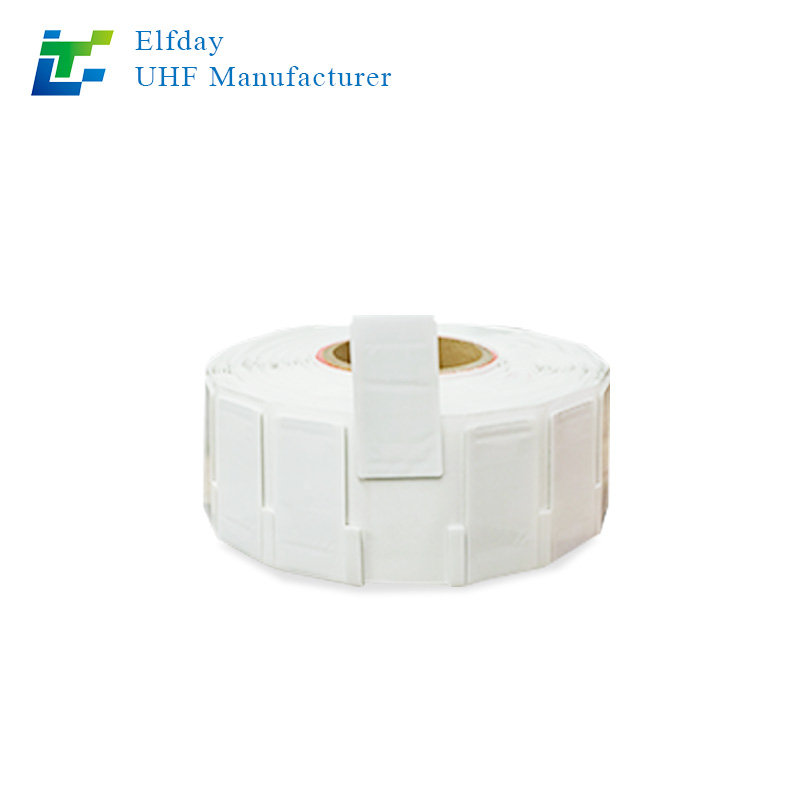
The physical design of an RFID tag affects its suitability for demanding industrial applications.
Different tag constructions offer different combinations of size, flexibility, durability, and mounting options.
| Tag type | Potential applications | Key considerations |
| Flexible RFID labels | Compatible surfaces and applications requiring a low-profile tag | Adhesive durability, abrasion, and surface compatibility |
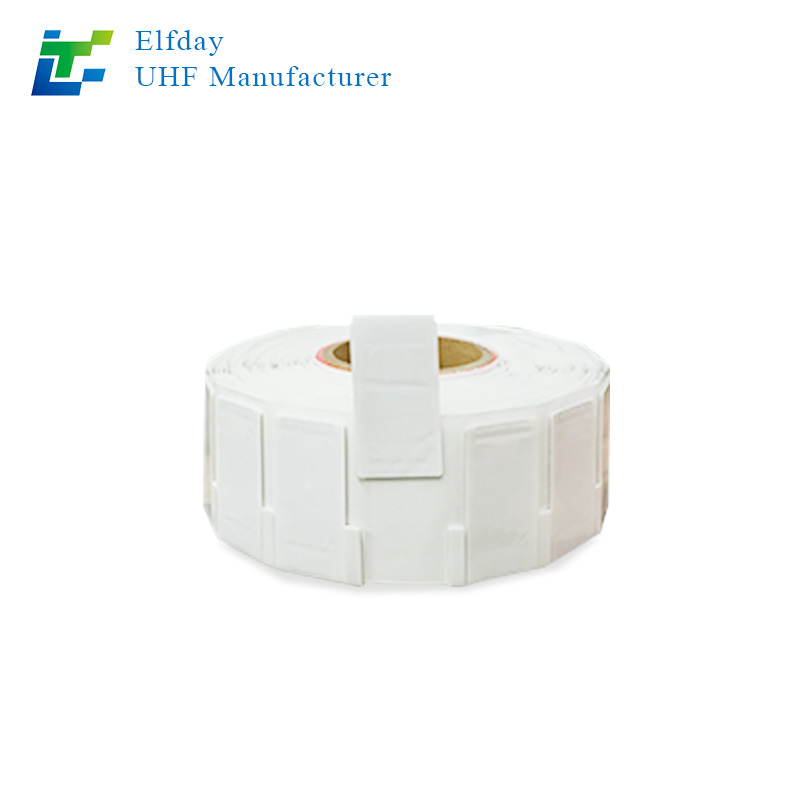
| Flexible anti-metal RFID tags | Metal assets with limited mounting space | Metal-mount performance, flexibility, and attachment |
| Rugged hard RFID tags | Tools, containers, and industrial assets requiring a more robust construction | Impact resistance, mounting method, and size |
| Screw-mounted RFID tags | Equipment requiring mechanical attachment | Available mounting points and installation requirements |
| Encapsulated RFID tags | Applications requiring a protective enclosure | Verified environmental limits and chemical compatibility |
No single tag construction is best for every industrial application. A flexible label may be suitable for a smooth, compatible surface, while a rugged tag may be more appropriate for equipment exposed to repeated impacts.
Consider how the tag will be installed, handled, inspected, and replaced throughout its service life.
6. Choose the Right RFID Frequency and Read Range
Industrial RFID systems commonly use UHF or HF technology, depending on the application and the reader infrastructure.
UHF RFID Tags
UHF RFID tags are widely used for inventory management, asset tracking, warehouse operations, and applications that benefit from identifying multiple tagged items within a reader's coverage area.
Actual read performance depends on the tag antenna, reader and antenna configuration, tag orientation, surrounding materials, installation conditions, and applicable radio regulations.
HF and NFC Tags
HF RFID operates at 13.56 MHz, and NFC is a related technology that supports compatible close-range interactions. These technologies may be appropriate when users need to identify a specific asset through deliberate close-range scanning.
When selecting RFID tags for harsh environments, frequency should be considered alongside durability and surface compatibility. A rugged tag is not automatically compatible with every reader, and a long-range tag is not necessarily suitable for metal mounting.
Before ordering, confirm the supported frequency and protocol, then test the tag using the intended reader system.
7. Understand How Industrial Conditions Affect Read Performance
A tag may meet its published specifications under controlled test conditions but behave differently when installed on real equipment.
Several factors can influence RFID performance:
Metal and nearby materials: Conductive surfaces can affect antenna behaviour. Liquids and other nearby materials may also influence performance, depending on frequency and tag design.
Tag orientation: The relative position of the tag and reader antenna can influence the strength and consistency of the response.
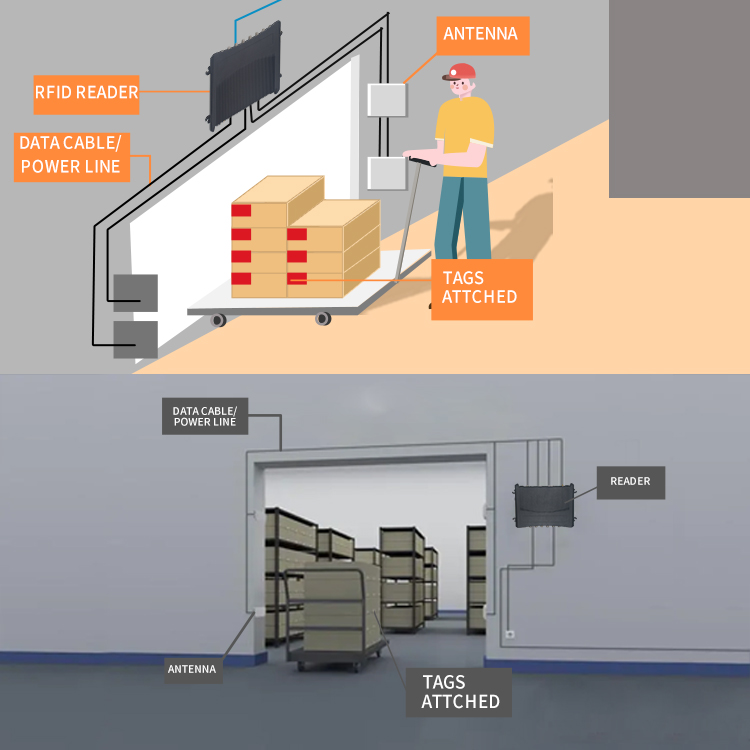
Reader configuration: Reader power, antenna placement, and antenna characteristics affect the interrogation field and the area being monitored.
Installation position: Recesses, narrow mounting spaces, curved surfaces, and nearby machinery may change the effective read conditions.
Interference and surrounding tags: The RF environment and the arrangement of multiple tagged items can affect identification consistency.
For critical applications, evaluate both read range and read reliability. A system that occasionally detects a tag at a long distance may be less useful than one that consistently identifies the correct equipment within the required operating zone.
8. Test RFID Tags Under Realistic Industrial Conditions
Sample testing helps confirm whether a candidate tag is suitable for the actual application.
Before placing a bulk order, design a test plan based on the most demanding conditions the tag is expected to encounter.
A practical evaluation can include the following steps:
-
Select representative assets. Include metal and non-metal surfaces, different equipment shapes, and difficult mounting positions.
-
Verify system compatibility. Test the tags with the intended RFID readers, antennas, and software.
-
Measure read consistency. Repeat scans at expected distances, orientations, and equipment positions.
-
Evaluate environmental exposure. Test relevant temperature, moisture, dust, vibration, abrasion, or chemical conditions.
-
Inspect the attachment. Check for peeling, loosening, cracks, deformation, or other signs of damage.
-
Retest readability. Confirm that the tag remains identifiable after the environmental tests.
-
Record the results. Document test conditions, observed performance, failures, and acceptance criteria.
The test conditions should reflect the actual application. A tag intended for indoor tool tracking may not require the same validation as one attached to outdoor machinery or equipment exposed to repeated washdown.
For large deployments, testing more than one tag design can help identify the most suitable balance of durability, performance, and cost.
9. Consider Installation, Maintenance, and Replacement Costs
The purchase price of an RFID tag is only one part of the total cost of an industrial tracking project.
Businesses should also consider installation labour, reader infrastructure, software integration, replacement frequency, and the operational impact of missed reads or detached tags.
A lower-cost tag may be appropriate for a controlled environment where replacement is straightforward. In a demanding industrial environment, a more durable or application-specific tag may be more economical over its service life if it reduces maintenance and replacement work.
When comparing quotations, evaluate:
-
Unit price and minimum order quantity.
-
Available dimensions and mounting options.
-
Verified operating and environmental specifications.
-
Compatibility with existing readers.
-
Sample availability and testing support.
-
Customization options, if required.
-
Lead times and expected supply continuity.
Request the same core specifications from each supplier so that different tag models can be compared on a consistent basis.
10. Industrial RFID Tag Selection Checklist
Use this checklist before approving a tag for industrial deployment:
The mounting surface and material are clearly identified.
The tag is suitable for the expected temperature range.
Water, dust, chemical, and abrasion requirements have been evaluated.
The tag's mounting method is suitable for the equipment.
The supported frequency and protocol match the reader system.
Read performance has been tested on representative assets.
The tag remains attached and readable after relevant environmental testing.
The supplier can provide accurate specifications and supporting test information.
The expected service life and replacement requirements are understood.
Total project cost has been evaluated beyond the initial tag price.
This checklist helps procurement, engineering, and maintenance teams use consistent criteria when selecting RFID tags for demanding operating conditions.
Choosing RFID tags for harsh industrial environments requires a practical assessment of surface materials, temperature, moisture, chemicals, mechanical stress, read performance, and reader compatibility.
Standard RFID tags may suit compatible non-metallic surfaces, while purpose-designed anti-metal RFID tags should be considered for many metal tools, machinery, and industrial assets. Rugged tag constructions may also be appropriate where impact, abrasion, or frequent handling is a concern.
The most reliable selection process combines accurate product specifications with realistic sample testing. By validating tags before bulk purchasing, businesses can reduce selection risks and build an RFID tracking system that better fits their industrial operating conditions.
Looking for RFID tags for harsh industrial environments? Prepare the equipment material, temperature range, chemical exposure, mounting requirements, reader specifications, and expected order quantity before requesting a quotation. Sharing these details helps suppliers identify suitable RFID tag options for your application.