



How Can You Reduce Unwanted RFID Reads Outside a Designated Zone?
RFID systems are widely used in warehouses, manufacturing facilities, distribution centers, and asset-tracking applications. They can identify tagged items automatically, reduce manual scanning, and improve inventory visibility. However, one common challenge is detecting RFID tags that are located outside the intended reading area.
For example, a reader installed at a warehouse entrance may accidentally detect tags on nearby shelves. A production-line reader may identify items waiting in an adjacent area instead of only those moving through the checkpoint. These unwanted reads can create inaccurate location records, duplicate events, and confusion in automated workflows.
Reducing unwanted RFID reads requires careful control of the reading zone. Reader power, antenna placement, tag orientation, the surrounding environment, and software event processing all influence which tags are detected and how those detections are interpreted.
This guide explains practical ways to reduce unwanted RFID reads outside a designated zone while maintaining reliable identification of the intended items.
1. Understand Why RFID Reads Occur Outside the Target Zone
An RFID reader does not automatically recognize physical boundaries such as doors, shelf edges, or painted floor markings. It detects tags through radio-frequency communication within the effective coverage of its antennas.
The actual reading area depends on several factors:
-
Reader transmit power
-
Antenna gain, direction, and polarization
-
Tag sensitivity and antenna design
-
Tag orientation and distance
-
Nearby metal structures and reflective surfaces
-
Radio-frequency interference
-
The layout of surrounding inventory and equipment
As a result, a reader may detect a tag beyond the area that an operator considers the designated zone.
For example, a UHF RFID reader positioned near a warehouse doorway may detect a tag on a nearby pallet even when the pallet has not passed through the doorway. The reader is responding to the tag's radio signal, not determining whether the pallet has crossed a physical boundary.
The first step is to define the intended reading zone clearly. Determine which items should be detected, where the reading event should occur, and which adjacent areas must be excluded.
2. Adjust RFID Reader Transmit Power
Reader transmit power is one of the first settings to evaluate when unwanted reads occur beyond the target area.
Higher transmit power can increase the likelihood of detecting distant tags, but it can also expand the effective reading area beyond the desired boundary. Lowering power may help restrict coverage, although excessive reduction can cause missed reads within the target zone.
How to Optimize Reader Power
-
Establish a baseline using the current reader settings.
-
Identify the locations where unwanted reads occur.
-
Reduce transmit power in controlled steps.
-
Test tags at the farthest required point inside the designated zone.
-
Check whether adjacent areas still produce unwanted reads.
-
Record the final configuration and validate it during normal operations.
The goal is not to use the lowest possible power. It is to find a setting that provides adequate coverage inside the target zone while limiting unnecessary detection outside it.
If reducing power causes missed reads within the intended area, consider improving antenna placement or using a more suitable antenna design rather than simply accepting lower identification performance.
3. Optimize Antenna Placement and Direction
Antenna placement plays a major role in controlling the physical area covered by an RFID reader.
An antenna installed at an unsuitable angle may direct energy toward neighboring shelves, workstations, or storage areas. This can cause tags outside the intended zone to respond.
Practical Antenna Placement Strategies
-
Aim antennas toward the target area. Position them to cover the passage, shelf, or workstation where identification should occur.
-
Avoid unnecessary coverage of adjacent areas. Adjust antenna angles and mounting positions to reduce spillover.
-
Test antenna height. A small change in height may alter the coverage pattern and improve zone separation.
-
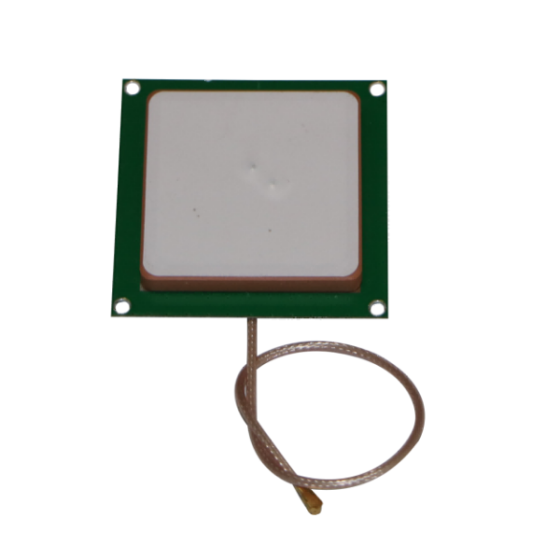
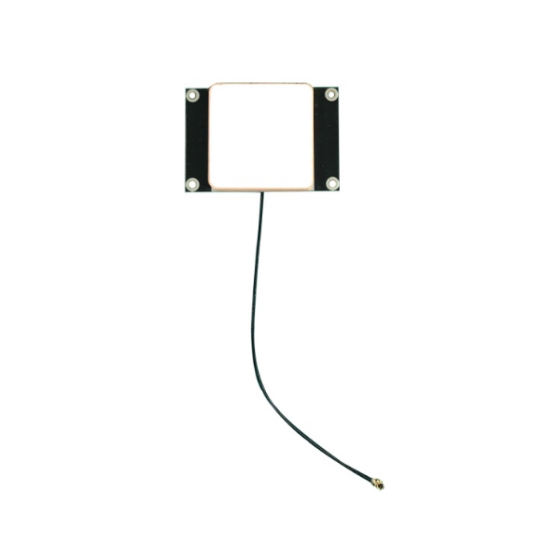
Use appropriate antenna characteristics. Select antenna gain, beamwidth, and polarization according to the required coverage and tag orientation.
-
Check the full coverage pattern. Evaluate the edges and surrounding areas rather than testing only directly in front of the antenna.
Directional antennas can help focus RF energy toward a specific area, but their radiation patterns are not perfectly confined to a narrow line or physical boundary.
For applications involving moving items, ensure that the antenna covers the complete passage path while limiting unnecessary coverage beyond it.
4. Use Physical RF Shielding When Appropriate
In some installations, antenna adjustment and power optimization are not enough to separate neighboring reading zones.
RF shielding or a purpose-designed enclosure may help limit radio-frequency energy escaping from a controlled reading area. Examples include certain portal readers, conveyor checkpoints, and enclosed workstations.
Possible design elements include:
-
RF-absorbing materials to reduce reflections
-
Conductive shielding structures
-
Controlled openings for items entering or leaving the zone
-
Enclosures designed for the intended RFID frequency
-
Carefully positioned antennas inside the enclosure
Shielding must be designed for the specific frequency, geometry, and operating environment. Gaps, openings, seams, and reflections can affect its effectiveness.
Metal barriers can also reflect RF energy and create unexpected coverage patterns if they are not designed and tested properly. In some cases, RF-absorbing materials may be useful for controlling reflections, but they should be selected for the relevant frequency range and application.
Before adding shielding, evaluate whether antenna repositioning, power adjustment, or a better-defined read zone can solve the problem more simply.
5. Select Tags That Suit the Reading Environment
Tag characteristics can influence whether a reader detects an item at the edge of a reading zone.
Different RFID tags vary in antenna design, size, sensitivity, frequency, and mounting requirements. A tag that is easily detected at a distance may be unnecessary for an application requiring short-range identification.
However, selecting a less sensitive tag is not a substitute for proper reader and antenna design. It may reduce both unwanted reads and the ability to detect intended items.
Consider the Following Factors
-
Required reading distance
-
Tag antenna design and size
-
Mounting surface and nearby materials
-
Tag orientation during normal use
-
Compatibility with the reader and protocol
-
Expected item movement and reading conditions
For metal assets, use tags designed for the intended mounting surface when necessary. For compact workstations or short-range checkpoints, evaluate tag options that meet the required performance without creating excessive reading coverage.
Test candidate tags inside and outside the designated zone to confirm that the complete system can distinguish intended items from nearby inventory.
6. Separate Adjacent Reading Zones
Warehouses and production facilities may contain multiple RFID readers operating near one another. If their coverage areas overlap, a tag may be detected by more than one reader.
This can create incorrect location records or make it difficult to determine which checkpoint generated an event.
Ways to Improve Zone Separation
-
Position readers and antennas to reduce unnecessary overlap.
-
Optimize the transmit power of each reader independently where the equipment supports it.
-
Use supported reader coordination or time-multiplexing features when neighboring systems interfere with one another.
-
Assign each reading zone a clear operational purpose.
-
Validate that tags are detected by the intended reader during normal movement.
-
Review whether the software needs to distinguish between nearby reader events.
Reader coordination is particularly important when several UHF RFID readers operate in close proximity. The available methods depend on the reader hardware, software, and regulatory requirements.
Where two zones must be distinguished reliably, combine RF design with application-level logic rather than relying on reader identity alone.
7. Use Software Filtering and Event Logic
Physical RF control reduces unwanted reads, but software can provide another layer of protection.
A reader may detect a tag outside the target area even after the RF configuration has been optimized. The application can evaluate the context of each read event before updating an asset's location or triggering a business action.
Possible methods include:
Reader-Based Filtering
Use supported reader settings to control which tag reports are delivered, how often they are reported, or how repeated observations are handled.
Time-Based Filtering
Ignore repeated reports of the same tag within a defined interval when they do not represent a new business event.
The interval must be chosen carefully. An overly long interval may suppress a legitimate second event when an asset passes through the zone again.
Event Sequencing
For a workflow with multiple checkpoints, use a defined sequence of events to help determine whether an asset has moved through the expected route.
For example, a system may require a tag to be detected by an entry checkpoint before recording a subsequent movement event.
Multi-Condition Validation
Where the system supports it, combine reader identity, read timing, signal observations, and workflow context to improve event classification.
Signal strength can provide useful supporting information, but it should not be treated as a precise distance measurement. RF reflections, tag orientation, and surrounding materials can cause a nearby tag to produce a weaker signal than a more distant tag.
Important: Software filtering should not hide underlying RF problems. First establish reliable detection within the intended area, then use event logic to handle residual unwanted reads.
8. Account for Reflections and Nearby Materials
Radio waves can reflect from metal structures, equipment enclosures, and other conductive surfaces. These reflections may create coverage patterns that differ from what a simple line-of-sight layout suggests.
A tag outside the target zone may therefore be detected because of the overall RF environment, even if it is not directly in front of the antenna.
To investigate this issue:
-
Inspect nearby metal shelves, walls, and machinery.
-
Test the system with typical inventory and equipment in place.
-
Compare results at different antenna angles and heights.
-
Check whether unwanted reads occur only at certain locations.
-
Evaluate RF-absorbing materials or shielding if reflections remain problematic.
Changes to shelving, equipment placement, or inventory density can alter the reading environment. Revalidate the system after significant layout changes.
9. Design the Reading Zone Around the Workflow
The best way to control unwanted reads is to design the RF zone around the actual operational event.
Different applications require different approaches.
Warehouse Doorways
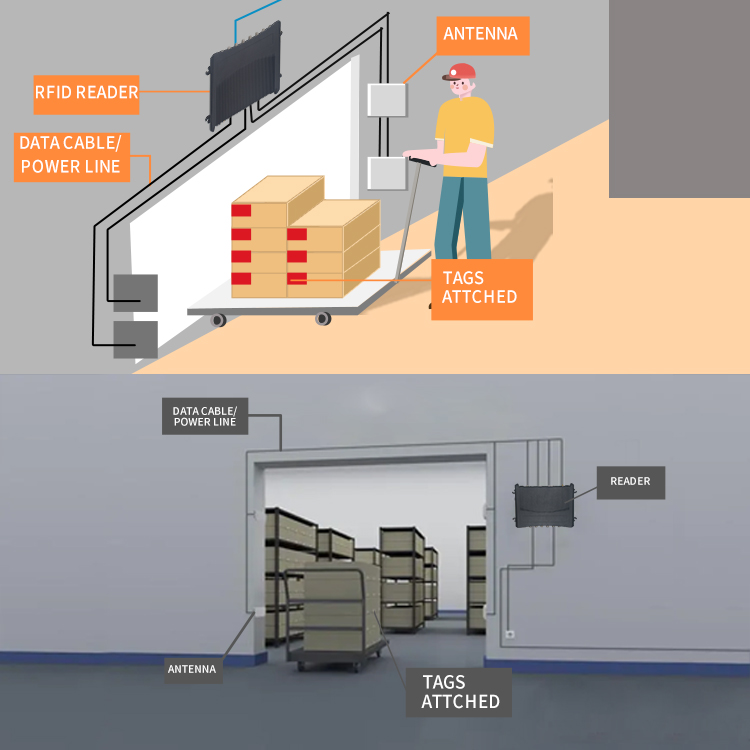
A doorway reader should identify items passing through the designated passage without unnecessarily detecting inventory on nearby shelves. Directional antennas, controlled power, physical shielding where suitable, and movement-aware event logic may help.
Conveyor Systems
For conveyor applications, position antennas around the intended read area and test items at realistic speeds and spacing. Consider the tag's position on each carton or container and whether adjacent conveyor sections produce unwanted reads.
Tool Cabinets and Workstations
A workstation may require short-range identification or a more confined reading area. Evaluate antenna placement, shielding, and tag presentation methods based on whether the system must identify items inside a cabinet, on a work surface, or moving through a specific point.
Asset Tracking Across Multiple Areas
When assets move between rooms or operational zones, coordinate reader locations and event processing so that the system records meaningful transitions rather than treating every tag observation as a location change.
These examples illustrate why a single reader-power setting or antenna layout is unlikely to work equally well for every application.
10. Test the System Inside and Outside the Designated Zone
A successful setup must do two things: detect the intended tags reliably and avoid recording unwanted tags as valid events.
Testing only inside the designated zone is not sufficient.
Recommended Validation Procedure
-
Define the target zone and the areas that should be excluded.
-
Prepare known tags representing the expected assets.
-
Test detection at multiple positions within the target zone.
-
Place tags at representative locations just outside the boundary.
-
Repeat tests at different orientations and realistic movement speeds.
-
Test with nearby readers and normal equipment operating.
-
Record missed reads and unwanted reads separately.
-
Adjust one configuration variable at a time.
-
Repeat the tests to confirm that results are consistent.
For example, if 200 expected tags pass through a checkpoint and 196 are correctly detected, the observed detection rate is 98%. If tags outside the checkpoint also generate valid events, those unwanted detections must be measured separately.
A high detection rate alone does not prove that the zone is properly controlled. The system must also distinguish intended events from irrelevant observations.
11. Monitor Performance After Deployment
RFID reading zones can change as facilities evolve. New equipment, shelving, inventory, or reader installations may affect the RF environment.
Establish a maintenance procedure that includes:
-
Reviewing reader logs for recurring unwanted reads
-
Checking antenna mounts, cables, and connectors
-
Verifying reader power and configuration after maintenance
-
Retesting after layout changes
-
Reviewing software filtering rules
-
Testing both detection and exclusion performance periodically
Keep a record of the approved tag models, reader settings, antenna positions, and test results. This documentation helps teams restore a known-good configuration after changes or equipment replacement.
Reducing unwanted RFID reads outside a designated zone requires a combination of RF design, careful configuration, and appropriate software logic.
Start by defining the intended reading area. Then optimize reader power and antenna placement, evaluate physical shielding when necessary, and check for overlapping coverage and RF reflections. Finally, validate the system with tests both inside and outside the target zone.
The goal is not simply to reduce reading distance. It is to identify the correct tags at the correct place and time while minimizing missed reads and unwanted events.
Looking for RFID tags and readers for a controlled reading zone? EFLDAY provides RFID tag and reader solutions for inventory management, industrial identification, and asset-tracking applications. Share your target reading area, tag type, operating environment, and expected item movement with our team to discuss a suitable configuration.