



How Do RFID Tags Work Without Batteries? A Complete Guide
How do RFID tags work without batteries? This is one of the most common questions about RFID technology.
The answer is that many RFID tags, especially passive RFID tags, do not need their own battery. Instead, they receive energy wirelessly from an RFID reader.
When a passive RFID tag enters the reader's radio frequency field, the tag's antenna captures part of that energy. The energy is converted into electrical power, which activates the RFID chip and allows the tag to communicate with the reader.
This simple principle makes battery-free RFID tags useful for identifying and tracking large numbers of products, cartons, pallets, tools, equipment, and other physical assets.
In this guide, we explain how passive RFID tags get power, how they communicate, how far they can be read, and why battery-free RFID is widely used for inventory and tracking applications.
Can RFID Tags Work Without Batteries?
Yes. Many RFID tags can operate without an internal battery.
These are known as passive RFID tags.
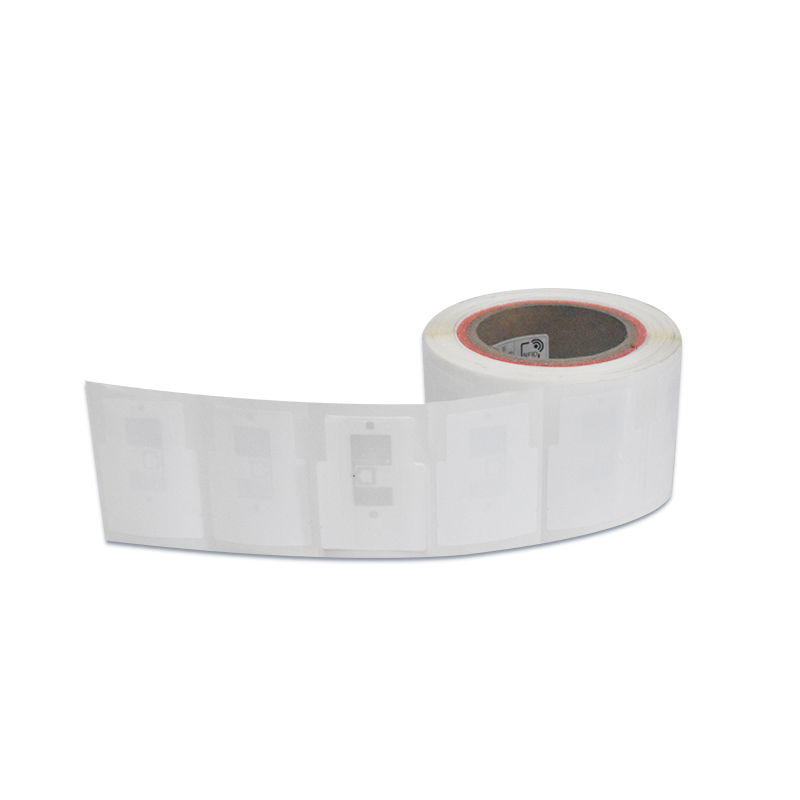
A passive RFID tag typically contains:
-
An RFID chip
-
An antenna
-
A substrate or inlay
-
A label, adhesive, or protective housing
Unlike active RFID tags, passive tags do not have an internal power source.
Instead, they rely on energy transmitted by the RFID reader.
The basic process is:
RFID Reader → Radio Frequency Energy → RFID Tag → Energy Harvesting → RFID Chip Activation → Data Response
This allows a passive RFID tag to operate only when it is within an appropriate RFID reader field.
How Do Passive RFID Tags Get Power?
Passive RFID tags receive power from the electromagnetic field generated by an RFID reader.
The process can be explained in several steps.
Step 1: The RFID Reader Transmits a Radio Signal
An RFID reader generates a radio frequency signal and sends it through an RFID antenna.
The signal creates an electromagnetic field around the antenna.
The size and strength of this field depend on factors such as:
-
Reader output
-
Antenna design
-
Frequency
-
Environment
-
Antenna positioning
Step 2: The RFID Tag Enters the RF Field
When a passive RFID tag enters the reader's operating area, its antenna interacts with the radio frequency signal.
The tag antenna captures some of the electromagnetic energy.
Step 3: The Tag Converts RF Energy Into Electrical Energy
The RFID tag uses its antenna and electronic circuitry to convert the received RF energy into usable electrical power.
This process is commonly described as RF energy harvesting.
The amount of energy available depends on the strength of the reader signal and the distance between the reader and tag.
Step 4: The RFID Chip Activates
Once enough energy has been collected, the RFID chip becomes active.
The chip can then process the reader's commands and access information stored in its memory.
Step 5: The Tag Sends Its Information Back
The passive RFID tag communicates with the reader by modifying or reflecting the incoming RF signal.
For UHF RFID, this process is commonly called backscatter communication.
The reader detects the changes in the reflected signal and decodes the information.
How Does RFID Backscatter Work?
Backscatter is an important part of passive RFID communication.
A passive RFID tag does not normally generate a strong radio signal like a conventional wireless transmitter.
Instead, the tag changes the characteristics of the signal it reflects back toward the reader.
The reader sends the RF signal.
The tag receives energy from that signal.
The RFID chip controls the tag antenna's response.
The tag then reflects the signal in different states.
The reader detects these changes and converts them into digital information.
In simple terms:
The reader provides the energy, and the tag uses that energy to respond.
This is the fundamental reason passive RFID tags can work without batteries.
What Is the Role of the RFID Tag Antenna?
The antenna is critical because it performs two important functions.
First, it helps the tag receive energy from the RFID reader.
Second, it enables the tag to communicate its information back to the reader.
The antenna design depends on the RFID frequency and intended application.
For example, UHF RFID tags often use antennas designed specifically for the UHF frequency range.
The antenna can also be optimized for different mounting surfaces.
A tag designed for cardboard may use a different antenna construction from an on-metal RFID tag designed for direct attachment to metal.
What Information Does a Passive RFID Tag Store?
The RFID chip can contain electronic memory.
Depending on the chip and system, the tag may store information such as:
-
Unique identification number
-
Electronic Product Code
-
Product information
-
Asset identification
-
Manufacturing information
-
Other application-specific data
However, many RFID systems do not need to store all product information directly on the tag.
Instead, the tag can contain a unique identifier.
The RFID software uses that identifier to retrieve detailed information from a database.
For example:
RFID Tag ID → Inventory Database → Product Information
This approach allows a relatively small amount of data on the tag to connect a physical object with a much larger digital record.
Do Passive RFID Tags Store Energy?
A passive RFID tag does not normally store a significant amount of energy for long-term operation.
Instead, it receives energy when it is exposed to the RFID reader's RF field.
This is different from a battery-powered device.
A passive tag essentially operates when the reader provides sufficient RF energy.
Once it moves outside the effective reading area, it generally stops communicating.
This battery-free design makes passive RFID tags suitable for applications involving large numbers of low-maintenance tags.
How Far Can a Battery-Free RFID Tag Be Read?
The read range depends on the RFID technology and system configuration.
UHF passive RFID tags generally provide longer read ranges than many HF and LF passive RFID systems.
Actual performance depends on:
-
RFID frequency
-
RFID chip
-
Tag antenna
-
Reader power
-
Reader antenna
-
Tag orientation
-
Tag size
-
Mounting surface
-
Product material
-
Environmental conditions
For example, a passive UHF RFID tag attached to a cardboard carton may perform differently from a tag attached directly to a metal machine.
This is why RFID read range should be evaluated under actual application conditions.
Can Passive RFID Tags Work on Metal?
Yes, but the tag must be designed appropriately.
A standard passive RFID tag may experience reduced performance when directly attached to metal.
Metal can interact with the RFID antenna and change its electrical characteristics.
For metal assets, on-metal RFID tags are designed to operate more effectively on conductive surfaces.
Typical applications include:
-
Industrial machinery
-
Tools
-
Metal containers
-
IT equipment
-
Automotive components
-
Warehouse equipment
Can Passive RFID Tags Work Near Liquids?
Passive RFID tags can be used in applications involving liquids, but liquids can affect RF performance.
Water and other liquids can interact with UHF radio waves and may reduce read performance depending on the tag and installation.
For products such as:
-
Bottled beverages
-
Liquid containers
-
Cosmetics
-
Cleaning products
-
Packaged food
the RFID tag may need to be positioned carefully or specifically designed for the application.
Testing the tag on the actual product is recommended.
Why Are Battery-Free RFID Tags Useful?
The lack of a battery provides several practical advantages.
Lower Maintenance
Because passive RFID tags do not require battery replacement, they can be used for long-term identification.
Smaller Form Factors
Without a battery, RFID tags can be manufactured in very small and thin formats.
This makes them suitable for:
-
Product labels
-
Packaging
-
Cartons
-
Documents
-
Apparel
-
Small assets
Lower Cost for High-Volume Applications
Passive RFID tags are generally less expensive than active RFID tags.
This makes them more practical when thousands or millions of items need to be identified.
Long Service Life
A passive RFID tag does not have a battery that can eventually run out of power.
The physical durability of the tag still depends on its construction and environment.
Easy Integration
Passive RFID tags can be integrated into labels, packaging, products, and industrial assets.
Where Are Battery-Free RFID Tags Used?
Battery-free passive RFID tags are used across many industries.
Inventory Management
Retailers and warehouses can attach passive RFID tags to products and use RFID readers to perform faster inventory checks.
Warehouse Tracking
Passive UHF RFID tags can be attached to:
-
Cartons
-
Pallets
-
Products
-
Containers
Readers can identify tagged items as they move through receiving, storage, picking, and shipping areas.
Retail
Retailers can use RFID tags to improve product visibility and inventory accuracy.
Applications include:
-
Stock counting
-
Replenishment
-
Receiving
-
Product tracking
-
Inventory audits
Logistics
Passive RFID tags can be used to identify shipments, cartons, pallets, and reusable containers.
Manufacturing
Manufacturers can use RFID tags to track components, work-in-progress items, tools, and finished products.
Asset Tracking
Passive RFID tags can provide unique identities for equipment and other physical assets.
Passive RFID vs Active RFID
The biggest difference is the power source.
| Feature | Passive RFID | Active RFID |
|---|---|---|
| Internal battery | No | Yes |
| Reader provides energy | Yes | Not usually required |
| Typical size | Smaller | Larger |
| Cost | Generally lower | Generally higher |
| Maintenance | Low | Battery replacement required |
| Read range | Generally shorter | Potentially longer |
| Common applications | Inventory, retail, logistics | Specialized asset tracking |
Passive RFID is particularly useful when large numbers of inexpensive, battery-free tags are needed.
Active RFID may be more appropriate when longer communication ranges or continuous battery-powered operation are required.
Do Passive RFID Tags Last Forever?
A passive RFID tag does not have a battery that naturally expires.
However, this does not mean every passive RFID tag will physically last forever.
The service life depends on the tag's:
-
Material
-
Adhesive
-
Housing
-
Environmental exposure
-
Mechanical stress
-
Temperature
-
Moisture
-
Chemical exposure
A simple paper RFID label may be intended for short-term product identification.
A rugged industrial RFID tag may be designed for years of use.
The physical construction should therefore match the expected service life.
Can Passive RFID Tags Be Rewritten?
Some passive RFID chips provide writable memory.
Depending on the chip and system configuration, certain memory areas can be written or updated.
For example, a system may update information during manufacturing or logistics operations.
However, not all RFID memory is freely writable, and some areas may have specific access or locking functions.
The exact capabilities depend on the RFID chip.
Are Battery-Free RFID Tags Safe?
Passive RFID tags operate using low-power radio frequency communication.
They do not contain batteries and generally do not require their own active radio transmitter.
The RFID reader is responsible for generating the RF field.
RFID equipment should still be designed and operated according to applicable regulatory requirements for the relevant frequency band and region.
How Do You Choose a Battery-Free RFID Tag?
The right passive RFID tag depends on the application.
Consider the Material
Determine whether the tag will be attached to:
-
Cardboard
-
Plastic
-
Glass
-
Wood
-
Fabric
-
Metal
-
Products containing liquids
Consider the Required Read Range
Determine how far away the RFID reader needs to identify the tag.
Consider the Environment
For harsh environments, evaluate:
-
Temperature
-
Water
-
Chemicals
-
Dust
-
Impact
-
UV exposure
Consider Tag Size
The available installation area can influence the appropriate antenna and tag dimensions.
Consider the RFID Chip
Different chips provide different:
-
Memory capacities
-
Features
-
Performance characteristics
-
Security functions
Test the Tag
The most reliable way to select a passive RFID tag is to test it with the actual product, reader, antenna, mounting position, and environment.
Frequently Asked Questions About RFID Tags Without Batteries
How do RFID tags work without batteries?
Passive RFID tags receive energy from the RF signal transmitted by an RFID reader. The tag antenna captures the energy and uses it to activate the RFID chip, which then communicates with the reader.
Do all RFID tags work without batteries?
No. Passive RFID tags operate without batteries, while active RFID tags contain an internal battery. Semi-passive RFID tags also use a battery for certain functions.
How does a passive RFID tag get power?
A passive RFID tag receives RF energy from the RFID reader. Its antenna captures the electromagnetic energy and converts it into electrical power for the RFID chip.
How long do passive RFID tags last?
Passive RFID tags do not have a battery that expires. Their physical service life depends on the materials, construction, adhesive, and operating environment.
Can passive RFID tags be read from a distance?
Yes. Passive UHF RFID tags can support relatively long read distances, although the actual range depends on the tag, reader, antenna, orientation, mounting surface, and environment.
Can passive RFID tags work on metal?
Yes, when an appropriate on-metal RFID tag is used. Standard RFID tags may experience reduced performance when directly attached to metal.
Can passive RFID tags store information?
Yes. The RFID chip can contain electronic memory. The amount and type of available memory depend on the specific RFID chip.
Do passive RFID tags need to be charged?
No. Passive RFID tags do not need to be charged like battery-powered devices. They receive energy from the RFID reader when they enter its RF field.
Why don't passive RFID tags need batteries?
Passive RFID tags are powered by the RF energy transmitted by the reader. Because they only need to operate when they are being interrogated, an internal battery is not necessary.
Are passive RFID tags cheaper than active RFID tags?
Generally, yes. Passive RFID tags are usually simpler and smaller because they do not require an internal battery.
Passive RFID tags can work without batteries because they receive energy wirelessly from an RFID reader.
The reader transmits an RF signal, the tag antenna captures part of that energy, and the RFID chip uses the harvested energy to activate and communicate.
For UHF RFID systems, the tag typically responds through backscatter communication, allowing the reader to identify the tag without the tag needing its own battery-powered transmitter.
This battery-free architecture makes passive RFID tags particularly useful for inventory management, warehouse tracking, retail, logistics, manufacturing, and asset identification.
When selecting a passive RFID tag, the most important factors include the RFID frequency, tag antenna, required read range, mounting material, tag size, environmental conditions, and RFID chip.
For demanding applications, the best approach is to test the tag under real operating conditions before large-scale deployment.