





How Do Tag Orientation and Installation Position Work Together?
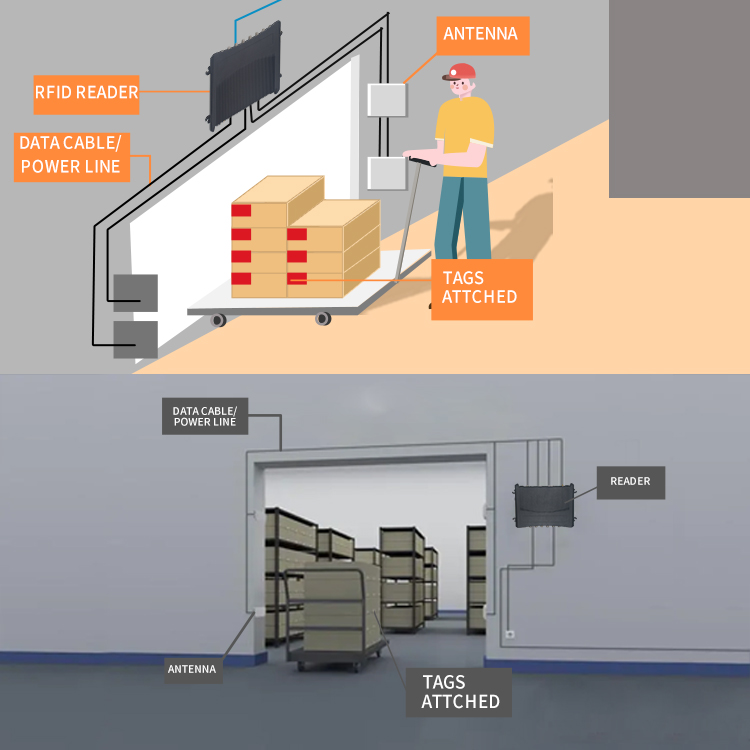
RFID tag orientation and installation position are two important factors that influence identification performance. Even when the correct RFID tag and reader are selected, poor placement or incorrect alignment may result in missed reads or inconsistent identification.
So, how do these two factors work together? The key is to consider the tag's position on the object and its orientation relative to the reader antenna at the same time.
What Is RFID Tag Orientation?
RFID tag orientation refers to the direction in which a tag is positioned relative to the reader antenna.
For example, a tag may be installed horizontally, vertically, or at an angle. Its orientation can influence how effectively it communicates with the reader.
For UHF RFID systems, tag antenna design and polarization are particularly important. A linearly polarized reader antenna may perform best when the tag antenna is aligned with its polarization direction. Circularly polarized antennas can offer more flexibility when tag orientation varies, although reading performance still depends on the installation environment.
Why Does Installation Position Matter?
Installation position determines where the RFID tag is attached to an item and how it interacts with surrounding materials.
An unsuitable position may cause problems such as:
-
Interference from nearby metal surfaces.
-
Reduced readability due to liquid-containing materials.
-
Physical obstruction by other objects.
-
Inconsistent detection when items are stacked.
-
Increased exposure to friction or impact.
For example, attaching a standard UHF RFID label directly to a metal surface may significantly affect its performance. A specialized anti-metal RFID tag or a different mounting position may be required.
How Do Orientation and Position Work Together?
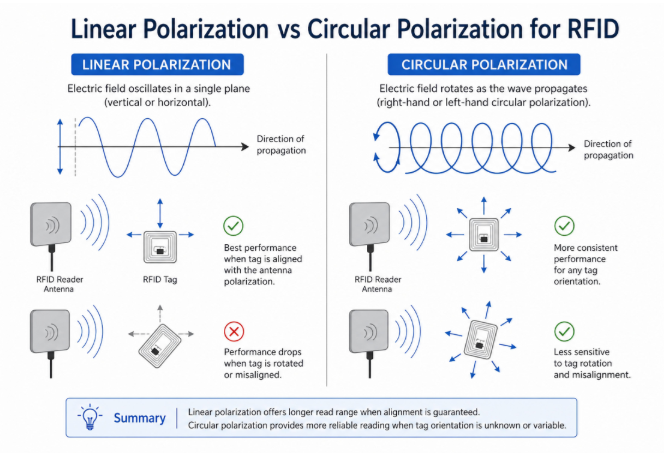
Tag orientation and installation position should be evaluated as a combination rather than as separate installation decisions.
Consider three practical situations:
Correct position, unsuitable orientation
A tag is installed in an appropriate location, but its antenna direction does not match the reader's polarization. This may reduce read consistency.
Correct orientation, unsuitable position
A tag is aligned with the reader antenna but installed directly against an incompatible material. The material may affect RF communication and lead to missed reads.
Suitable position and orientation
The tag is installed on a compatible surface, away from major sources of interference, and aligned appropriately with the reader antenna. This creates more favorable conditions for reliable identification.
The best configuration depends on the tag design, reader antenna, object material, and actual operating environment.
Practical Tips for Better RFID Tag Installation
To improve RFID identification performance, consider these installation practices:
-
Understand the item material: Check whether the mounting surface contains metal, liquid, or other materials that may affect RF performance.
-
Select a suitable tag: Choose standard, anti-metal, or specialized industrial tags according to the application.
-
Choose an appropriate position: Avoid locations that are frequently blocked, exposed to damage, or unsuitable for the tag.
-
Check antenna alignment: Consider the reader antenna's polarization and the tag antenna's orientation.
-
Test under actual conditions: Evaluate tag readability with real products, packaging, stacking arrangements, and movement patterns.
Testing is especially important when items move through a reading zone or are stored in different orientations.
Common Installation Mistakes
| Mistake | Possible Result |
| Ignoring tag orientation | Inconsistent identification |
| Installing directly on unsuitable materials | Reduced readability |
| Placing tags behind metal structures | RF signal obstruction |
| Using the same position for every asset without testing | Unpredictable reading results |
| Failing to test after installation | Problems discovered during operation |
RFID tag orientation and installation position work together to determine how effectively a tag communicates with a reader.
A suitable installation position helps avoid material interference and physical obstruction, while correct orientation helps establish favorable communication with the reader antenna.
For reliable results, businesses should consider tag design, object material, antenna polarization, and actual operating conditions before finalizing installation procedures.