



How Does an RFID System Achieve End-to-End Tracking of Items?
Tracking an item throughout its entire lifecycle can be challenging, especially when it moves between warehouses, production facilities, transportation vehicles, and distribution centers. Traditional tracking methods often rely on manual scanning and separate record systems, making it difficult to maintain consistent visibility across different operational stages.
An RFID system provides another approach by using radio frequency identification to record item identification events at designated locations. When RFID tags are attached to products, containers, pallets, or assets, compatible readers can identify them and send the collected information to a centralized tracking platform.
By connecting multiple identification points with inventory and logistics software, businesses can build a continuous record of item movement from its origin to its final destination.
But how does an RFID system achieve end-to-end tracking? What hardware and software are involved, and how does information from different locations become a complete tracking history?
This article explains the process step by step.
What Is End-to-End Tracking in an RFID System?
End-to-end tracking refers to monitoring and recording an item's movement across multiple stages of its operational or supply chain lifecycle.
Instead of identifying an item at only one location, an RFID tracking system connects identification events from different checkpoints.
For example, a product may pass through the following stages:
-
Product identification and tagging
-
Manufacturing and assembly
-
Warehouse receiving
-
Inventory storage
-
Order picking and packing
-
Shipping and transportation
-
Distribution center receiving
-
Final delivery
At each designated checkpoint, RFID readers can identify compatible tags and send the collected information to the tracking platform.
The software associates these identification events with the item's existing record, creating a history of where and when it was detected.
It is important to understand that conventional RFID tracking is generally based on identification events at reader locations. It does not automatically provide continuous GPS-style positioning between checkpoints.
Step One: Assign an RFID Tag to Each Item
End-to-end tracking begins with assigning an identification tag to the object being tracked.
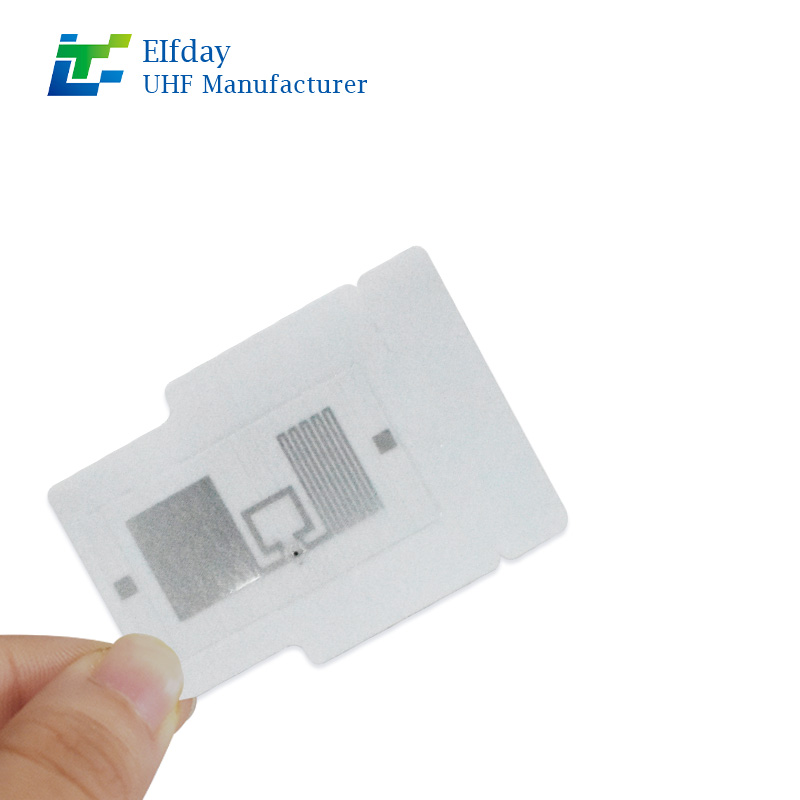
An RFID tag contains a chip and antenna that allow it to communicate with a compatible RFID reader.
In many UHF RFID applications, the tag stores an identifier such as an Electronic Product Code (EPC). This identifier serves as a reference for retrieving the item's detailed information from a connected database.
Depending on the application, RFID tags can be attached to:
-
Individual products
-
Cartons and packages
-
Pallets and shipping containers
-
Tools and industrial equipment
-
Reusable transport containers
-
Work-in-process materials
Choosing the Right RFID Tag
Tag selection depends on the item's material, size, surface, environment, and identification requirements.
For example:
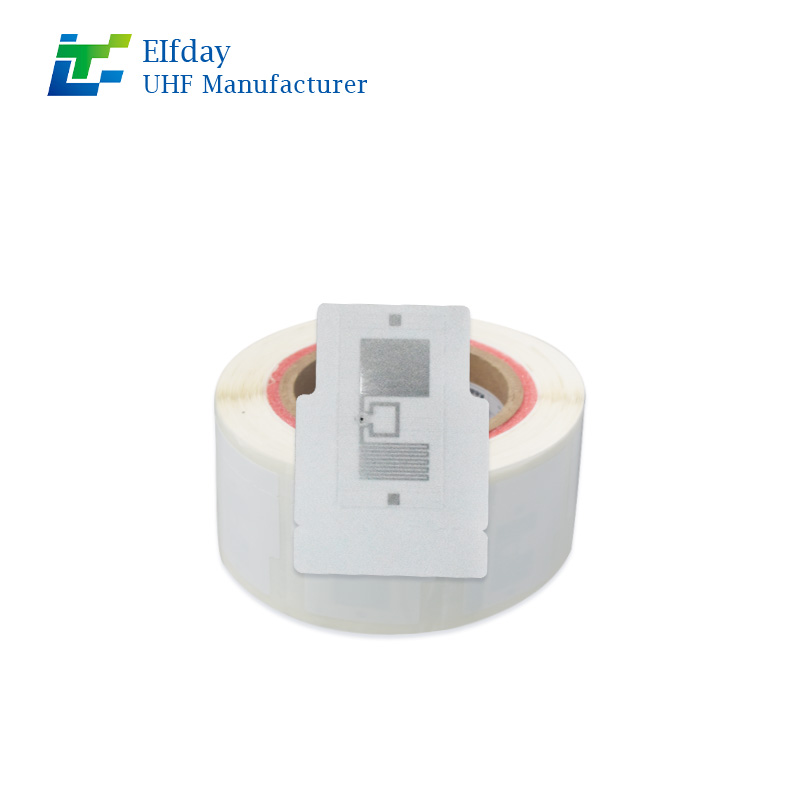
Standard RFID Labels: Suitable for many carton, package, and general inventory applications.
Anti-Metal RFID Tags: Designed for applications involving metal surfaces, such as machinery, metal containers, and industrial equipment.
Hard RFID Tags: Useful when a more rigid tag structure is required for reusable assets or demanding operating environments.
Flexible RFID Tags: Suitable for selected applications where the tag needs to accommodate curved or uneven mounting surfaces.
The tag should be tested on the actual object before large-scale deployment. Metal, liquids, tag orientation, and installation position can affect RFID communication.
Step Two: Establish RFID Identification Points Across the Process
To achieve end-to-end tracking, businesses need to identify the important locations where item movement should be recorded.
These locations become RFID identification points.
Common examples include:
-
Production line entrances and exits
-
Warehouse receiving stations
-
Storage area entrances
-
Picking and packing stations
-
Loading docks
-
Distribution center checkpoints
-
Return processing areas
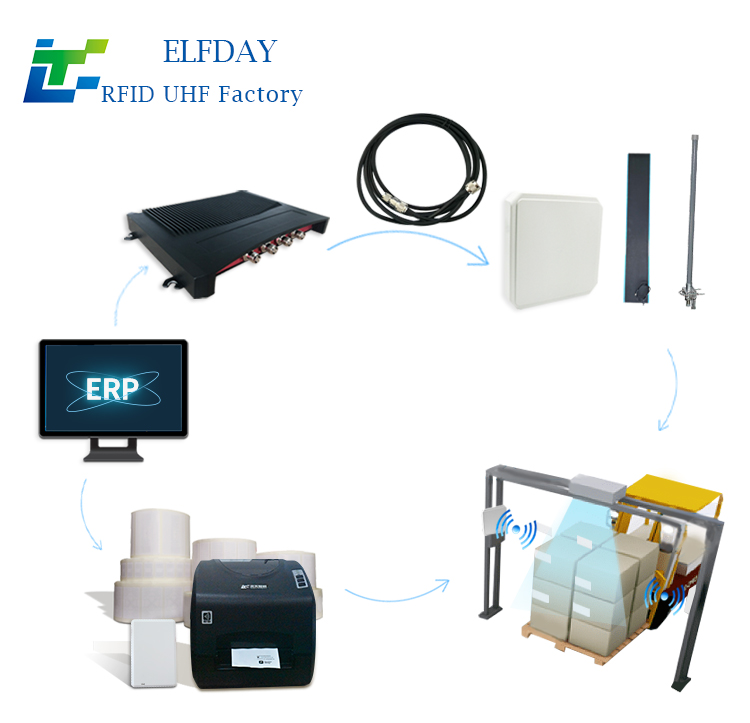
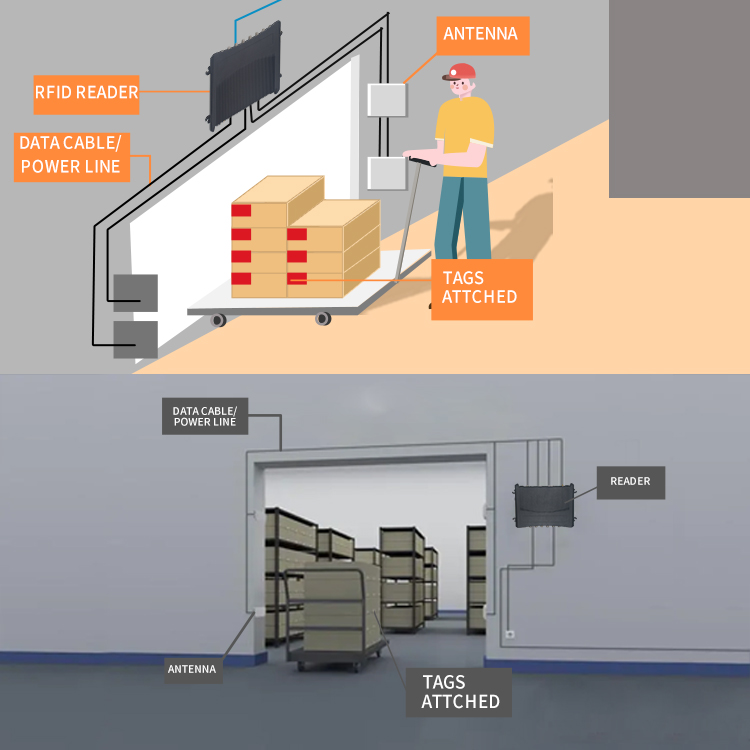
Each identification point may use a fixed RFID reader, one or more antennas, and supporting network equipment.
For applications involving mobile inventory checks, handheld RFID readers may also be used.
Why Are Identification Points Important?
A tag can only be recorded when it enters a suitable RFID reading area and is successfully identified.
Therefore, the location and coverage of each reading point determine which movement events the system can capture.
For example, if a warehouse wants to record when pallets leave the storage area, an RFID reader and antenna system can be installed at the relevant passageway.
When tagged pallets pass through the reading zone, the reader collects their identifiers and sends the observations to the management platform.
The system can then associate those observations with the corresponding warehouse movement event.
Step Three: Capture Item Identification Data at Each Checkpoint
When an RFID-tagged item enters a reader's communication area, the reader communicates with the tag and collects its identification information.
Depending on the equipment and configuration, the collected data may include:
-
Tag identifier or EPC
-
Reader ID
-
Antenna port
-
Read timestamp
-
Signal strength or other available parameters
The reader transfers this information to RFID software through a supported communication interface.
For example, when a tagged pallet passes through a warehouse shipping area, the RFID reader may identify several tags and send the corresponding observations to the tracking platform.
The software can use the reader ID and antenna information to associate each observation with the relevant identification point.
Multi-Tag Identification
Many UHF RFID systems support the identification of multiple tags within a reading area through anti-collision procedures.
This is particularly useful when cartons or pallets contain many tagged products.
However, actual identification performance depends on tag quantity, reader settings, antenna coverage, tag orientation, and environmental conditions.
Step Four: Process and Associate RFID Events
Collecting tag readings at multiple locations is only part of the tracking process.
The system must also organize the observations and determine what they mean within the business workflow.
RFID middleware or tracking software can perform several important functions.
Duplicate Read Filtering
A tag may be detected repeatedly while it remains in a reader's communication area.
Software can apply filtering rules to reduce unnecessary duplicate observations.

Location Association
The platform can associate each observation with a reader, antenna, or predefined identification point.
For example, an EPC detected by a reader assigned to the receiving dock can be associated with that checkpoint.
Timestamp Recording
The system records when an identification event occurred, allowing businesses to review the sequence of recorded events.
Event Validation
The software can compare detected tags with expected orders, shipment records, or inventory lists.
For example, before confirming a shipment-related event, the platform may check whether the detected items belong to the relevant outbound order.
These processes transform raw tag observations into structured tracking records.
Step Five: Build a Centralized Item Tracking History
Once RFID events have been processed, the tracking platform can associate them with the corresponding item records.
Each item can have a history containing its recorded identification events.
A typical tracking record may include:
| Tracking Information | Description |
| Item ID | Unique identifier associated with the item |
| EPC | RFID tag identifier |
| Event type | Receiving, storage, picking, shipping, or delivery |
| Location | Designated reader location or checkpoint |
| Timestamp | Time when the identification event was recorded |
| Reader ID | Reader that collected the observation |
| Status | Business status determined by system rules |
For example, a product record may show that it was identified at a production checkpoint, received into a warehouse, picked for an order, and detected at a shipping dock.
The tracking platform combines these records into an event history that employees can review when checking an item's progress.
The displayed location should be understood as the last recorded identification point or an application-defined location, rather than an exact continuous position unless the system includes additional positioning technology.
Step Six: Connect RFID Tracking Data With Supply Chain Management Systems
End-to-end tracking becomes more useful when RFID identification data is integrated with existing business applications.
Common integration targets include:
Warehouse Management Systems (WMS)
A WMS manages receiving, storage, picking, inventory, and shipping operations.
RFID events can help update warehouse records and support item identification at designated checkpoints.
Enterprise Resource Planning (ERP)
ERP systems manage broader business information, including purchasing, orders, products, and inventory.
RFID data can be associated with relevant ERP records to improve information consistency across departments.
Manufacturing Execution Systems (MES)
MES platforms manage production activities and manufacturing process information.
RFID identification events can help associate workpieces, components, and production carriers with their corresponding manufacturing records.
Transportation Management Systems (TMS)
A TMS manages transportation planning and shipment information.
RFID events collected at loading docks and distribution checkpoints can supplement transportation records and help verify the presence of tagged items at designated locations.
Integration methods may include APIs, middleware, database interfaces, or other supported communication mechanisms.
The specific integration design depends on the reader, tracking software, and enterprise applications.
Step Seven: Monitor Item Movement and Identify Exceptions
An RFID tracking platform can do more than display historical identification records. It can also compare actual observations with expected business activities.
This helps businesses identify exceptions that may require attention.
Examples include:
Unexpected Item Detection: A reader identifies a tag that is not included in the expected receiving or shipping list.
Missing Item Records: An expected tag is not detected during a designated identification process and requires further verification.
Unexpected Checkpoint Activity: A tag is detected at a location that does not match the expected workflow.
Delayed Movement: An item has not generated an expected identification event within a defined period.
Inventory Discrepancies: The detected tag list differs from the expected inventory records.
The system can generate alerts or exception reports according to configured business rules.
However, a missed RFID read does not necessarily mean an item is missing. Staff should review the reading environment, tag condition, and operational records before making a final decision.
Practical Example: End-to-End RFID Tracking in a Warehouse and Logistics Process
Consider a company that manufactures electronic products and distributes them to customers through several warehouses.
The company wants to track cartons from production to final delivery.
A possible RFID workflow is as follows.
Stage 1: Product Identification
RFID labels are attached to cartons, and each EPC is associated with the corresponding product and order information.
Stage 2: Production Completion
An RFID reader identifies tagged cartons at the production exit.
The system records the identification event and associates it with the relevant production record.
Stage 3: Warehouse Receiving
When cartons enter the warehouse receiving area, fixed RFID readers collect their identifiers.
The software compares the detected tags with the expected receiving records.
Stage 4: Inventory Storage
During storage operations, handheld RFID readers or designated fixed reading points can identify tagged cartons.
The platform records the corresponding inventory activity according to the warehouse workflow.
Stage 5: Order Picking
When products are prepared for an order, RFID identification can help verify that the selected cartons match the expected order information.
Stage 6: Shipping
Readers installed near the loading area identify tagged cartons as they pass through the shipping checkpoint.
The software compares the observations with the outbound shipment list.
Stage 7: Distribution and Delivery
Additional RFID reading points at distribution centers can record subsequent identification events.
At final delivery, RFID data may be collected if compatible readers and a defined identification process are available at the delivery location.
The result is a connected tracking history that helps the company review item movement across multiple operational stages.
Hardware and Software Required for End-to-End RFID Tracking
A complete RFID tracking solution typically combines identification hardware, communication infrastructure, and management software.
| Component | Main Function | Application |
| RFID tags | Provide item identification | Products, cartons, pallets, assets |
| Fixed RFID readers | Automatically identify tags at checkpoints | Warehouses, production lines, loading areas |
| Handheld RFID readers | Support mobile identification | Inventory checks and asset inspections |
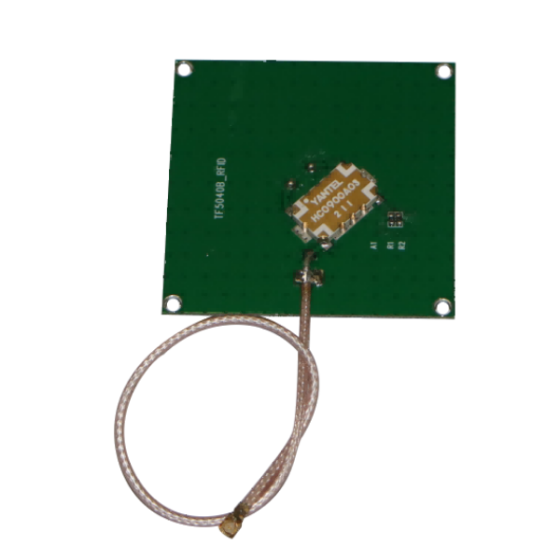
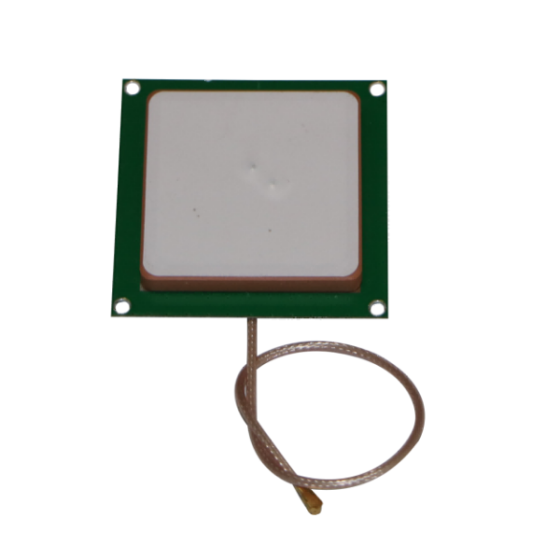
| RFID antennas | Establish reading areas | Fixed identification points |
| RF cables and connectors | Connect readers and external antennas | Fixed RFID installations |
| Network equipment | Transfer reader data | Communication infrastructure |
| RFID middleware | Filter and organize tag observations | Event processing |
| RFID tracking software | Manage item records and movement history | Centralized tracking |
| ERP/WMS/MES integration | Connect RFID data with business processes | Enterprise management |
Not every project requires all these components. The actual configuration depends on the number of identification points, operating environment, tracking requirements, and existing IT infrastructure.
Best Practices for Building a Reliable End-to-End RFID Tracking System
A successful tracking project requires coordinated planning across hardware, software, and business operations.
1. Define the Tracking Scope
Decide whether the system will track individual products, cartons, pallets, reusable containers, or high-value assets.
The identification level affects tag selection, data structure, and system complexity.
2. Choose Suitable RFID Tags
Select tags according to the object's material, size, mounting surface, and operating environment.
For metal assets, evaluate specially designed anti-metal RFID tags.
3. Plan Identification Checkpoints
Install readers and antennas at locations where item movement needs to be recorded.
Avoid unnecessary reading points that add cost without providing meaningful operational information.
4. Establish Consistent Item Identification
Each tracked object should have a reliable identifier associated with its business record.
The relationship between EPCs, product IDs, carton IDs, pallet IDs, and shipment records should be clearly defined.
5. Configure Event Processing Rules
Determine how the system handles repeated reads, unexpected tags, missing observations, and event validation.
6. Integrate With Existing Business Systems
Connect RFID events with the relevant WMS, ERP, MES, or TMS workflows.
This reduces disconnected records and helps employees use tracking information within their normal operations.
7. Test the Complete Workflow
Test tag readability, reader coverage, network communication, event processing, and business-system updates under actual operating conditions.
8. Monitor and Improve
Review missed reads, unwanted reads, duplicate records, communication failures, and operational feedback.
Regular evaluation helps maintain the quality of tracking records as processes and environments change.
An RFID system achieves end-to-end item tracking by connecting multiple identification points across an item's operational lifecycle.
RFID tags provide unique identifiers, readers collect tag observations at designated checkpoints, and software processes these observations into structured tracking events. By connecting these events with inventory, warehouse, manufacturing, and transportation systems, businesses can build a centralized history of item movement.
The key to successful RFID tracking is not simply installing more readers. It is selecting suitable tags, planning effective reading zones, establishing consistent identification rules, and integrating RFID data with the company's actual business processes.
EFLDAY provides RFID tags, RFID readers, RFID antennas, and related identification products for inventory management, logistics, manufacturing, and asset tracking applications. Selecting compatible hardware is an important foundation for building an effective end-to-end RFID tracking solution.
Frequently Asked Questions
Can RFID track an item from manufacturing to final delivery?
Yes. RFID can support tracking across multiple stages when tags are associated with item records and readers are installed at relevant identification points. The system combines observations from these locations to create a tracking history.
Does RFID provide continuous real-time item location?
Not necessarily. Conventional RFID systems typically record identification events when tags enter a reader's communication area. Continuous positioning requires additional infrastructure or positioning technologies designed for that purpose.
Can RFID track individual products and entire pallets?
Yes. RFID tags can be assigned to individual products, cartons, pallets, or reusable containers. The appropriate identification level depends on the business process and tracking requirements.
What is the difference between RFID tracking and barcode tracking?
RFID uses radio frequency communication to identify compatible tags and can identify multiple tags without requiring direct line of sight. Barcode systems use optical scanning and generally require the barcode to be visible to the scanner. The appropriate technology depends on the application, environment, and cost requirements.
What RFID frequency is suitable for end-to-end logistics tracking?
UHF RFID is commonly considered for logistics and warehouse applications because it supports identification across suitable reading areas and can handle multiple tags through supported inventory procedures. The final choice depends on local frequency regulations, tag design, reader compatibility, and operating conditions.
Can RFID tracking data be integrated with an ERP or WMS?
Yes. RFID tracking software can exchange identification events and item information with ERP, WMS, MES, and TMS platforms through APIs, middleware, or other supported interfaces. The integration should follow the company's operational and data management requirements.