







How RFID on Clothes Improves Garment Tracking and Inventory Accuracy
RFID on clothes enables clothing warehouses to track garments automatically from receiving to shipping. By attaching RFID tags to clothes, businesses can improve inventory accuracy, reduce manual counting errors, and manage thousands of apparel items efficiently.
Introduction: The Growing Need for Smart Clothing Tracking
Managing clothing inventory has become increasingly challenging as fashion businesses handle larger product volumes, faster supply chains, and higher customer expectations. From garment manufacturers to retailers and warehouse operators, accurate tracking is essential for reducing losses, improving efficiency, and ensuring products are available when needed.
Traditional inventory methods often rely on manual counting and barcode scanning, which can be time-consuming and vulnerable to human errors. When thousands of clothing items need to be managed, even small mistakes can result in incorrect stock levels, delayed shipments, and increased operational costs.
RFID on clothes provides an advanced solution by allowing businesses to automatically identify, track, and manage garments throughout the entire supply chain. By attaching RFID tags to clothing items, companies can gain better inventory visibility and improve the accuracy of garment management.
What Is RFID on Clothes?
RFID on clothes refers to the use of RFID technology to identify and track garments through electronic tags attached to clothing products. Each RFID tag contains unique information that can be connected to product details, inventory records, and supply chain data.
When RFID readers detect tagged clothing items, information can be collected automatically without requiring direct scanning. This allows businesses to quickly monitor garment movement from production and storage to distribution and retail.
Unlike traditional barcode systems that require each item to be scanned individually, RFID technology can read multiple clothing tags at the same time, making inventory management faster and more efficient.
How RFID on Clothes Improves Garment Tracking
RFID on clothes improves garment tracking by providing accurate and automated identification throughout the clothing supply chain.
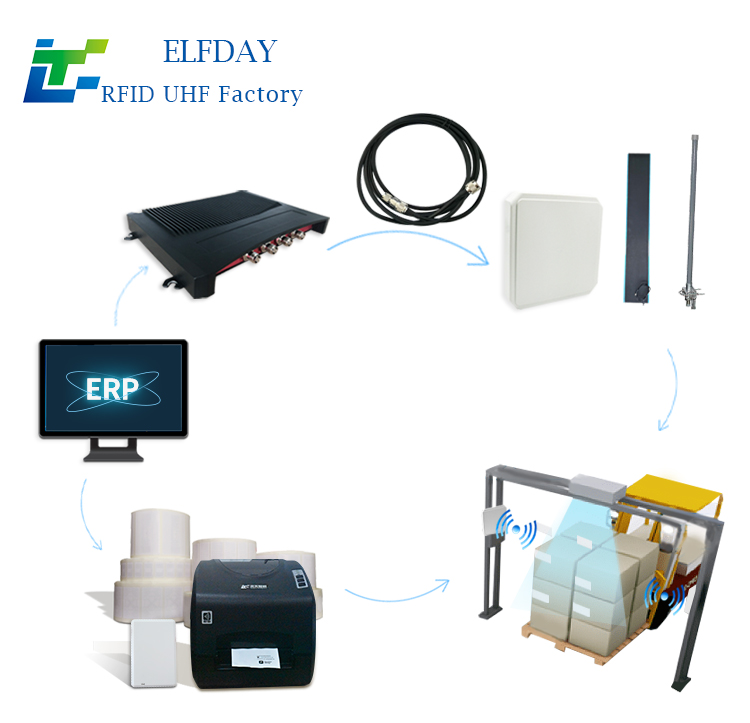
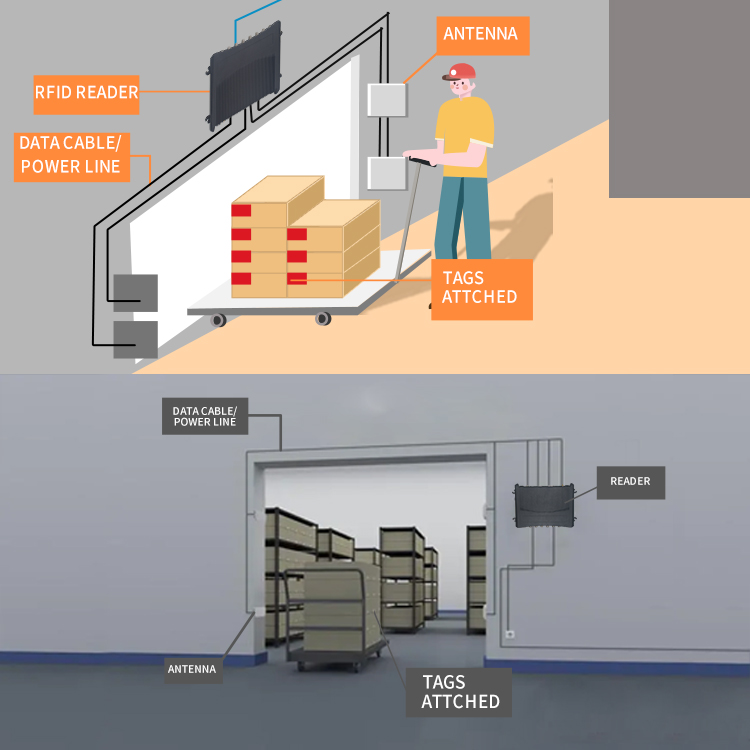
In a clothing warehouse, RFID tags allow employees to quickly identify incoming garments when shipments arrive. Instead of manually checking every item, warehouse teams can use RFID readers to collect product information instantly and update inventory systems automatically.
During storage and distribution, RFID technology helps businesses know where garments are located and how products are moving through different processes. This reduces the risk of misplaced clothing items and improves overall warehouse organization.
For shipping operations, RFID verification ensures that the correct garments are selected, packed, and delivered. This helps reduce order errors and improves customer satisfaction.
Improving Inventory Accuracy with RFID Technology
Inventory accuracy is one of the biggest challenges in the apparel industry. Clothing businesses often manage thousands of products with different sizes, colors, and styles. Manual inventory checks can easily lead to inaccurate records.
RFID on clothes helps solve this problem by automatically capturing garment information and updating inventory data in real time. Businesses can quickly check available stock, identify missing items, and make better purchasing decisions.
With improved inventory accuracy, companies can reduce overstocking, avoid product shortages, and optimize warehouse space.
Reducing Manual Counting Errors
Traditional clothing inventory management requires employees to count products manually or scan individual barcodes. These processes take significant time and may result in mistakes caused by human factors.
By using RFID on clothes, businesses can automate inventory counting and reduce the possibility of errors. RFID readers can identify multiple tagged garments simultaneously, allowing employees to complete stock checks much faster.
This improves operational efficiency and allows warehouse teams to spend less time on repetitive tasks.
Applications of RFID on Clothes in the Apparel Industry
RFID on clothes is widely used in different areas of the clothing industry, including manufacturing, retail, logistics, and laundry management.
In clothing manufacturing, RFID technology helps track garments during production processes such as cutting, sewing, quality inspection, and packaging. Manufacturers can improve production visibility and identify potential delays more effectively.
In fashion retail stores, RFID on clothes helps maintain accurate inventory information. Store employees can quickly locate products, check stock availability, and improve customer service.
In e-commerce warehouses, RFID technology supports faster order fulfillment by providing accurate product information. This helps online retailers reduce picking mistakes and improve delivery efficiency.
For commercial laundry and uniform management, RFID clothing tags allow organizations to track garment usage, cleaning cycles, and distribution records, reducing clothing loss and improving management efficiency.
Key Benefits of RFID on Clothes
RFID on clothes offers several advantages for modern clothing businesses.
The first benefit is improved inventory accuracy. Automated identification reduces errors and provides more reliable stock information.
Another advantage is faster inventory management. Businesses can complete garment counting and checking processes in a shorter time compared with traditional methods.
RFID technology also improves supply chain visibility by allowing companies to track clothing items from production to delivery.
In addition, RFID on clothes helps reduce garment loss because each item has a unique digital identity that can be monitored throughout its lifecycle.
RFID on Clothes Compared with Traditional Barcode Systems
Compared with barcode technology, RFID provides a more efficient solution for large-scale clothing management.
Barcode systems usually require direct scanning of each individual product, while RFID readers can identify multiple garments at once. This makes RFID especially suitable for warehouses and businesses managing large quantities of apparel.
RFID also provides better tracking capabilities because garment information can be updated automatically throughout different stages of the supply chain.
The Future of RFID in the Clothing Industry
As the apparel industry continues to move toward digital transformation, RFID on clothes will become increasingly important for smart garment management.
Future clothing supply chains will rely more on automated tracking, real-time inventory visibility, and connected digital systems. RFID technology will help businesses create more transparent and efficient operations while improving customer experiences.
From smart warehouses to intelligent retail environments, RFID-enabled clothing management will continue to shape the future of the fashion industry.
Frequently Asked Questions About RFID on Clothes
How does RFID on clothes work?
RFID on clothes works by attaching RFID tags to garments. These tags store unique identification information that can be detected by RFID readers and connected to inventory management systems.
Can RFID tags be used on different types of clothing?
Yes. RFID tags can be attached to many types of garments, including shirts, jackets, uniforms, jeans, sportswear, and other textile products.
Does RFID on clothes improve inventory accuracy?
Yes. RFID technology reduces manual errors by automatically identifying garments and providing real-time inventory information.
Why do clothing companies use RFID tags?
Clothing companies use RFID tags to improve garment tracking, reduce inventory mistakes, increase warehouse efficiency, and optimize supply chain management.
RFID on clothes is changing the way clothing businesses manage garments, inventory, and supply chain operations. By enabling automatic identification and real-time tracking, RFID technology helps companies improve accuracy, reduce errors, and manage large volumes of apparel more efficiently.
As fashion businesses continue to adopt smarter technologies, RFID on clothes will remain an important solution for achieving faster, more accurate, and more efficient garment management.