




How to Choose RFID Tags for Industrial Equipment Tracking
Industrial equipment tracking requires RFID tags that can withstand demanding environments, provide reliable identification, and work with the existing RFID system. From manufacturing tools and heavy machinery to maintenance equipment and reusable components, the right tag depends on the asset material, operating conditions, read range, and tracking requirements.
Choosing RFID tags for industrial equipment involves more than comparing prices or advertised read distances. Businesses should evaluate tag compatibility, mounting methods, durability, and performance under actual operating conditions before committing to a large-scale deployment.
1. Identify the Equipment and Tracking Requirements
Start by identifying the types of equipment you need to track and how the RFID system will be used.
Industrial equipment tracking can include fixed machinery, handheld tools, maintenance assets, production fixtures, containers, and equipment that moves between facilities. Each application may require a different tag design.
For example, a tag attached to a small metal tool may need a compact form factor and a secure mounting method. A tag used on a large machine may need to remain readable from a greater distance, depending on the reader setup and tracking workflow.
Before selecting a tag, consider the following questions:
-
What type of equipment needs identification?
-
Is the asset made of metal, plastic, or another material?
-
Will the tag be scanned at close range or from a distance?
-
Does the equipment move frequently between locations?
-
Must the tag withstand vibration, moisture, dust, heat, or cleaning chemicals?
-
Will the tag remain attached for months or several years?
Defining these requirements helps narrow the available options and reduces the risk of choosing a tag that performs poorly in the intended environment.
2. Choose the Right RFID Frequency
RFID tags operate at different frequencies, and the best choice depends on the tracking application, reader infrastructure, and required read range.
UHF RFID Tags
Ultra-high-frequency (UHF) RFID tags are commonly used for inventory management, industrial asset tracking, warehouse operations, and identifying multiple tagged items within a reader's coverage area.
UHF systems can support longer read distances than many HF and LF applications, depending on the tag, antenna, reader power, environment, and local regulatory requirements. They can be useful when equipment must be identified efficiently during inventory checks or movement through designated scanning areas.
However, UHF is not automatically the best choice for every industrial application. Metal surfaces, liquids, tag orientation, and nearby objects can affect performance.
HF and NFC Tags
High-frequency (HF) RFID operates at 13.56 MHz. NFC is a related technology that also operates at 13.56 MHz and supports compatible close-range interactions.
HF and NFC may be suitable when equipment needs to be identified at close range, when a user must deliberately scan a specific item, or when compatible NFC-enabled devices are part of the workflow.
For industrial equipment tracking, the decision should be based on the intended interaction, required read distance, data requirements, and compatibility with the available reader devices.
Selection tip: Confirm the frequency and protocol supported by your RFID readers before ordering tags. Tags operating at different frequencies are generally not interchangeable without compatible system hardware.
3. Consider Metal Surfaces and Mounting Conditions
The mounting surface is one of the most important factors when selecting RFID tags for industrial equipment.
Metal can detune an RFID antenna or interfere with its electromagnetic field, particularly when a conventional tag is mounted directly against a conductive surface. This may reduce read range or prevent reliable identification.
If the equipment includes steel or aluminium surfaces, evaluate RFID tags specifically designed for on-metal applications.
Standard RFID Tags vs. Anti-Metal RFID Tags
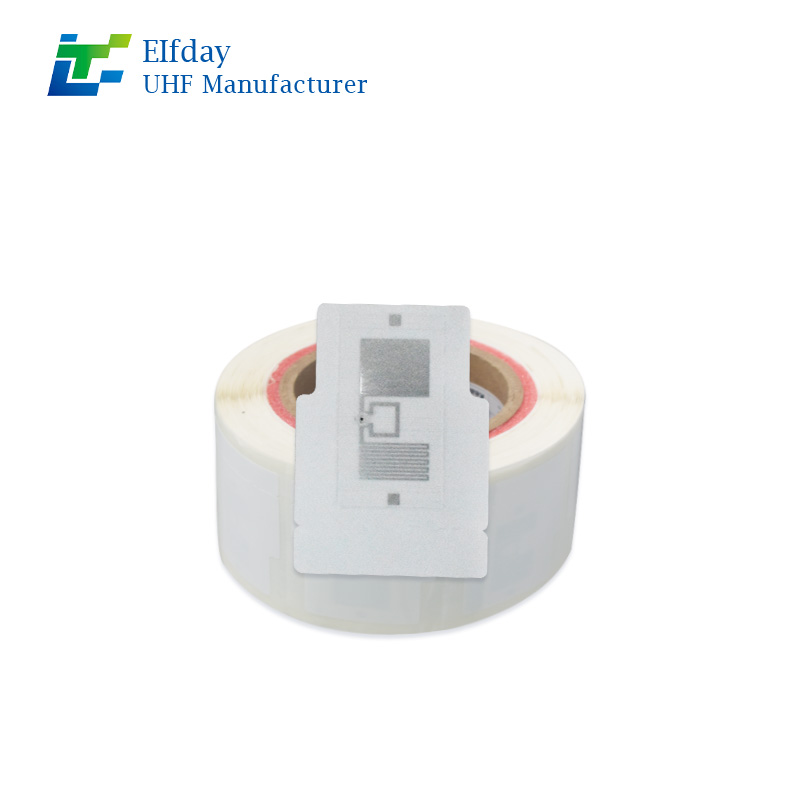
Standard RFID labels may work well on suitable non-metallic surfaces, including certain plastic housings and packaging materials. On metal, their performance depends on the tag design and installation conditions.
Anti-metal RFID tags are designed to operate on or near metal surfaces. Depending on the design, they may incorporate spacing layers, specialized antenna structures, or other features that help manage the effects of metal.
When comparing anti-metal RFID tags, check:
-
Whether the tag is designed for direct metal mounting.
-
The recommended mounting surface and installation method.
-
The tag dimensions and available mounting space.
-
The tested read performance on representative equipment.
-
Whether the adhesive or mechanical attachment method suits the application.
For machinery, metal tools, and industrial containers, testing the tag on the actual asset is more reliable than selecting one based on general product descriptions alone.
4. Evaluate Durability and Environmental Resistance
Industrial equipment may operate in environments that expose tags to abrasion, vibration, moisture, temperature changes, oils, or cleaning agents. A tag that works in a controlled office environment may not remain readable on a factory floor.
Match the tag construction to the actual operating conditions.
| Environmental requirement | What to evaluate |
| Dust and moisture | Enclosure design and verified ingress protection, where applicable |
| Heat or cold | Operating and storage temperature limits |
| Oils and chemicals | Material compatibility and resistance test results |
| Frequent handling | Surface wear, impact resistance, and attachment strength |
| Vibration | Mounting security and resistance to loosening |
| Outdoor exposure | UV resistance, weathering, and temperature cycling |
| Long service life | Readability retention, material stability, and attachment durability |
Do not assume that every industrial RFID tag is waterproof, chemical-resistant, or suitable for extreme temperatures. Request the manufacturer's specifications and supporting test information for the conditions that matter to your operation.
For high-value assets or critical equipment, consider validating durability through sample testing before placing a bulk order.
5. Select a Suitable Read Range
Read range affects how RFID tags fit into an equipment tracking workflow. Some applications require an employee to scan a single tool at close range, while others need to identify tagged assets as they pass a reader installation.
The actual read range depends on several variables:
-
RFID frequency and tag antenna design.
-
Reader output power and antenna configuration.
-
Tag orientation relative to the reader antenna.
-
The material and geometry of the mounting surface.
-
Nearby metal, liquids, and other radio-frequency interference.
-
Local radio regulations and installation constraints.
A read distance quoted in a product specification should not be treated as a guaranteed result in every installation.
For reliable equipment tracking, test representative tags using the intended reader, antenna, mounting position, and operating environment. Evaluate not only maximum read distance but also read consistency and the risk of detecting unintended nearby assets.
6. Check Reader Compatibility and Data Requirements
Before purchasing RFID tags, verify that they are compatible with the existing tracking infrastructure.
For UHF systems, confirm support for the relevant air-interface protocol, commonly EPC Class 1 Gen 2 / ISO 18000-63 where applicable. For HF or NFC applications, check the supported standards, chip capabilities, and reader compatibility.
You should also determine what information needs to be stored on the tag.
In many industrial tracking systems, the tag carries a unique identifier that links to an equipment record in asset management software. The database can then store information such as the equipment model, serial number, maintenance history, assigned location, inspection status, and responsible department.
This approach can make it easier to update equipment records without rewriting extensive information onto every tag. The appropriate data structure depends on the tracking system and operational requirements.
7. Compare Attachment Methods and Tag Designs
The attachment method affects installation time, durability, and long-term tracking reliability.
Common options include:
-
Adhesive-backed RFID tags: Suitable for compatible surfaces where the adhesive can withstand the operating environment.
-
Screw-mounted tags: Useful when mechanical attachment is needed and the equipment can accommodate secure mounting points.
-
Rugged hard tags: Worth considering for applications that require a more robust tag construction.
-
Flexible anti-metal tags: May suit equipment with limited mounting space or applications requiring a low-profile design.
-
Embedded or integrated tags: Can be considered during equipment manufacturing or product design when permanent identification is required.
The best option depends on the equipment geometry, surface material, installation process, maintenance access, and expected service life.
For existing equipment, confirm that the selected mounting method will not interfere with operation, safety requirements, maintenance, or manufacturer warranties.
8. Test RFID Tags Before Bulk Ordering
Sample testing is an important step in industrial RFID procurement, particularly when tags will be deployed across many assets or multiple facilities.
A structured evaluation can reveal problems that may not be apparent from a datasheet.
A practical test process should include:
-
Verify compatibility: Confirm that the tags work with the intended readers and software.
-
Test on actual equipment: Attach the tags to representative metal and non-metal surfaces.
-
Measure read consistency: Repeat scans at expected distances, angles, and equipment positions.
-
Check environmental suitability: Evaluate exposure to relevant moisture, temperature, vibration, abrasion, or chemicals.
-
Validate identification workflows: Confirm that the correct equipment record appears when a tag is scanned.
-
Review installation requirements: Check attachment time, positioning, and the risk of tags being damaged or detached.
-
Document the results: Record the test conditions, observed performance, and acceptance criteria.
If the project involves different equipment types or operating environments, test more than one tag design before standardizing on a single product.
9. Compare Total Cost, Not Just Unit Price
The lowest-priced RFID tag is not necessarily the most economical option for an industrial tracking project.
Procurement teams should consider the total cost of ownership, including tag price, installation labour, reader infrastructure, system integration, maintenance, replacement frequency, and the operational impact of missed or incorrect reads.
A more durable or application-specific tag may cost more initially but could be a better choice if it reduces replacement work or improves tracking consistency.
When requesting quotations, provide suppliers with the equipment material, operating environment, desired read range, reader specifications, attachment requirements, order quantity, and expected service life. Clear requirements make quotations easier to compare and reduce the risk of purchasing unsuitable products.
10. Use a Practical Checklist Before Selecting RFID Tags
Before finalizing an industrial RFID tag, review these essential requirements:
The tag is compatible with the RFID frequency and protocol used by the system.
The design is suitable for the equipment's surface material.
The mounting method fits the asset and operating environment.
The required read range has been validated under realistic conditions.
Environmental specifications meet the application's requirements.
The tag can be associated with the correct equipment record.
Sample testing has confirmed acceptable read consistency.
The supplier can provide relevant specifications and customization details.
The total cost fits the project's budget and service-life expectations.
A documented checklist helps procurement, engineering, and maintenance teams evaluate RFID tags against the same requirements.
Choosing RFID tags for industrial equipment tracking requires a clear understanding of asset materials, environmental conditions, read range, reader compatibility, attachment methods, and long-term operating costs.
UHF RFID tags may be suitable for many inventory and asset tracking workflows, while HF or NFC technologies can fit applications that rely on close-range identification. For equipment with metal surfaces, purpose-designed anti-metal RFID tags should be evaluated under actual installation conditions.
The most reliable selection process combines technical specifications with practical sample testing. By defining requirements before ordering, industrial businesses can make better-informed purchasing decisions and build an RFID tracking system that fits their operational needs.
Looking for RFID tags for industrial equipment tracking? Prepare your equipment details, mounting surface, reader specifications, operating environment, and expected order quantity before requesting a quotation. These details help suppliers recommend suitable tag options for your application.

