




How to Measure the Operational Value of Reliable RFID Identification
Reliable RFID identification is essential for businesses that depend on accurate inventory tracking, efficient warehouse operations, and real-time asset visibility. However, the value of RFID technology goes beyond simply identifying tagged items. Its real operational value lies in reducing labor costs, minimizing errors, improving workflow efficiency, and supporting better business decisions.
For companies investing in RFID solutions, measuring these benefits helps determine whether their RFID tags and identification systems deliver long-term operational value.
Evaluate RFID Read Accuracy and Consistency
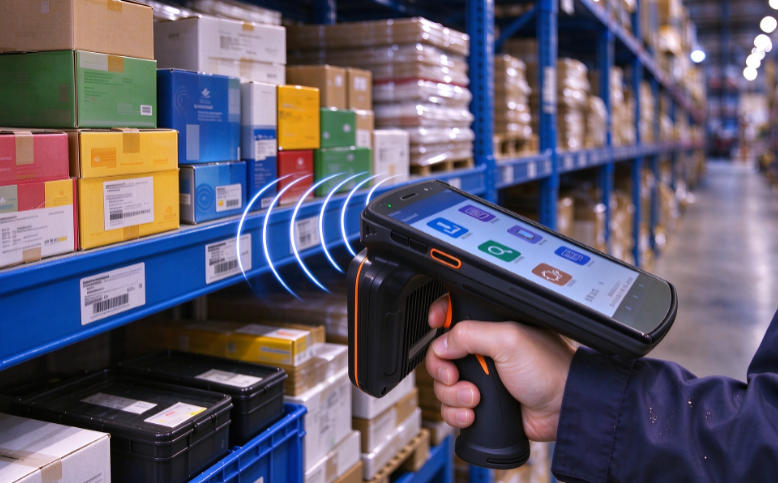
Read accuracy is one of the most important indicators of reliable RFID identification. When RFID tags consistently communicate with readers, businesses can collect item information with fewer missed reads and repeated scanning operations.
Companies should pay attention to:
Successful tag identification rates.
Missed reads during inventory counting.
Reading consistency across different distances.
Performance in environments with metal, liquids, or signal interference.
Identification stability during high-volume operations.
A reliable RFID tag helps maintain consistent data collection, reducing the need for manual verification and repeated scanning.
Measure Improvements in Labor Efficiency
Unreliable RFID identification often requires employees to spend additional time locating items, repeating scans, and correcting inventory records.
Reliable RFID tags can simplify these processes by enabling faster and more consistent identification.
Businesses can evaluate labor efficiency by monitoring:
Time required to complete inventory checks.
Employee hours spent on manual scanning.
Time spent troubleshooting identification failures.
Labor requirements for receiving and shipping operations.
Frequency of manual inventory verification.
For example, a warehouse that previously required an entire working day to complete inventory counting may significantly reduce this workload after improving RFID identification performance.
The resulting labor savings allow employees to focus on more productive warehouse activities.
Monitor Inventory Accuracy and Data Reliability
Inventory accuracy directly influences purchasing decisions, stock management, and order fulfillment.
When RFID tags fail to provide reliable identification, businesses may experience missing inventory records, duplicate entries, and discrepancies between physical stock and system data.
To measure improvements, businesses should monitor:
Inventory record accuracy.
Frequency of stock discrepancies.
Number of unidentified items.
Time required for inventory reconciliation.
Frequency of incorrect shipment records.
Reliable RFID identification helps businesses maintain more accurate inventory information, improve stock visibility, and reduce unnecessary inventory checks.
Track RFID Tag Replacement and Maintenance Expenses
RFID tag reliability has a direct impact on long-term maintenance expenses.
Tags exposed to moisture, extreme temperatures, vibration, chemicals, or physical impacts may experience premature failure if they are not designed for the application environment.
Businesses should evaluate:
RFID tag failure frequency.
Annual tag replacement quantities.
Costs of replacement tags.
Maintenance labor requirements.
Expenses caused by repeated installation and testing.
Choosing RFID tags with appropriate durability, materials, and environmental protection can reduce replacement frequency and help maintain stable system performance.
Although higher-quality tags may require a larger initial investment, they can offer better long-term value by reducing maintenance and replacement expenses.
Assess Operational Downtime and Workflow Continuity
RFID identification failures can interrupt important business processes, especially in automated warehouses, manufacturing facilities, and logistics operations.
For example, when an RFID reader cannot identify a package, employees may need to stop the workflow and perform manual verification.
These interruptions can affect:
Warehouse receiving and dispatch operations.
Automated sorting and conveyor systems.
Manufacturing material tracking.
Transportation and shipment monitoring.
Equipment and asset management.
Businesses should record how frequently RFID identification problems interrupt operations and how much time employees spend resolving them.
More reliable RFID identification supports smoother workflows, reduces unnecessary interruptions, and improves overall operational productivity.
Evaluate the Financial Benefits of RFID Identification
The operational value of reliable RFID identification becomes clearer when businesses consider its overall financial impact.
Instead of evaluating RFID tags only by their purchase price, companies should consider the total cost of ownership and the savings generated throughout their operational lifecycle.
Important financial indicators include:
|
Financial indicator |
Potential business benefit |
|
Labor expenses |
Reduced manual scanning and verification |
|
Inventory management costs |
Fewer stock discrepancies |
|
Tag replacement expenses |
Lower maintenance costs |
|
Downtime expenses |
Fewer workflow interruptions |
|
Shipping error costs |
More reliable package identification |
|
Quality control expenses |
Less time spent troubleshooting |
Comparing these costs before and after improving RFID identification can help businesses understand the actual financial contribution of their RFID investment.
Choose RFID Tags Based on Application Requirements
Reliable identification also depends on selecting RFID tags that match the materials, operating conditions, and requirements of each application.
Different environments require different RFID tag designs.
|
Application |
Recommended tag characteristics |
|
Warehouse inventory |
Stable read performance and suitable read range |
|
Metal asset tracking |
Anti-metal design and interference resistance |
|
Logistics management |
Consistent identification and durable construction |
|
Laundry management |
Water resistance and wash-cycle durability |
|
Outdoor equipment |
Waterproof protection and temperature resistance |
|
Manufacturing |
Mechanical durability and stable performance |
Before large-scale deployment, businesses should conduct practical testing to evaluate read performance, mounting compatibility, environmental resistance, and identification consistency.
Choosing suitable RFID tags from the beginning can help prevent unnecessary operating expenses and improve long-term system reliability.
Measuring the operational value of reliable RFID identification requires looking beyond basic tag reading capabilities.
Businesses should evaluate how RFID identification performance affects labor efficiency, inventory accuracy, maintenance expenses, operational downtime, and overall business productivity.
Reliable RFID tags help organizations reduce manual intervention, improve tracking accuracy, maintain workflow continuity, and control long-term operating costs.
For companies implementing RFID solutions, selecting application-specific tags with consistent performance and suitable durability is an important step toward achieving sustainable operational efficiency.

