




How to Plan RFID Tag Deployment Across Multiple Locations
Deploying RFID tags across multiple locations requires more than selecting suitable tags and installing readers. When a business operates multiple warehouses, factories, offices, or distribution centers, each site may have different equipment, materials, workflows, and operating conditions.
Without a consistent deployment strategy, these differences can lead to inconsistent identification results, fragmented inventory records, and difficulties managing RFID devices across locations.
A well-planned RFID deployment helps organizations establish standardized identification procedures while allowing individual sites to address their specific operational requirements.
Assess the Requirements of Each Location
The first step is to understand how RFID technology will be used at every deployment site.
Although multiple locations may share the same business objectives, their operational environments can vary considerably.
During the initial assessment, consider:
The number and types of assets requiring identification
The materials and surfaces where RFID tags will be attached
Indoor and outdoor operating conditions
Inventory movement and handling procedures
Existing RFID readers and software systems
Areas where identification or inventory checks will take place
For example, a warehouse may primarily track pallets and storage containers, while a manufacturing facility may need to identify production equipment, tools, and work-in-progress items.
Documenting these differences helps determine whether each location can use the same RFID tag configuration or requires specific alternatives.
Establish Standardized RFID Tag Selection Criteria
Standardization is essential when RFID tags are deployed across multiple locations.
Using consistent tag models where practical can simplify procurement, installation, maintenance, and inventory management.
However, selecting one tag for every application may not be appropriate.
Different assets and operating environments may require different tag designs, including:
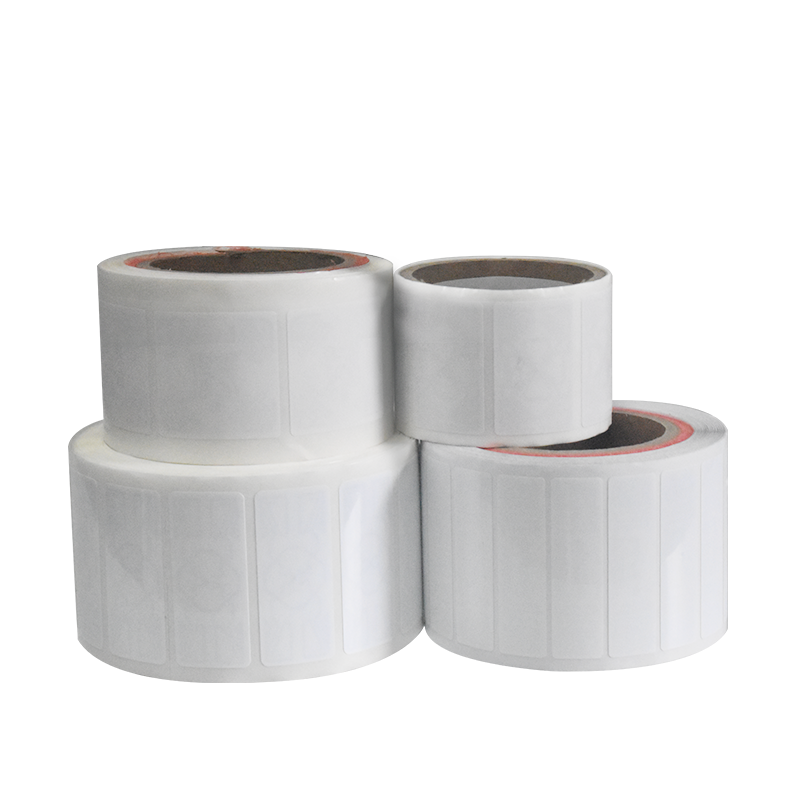
General-purpose UHF RFID tags for cartons and plastic containers
On-metal RFID tags for metal equipment and storage assets
Rugged RFID tags for applications involving frequent handling
Flexible RFID tags for curved or space-constrained surfaces
Custom RFID tags for specialized identification requirements
A practical approach is to establish a standard tag list based on application categories. Each site can then select approved models according to its actual requirements.
This balances consistency with application-specific flexibility.
Define a Consistent Tag Identification Structure
A multi-location RFID project needs a clear identification structure.
Each RFID tag should have a unique identifier that can be associated with the correct asset record in the organization's database.
The identification structure should account for:
Unique tag identification numbers
Asset categories and ownership
Location or facility information
Department or operational area
Asset status and movement history
For example, a company may manage equipment across three warehouses. Each RFID tag can be associated with an asset record containing its current facility, assigned department, and movement history.
The RFID tag itself does not necessarily need to store every business detail. In many systems, its identifier is linked to more complete information in centralized software.
This approach helps maintain consistent asset records even when items move between locations.
Plan Installation Procedures for Each Site
Once tag models and identification rules are established, installation procedures should be documented.
Different locations may have different installation teams, equipment, and working conditions. Without clear instructions, tags may be attached inconsistently.
A standardized installation guide should specify:
Approved tag models for each asset category
Recommended attachment surfaces and positions
Suitable adhesives or mechanical mounting methods
Surface cleaning and preparation procedures
Tag orientation requirements where applicable
Inspection and testing procedures after installation
Include photographs or diagrams showing acceptable installation positions for common asset types.
Local teams should follow the same core procedures while documenting any approved exceptions.
Check RFID Reader Compatibility Across Locations
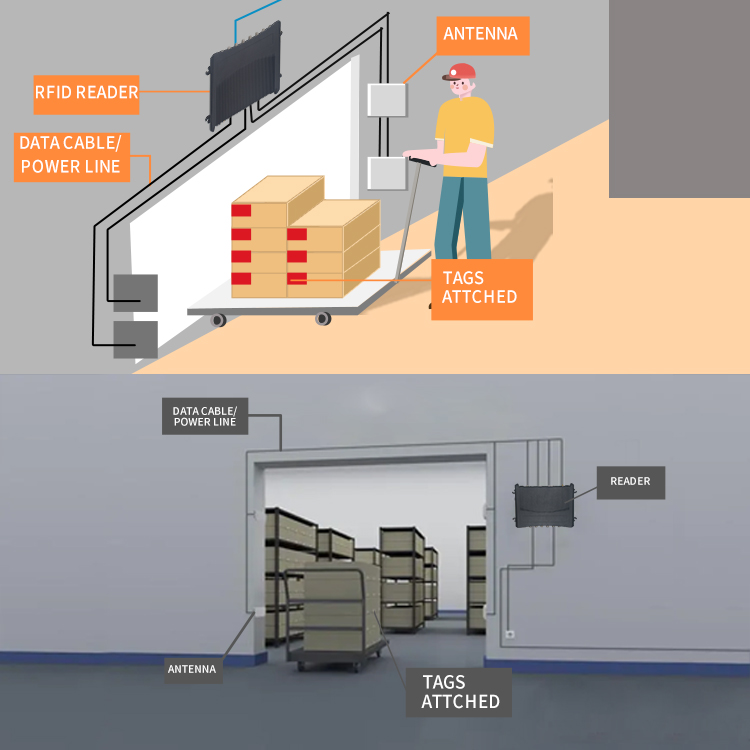
RFID tags cannot be evaluated independently of the readers and antennas used in the deployment.
Before installation begins, verify that the selected tags are compatible with the RFID equipment at each location.
Important considerations include:
RFID frequency and regional regulations
Supported RFID protocols
Reader and antenna configuration
Tag orientation and polarization
Reading conditions around metal or liquid materials
Communication with the existing software platform
For example, a company operating in different countries may need to account for regional UHF frequency requirements rather than assuming that one reader configuration can be used everywhere.
Testing the complete tag-reader combination at each site helps identify compatibility issues before large-scale deployment.
Conduct a Pilot Deployment Before Expansion
A pilot deployment is an effective way to validate the proposed RFID configuration.
Instead of installing thousands of tags immediately, begin with a representative group of assets at one or two locations.
The pilot should evaluate:
-
Whether the selected tags can be attached reliably.
-
Whether readers identify the intended tags under normal operating conditions.
-
Whether the system handles multiple tags appropriately.
-
Whether asset records are correctly associated with tag IDs.
-
Whether data can be transferred to the existing management platform.
-
Whether local employees can follow the installation and operating procedures.
Record problems and corrective actions during the pilot.
The results can then be used to refine tag selection, installation guidelines, reader settings, and staff training before expanding to additional sites.
Coordinate Data Management Across Locations
A successful multi-site RFID deployment depends on consistent data management.
If each location maintains separate identification rules or inventory records, it may become difficult to obtain a unified view of company assets.
Where appropriate, RFID data should be integrated with a centralized platform such as an ERP, WMS, or asset management system.
A centralized structure can support:
Cross-location asset searches
Inventory visibility across facilities
Asset transfer records
Standardized reporting
User permissions and location-based access
Identification of missing or inconsistent records
The system should also define how tag IDs are assigned, how duplicate records are handled, and how asset information is updated when items move between locations.
Monitor Deployment Quality After Installation
RFID deployment does not end when tags have been attached and readers have been configured.
Regular checks help identify installation problems, damaged tags, changes in the operating environment, and data inconsistencies.
Useful monitoring activities include:
Reviewing identification results at key checkpoints
Inspecting tags that are frequently damaged or detached
Comparing physical inventory with system records
Checking reader and antenna configurations
Reviewing asset transfer records
Collecting feedback from employees at each location
A shared reporting process allows the central project team to compare results across facilities and identify recurring problems.
Build a Scalable Deployment Plan
Businesses may add new warehouses, production lines, or operating facilities over time. The RFID deployment strategy should therefore support future expansion.
A scalable plan should include approved tag specifications, installation documentation, identification rules, reader compatibility requirements, and system integration standards.
It is also useful to maintain a deployment record for every site, including installed tag quantities, equipment configurations, test results, and outstanding issues.
This documentation makes it easier to introduce RFID technology at new locations without repeating the entire planning process.
Planning RFID tag deployment across multiple locations requires coordination between tag selection, installation procedures, reader compatibility, data management, and ongoing monitoring.
The most effective approach is to establish common standards while allowing individual sites to address their specific operating conditions.
By assessing each location, validating the system through pilot testing, and maintaining consistent identification and data procedures, organizations can build an RFID deployment that is easier to manage, maintain, and expand.
Explore EFLDAY's RFID tags, RFID readers, and RFID antennas to identify suitable components for your multi-location RFID project.