



How to Set Performance Benchmarks for an RFID Tracking Project
Setting performance benchmarks for an RFID tracking project is essential for measuring system effectiveness, improving operational efficiency, and ensuring that your investment delivers measurable business value.
Whether you are implementing RFID for warehouse management, logistics tracking, inventory control, or vehicle management, your benchmarks should measure more than just whether RFID tags can be read. They should evaluate the entire tracking process, from tag identification to data accuracy and operational performance.
Here is a practical framework for establishing RFID performance benchmarks.
Define Your RFID Project Objectives
Before setting performance benchmarks, identify what you want your RFID system to achieve.
Different applications require different performance indicators.
|
RFID Application |
Primary Objective |
Key Performance Focus |
|
Warehouse Management |
Improve inventory visibility |
Inventory accuracy, read rate |
|
Logistics Tracking |
Track goods throughout transportation |
Tracking accuracy, read speed |
|
Asset Tracking |
Locate and manage assets |
Identification accuracy, coverage |
|
Vehicle Management |
Automate vehicle identification |
Reading distance, response time |
|
Access Control |
Improve entry management |
Identification speed, reliability |
|
Supply Chain Management |
Improve product traceability |
Data accuracy, tracking coverage |
Recommendation: Establish 3–5 primary objectives rather than trying to measure every possible system metric.
Identify the Key RFID Performance Metrics
The following metrics are particularly important when evaluating an RFID tracking project.
1. RFID Tag Read Rate
Definition: The percentage of RFID tags successfully identified compared with the total number of tags that should be detected.
Formula:
Example:
Total RFID tags: 1,000
Successfully identified tags: 980
Read rate: 98%
Suggested benchmark: 98%–99% or higher under defined operating conditions.
2. RFID Reading Accuracy
Measures whether the system correctly identifies the right RFID tag and associates it with the correct asset, product, or vehicle.
Formula:
Suggested benchmark: 99% or higher.
This metric is especially important in warehouses where incorrect product identification can lead to inventory discrepancies.
3. Reading Distance
Definition: The maximum distance at which an RFID reader and antenna can reliably identify a tag.
Measure reading distance under actual installation conditions.
Consider:
RFID tag type and sensitivity.
Antenna gain and polarization.
Reader transmission power.
Tag orientation.
Environmental interference.
Product and packaging materials.
Suggested benchmark: Set the required reading distance according to the application rather than using one universal target.
For example, a warehouse portal may have a different distance requirement from a vehicle identification system.
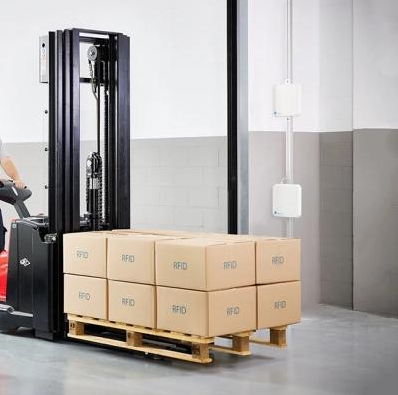
4. Data Processing and Response Time
Measures how quickly the RFID system processes tag information and makes it available to the management platform.
|
Performance Indicator |
Example Target |
|---|---|
|
Tag identification response |
Under 200 ms |
|
Data transmission latency |
Under 1 second |
|
System data synchronization |
Under 5 seconds |
|
Dashboard update |
Under 5 seconds |
These are illustrative targets, not universal RFID standards. Define exactly where timing starts and ends before testing.
5. System Reliability and Uptime
Measures how consistently the RFID tracking system operates.
Formula:
Example benchmark:
Target uptime: 99.5% or higher.
Monitor unexpected downtime.
Record reader communication failures.
Track network and software interruptions.
Establish Baseline Performance
Before implementing RFID, collect data about your existing operational processes.
This provides a reference point for evaluating improvements.
For example:
|
Operational Metric |
Before RFID |
Target After RFID |
|
Inventory accuracy |
90% |
99% |
|
Inventory counting time |
4 hours |
30 minutes |
|
Manual data entry |
100% |
Below 10% |
|
Product tracking coverage |
70% |
99% |
|
Inventory discrepancy rate |
10% |
Below 1% |
These figures are sample project targets. Your actual targets should reflect baseline measurements and operational requirements.
The key is to measure improvement, not simply system specifications.
Create an RFID Performance Benchmark Table
Once you have identified your objectives and metrics, consolidate them into a benchmark table.
Here is an example for a UHF RFID warehouse and logistics tracking project.
|
Performance Metric |
Target Benchmark |
Measurement Method |
|
RFID Tag Read Rate |
≥ 99% |
Controlled tag-reading test |
|
Identification Accuracy |
≥ 99.5% |
Compare with ground-truth records |
|
Reading Distance |
≥ 5 meters |
Distance testing |
|
Data Transmission Latency |
≤ 1 second |
System timestamp analysis |
|
System Uptime |
≥ 99.5% |
System monitoring |
|
Inventory Accuracy |
≥ 99% |
Physical inventory comparison |
|
Data Synchronization |
≤ 5 seconds |
Database comparison |
|
Duplicate Read Handling |
≥ 99% correctly filtered |
Event log analysis |
Note that the 5-meter reading distance is only an example. It must be validated against the specific RFID reader, antenna, tag, and installation environment.
Conduct Real-World Performance Testing
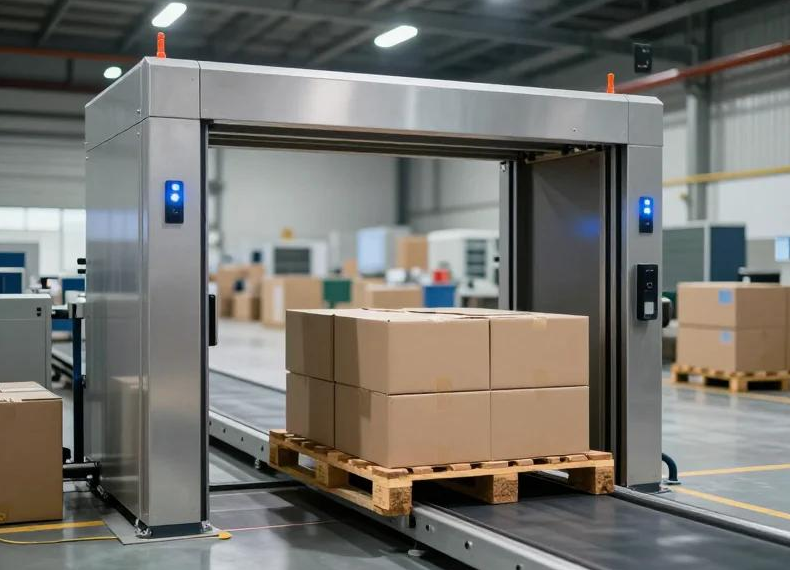
Laboratory testing alone is not enough. RFID performance can change significantly in actual operating environments.
I recommend testing under the following conditions:
Warehouse Environment
Test multiple tags, stacked products, metal shelves, and different tag orientations.
Logistics Environment
Test moving goods, conveyor speeds, loading operations, and simultaneous tag identification.
Vehicle Management Environment
Test vehicle speed, antenna positioning, reading distance, and tag mounting locations.
Hardware Reliability Testing
Evaluate antenna performance, reader stability, temperature resistance, and interference.
For reliable results, repeat tests across different shifts, operating speeds, tag quantities, and environmental conditions.
Monitor Performance Using an RFID KPI Dashboard
After deployment, continuously monitor the project's performance.
A practical dashboard should include:
Tag read rate.
Missed read events.
Incorrect identification rate.
Average reading distance.
Reader communication status.
System uptime.
Data processing latency.
Inventory accuracy.
Operational cost savings.
Review operational metrics daily or weekly, and conduct a more comprehensive performance evaluation monthly.
Evaluate ROI and Business Improvements
Technical performance does not automatically translate into business value.
You should also measure the financial and operational benefits of RFID implementation.
|
Business KPI |
Measurement |
|
Labor Cost Reduction |
Labor costs before vs. after RFID |
|
Inventory Cost Reduction |
Reduction in inventory discrepancies |
|
Processing Efficiency |
Time saved per operation |
|
Loss Prevention |
Reduction in missing assets or products |
|
Operational Productivity |
Number of items processed per hour |
|
ROI |
Financial benefits compared with project investment |
A simple ROI formula is:
Make sure the benefit and cost periods are consistent when calculating ROI.
Recommended RFID Project Benchmark Implementation Plan
A structured implementation process helps ensure that benchmarks are realistic and measurable.
-
Phase 1: Project Planning
Define application scenarios, business objectives, and performance requirements.
-
Phase 2: Baseline Measurement
Record existing inventory accuracy, processing time, labor costs, and tracking performance.
-
Phase 3: Pilot Testing
Deploy RFID readers, antennas, and tags in a limited operational area.
-
Phase 4: Benchmark Evaluation
Compare actual performance against predefined targets and identify performance gaps.
-
Phase 5: System Optimization
Adjust antenna positioning, reader power, tag selection, and software configurations.
-
Phase 6: Full Deployment and Monitoring
Expand the system and continuously monitor technical and business KPIs.
Final Recommendations
For most RFID tracking projects, I recommend organizing performance benchmarks into four categories:
|
Category |
Most Important Metrics |
|
Identification Performance |
Read rate, identification accuracy |
|
Communication Performance |
Reading distance, response time, latency |
|
System Reliability |
Uptime, error rate, communication stability |
|
Business Performance |
Inventory accuracy, labor savings, ROI |
The most important principle is to establish measurable targets before deployment, validate them through real-world pilot testing, and continuously improve the system based on actual operating data.
A useful next step: Create an RFID Tracking Project KPI Benchmark Spreadsheet with target values, actual test results, pass/fail status, and improvement actions. This makes it much easier to evaluate RFID readers, antennas, tags, and complete tracking solutions objectively.