



RFID Tags Grocery Stores for Fresh Food and Stock Management
Managing fresh food and packaged goods is one of the biggest challenges for modern grocery stores. Products move quickly from receiving areas to storage rooms and then onto shelves, while inventory levels can change throughout the day. RFID tags grocery stores use can provide a practical way to identify products, monitor stock, and improve visibility across different areas of the store.
Unlike traditional inventory methods that often rely on manual counting and individual barcode scanning, RFID technology can identify multiple tagged items within the reader's range. This can help grocery staff spend less time on repetitive inventory tasks and more time keeping shelves stocked and operations running smoothly.
Why Grocery Stores Need Better Inventory Visibility
Grocery stores manage a wide variety of products, including fresh food, packaged goods, beverages, dairy products, prepared foods, and household items. Each category can have different turnover rates and storage requirements.
When inventory records are not updated frequently, several problems can occur. Employees may not know exactly how much stock is available in the backroom, shelves may remain empty even though products are available nearby, and excess inventory can take up valuable storage space.
Better inventory visibility allows staff to make faster decisions about replenishment, product handling, and stock management.
How RFID Tags Work in Grocery Stores
RFID tags contain electronically stored identification information that can be detected by compatible RFID readers. Depending on the application, tags can be attached to individual products, packaging, cases, containers, or reusable assets.
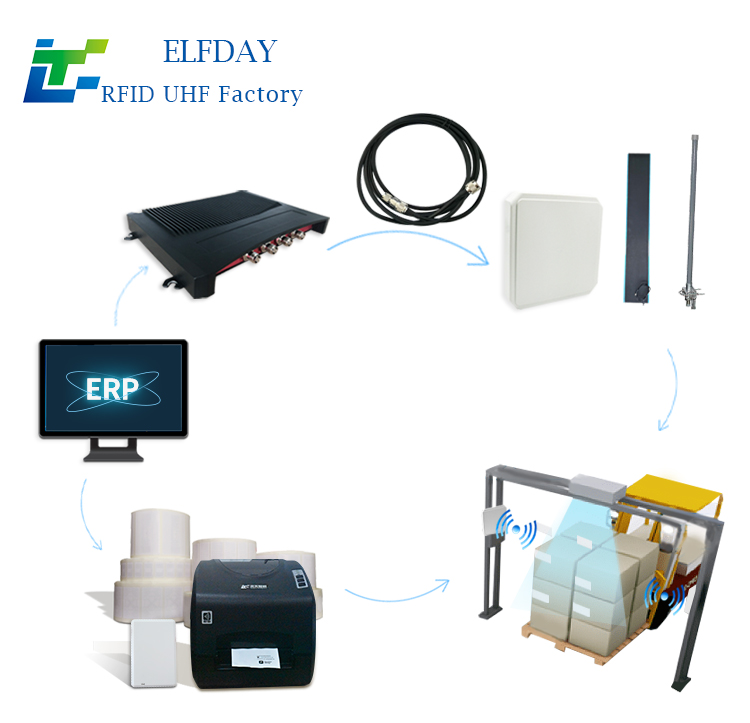
When an RFID reader scans a group of tagged items, multiple tags can potentially be identified during the same reading process. The collected information can then be connected to inventory management software.
For grocery retailers, this creates a link between physical products and digital inventory records.
RFID tags grocery stores use can therefore support inventory processes such as:
- Product identification
- Stock counting
- Backroom inventory checks
- Shelf replenishment
- Receiving and distribution
- Product movement tracking
- Reusable container management
Supporting Fresh Food Inventory
Fresh food requires particularly careful inventory management because products can have short selling windows and high turnover rates.
RFID can help staff identify and track selected fresh food products or their associated packaging. With better visibility of available stock, employees can determine which products need replenishment and which items are already available in storage.
For grocery stores handling large volumes of fresh products, faster identification can make daily inventory routines more efficient.
Tracking Packaged Grocery Products
Packaged goods are another important application for RFID technology. Products such as canned food, boxed goods, snacks, beverages, and household products can be identified using RFID tags when the packaging and operating environment are suitable.
Instead of manually checking each item, employees can use RFID readers to capture information from multiple tagged products. This can make stock checks faster, particularly in large backrooms or storage areas.
Improving Stock Level Monitoring
Knowing how much inventory is actually available is essential for effective grocery store management.
RFID can provide more frequent inventory information by making product identification faster. When integrated with inventory software, RFID data can help staff compare recorded inventory with physical stock.
This can make it easier to identify:
- Products that are running low
- Stock stored in the wrong location
- Inventory discrepancies
- Products waiting for shelf replenishment
- Overstocked items
- Missing or misplaced products
With more accurate information, employees can make better decisions about when and where inventory needs attention.
Faster Shelf Replenishment
Customers expect popular grocery products to be available when they visit a store. Empty shelves can result in missed sales and a less convenient shopping experience.
RFID can support the replenishment process by helping employees determine whether additional products are available in the backroom. Instead of spending significant time searching through storage areas, staff can use RFID-enabled inventory information to identify available stock more efficiently.
This is especially useful during busy periods when employees need to replenish shelves quickly.
Managing Backroom Inventory More Efficiently
The backroom is often one of the most difficult areas to manage because large quantities of products can be stored in a relatively small space.
Cartons, cases, totes, and other containers may be moved frequently as employees replenish shelves. Without an efficient identification system, locating a particular product can take unnecessary time.
RFID tags grocery stores use can help provide a clearer picture of what is stored in the backroom. Employees can use RFID readers to identify tagged products and improve the efficiency of stock searches and inventory checks.
Supporting Receiving Operations
Inventory management starts when products arrive at the store.
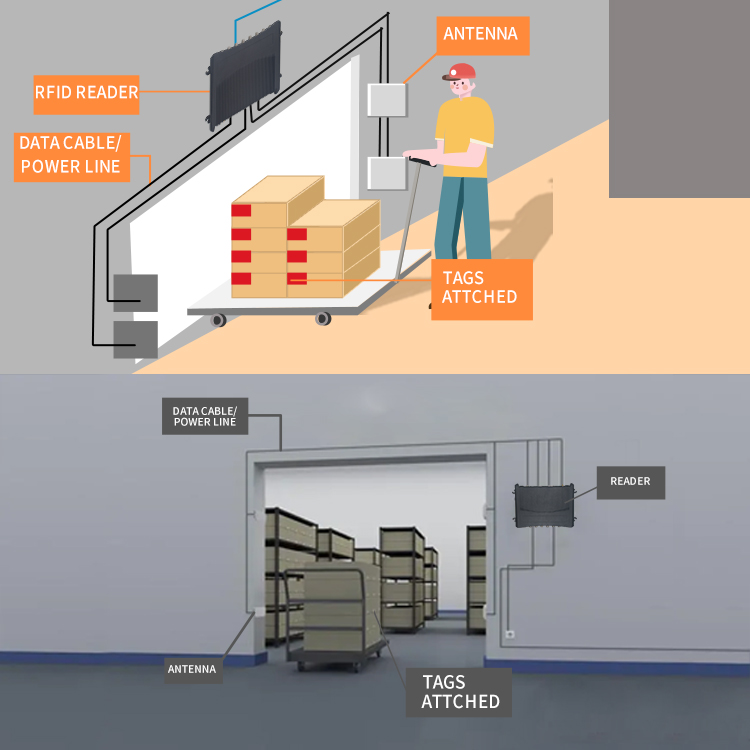
During receiving, employees need to verify incoming products, quantities, and shipment information before items are moved into storage or onto the sales floor. RFID can help streamline this process by allowing multiple tagged products or cases to be identified during a reading operation.
This can reduce repetitive manual scanning and provide a more efficient way to capture incoming inventory information.
Helping Reduce Manual Inventory Work
Traditional inventory counting can be time-consuming, especially in large grocery stores with thousands of products.
Employees may need to walk through aisles, handle individual products, scan barcodes, and manually record quantities. Repeating these tasks regularly requires significant labour.
RFID offers an alternative approach. Because multiple tags can be detected by a reader, employees may be able to complete certain inventory checks with fewer manual steps.
The goal is not simply to automate counting, but to make the entire inventory workflow more efficient.
RFID for Reusable Crates and Containers
RFID applications in grocery stores are not limited to products.
Reusable crates, totes, trays, and delivery containers can also be equipped with RFID tags. These assets often move between suppliers, distribution centres, warehouses, and retail stores.
Giving each reusable asset a unique identity can help businesses monitor its movement and identify where containers are being used or stored.
This can support better asset utilisation and reduce losses caused by misplaced reusable containers.
Considerations for RFID Tags in Grocery Applications
Choosing the right RFID tag is important because grocery products come in many different shapes and materials.
Liquids, metal packaging, dense products, and certain types of packaging can affect RFID performance. Tag size, placement, reader configuration, required read distance, and the surrounding environment should all be considered before deployment.
For this reason, grocery retailers should evaluate RFID tags based on the specific products and applications they need to track rather than choosing a single tag type for every situation.
Building a More Efficient Grocery Inventory Process
RFID technology can help grocery stores move from periodic, labour-intensive inventory checks toward more frequent and automated product identification.
From fresh food and packaged goods to backroom inventory and reusable containers, RFID can provide a consistent way to connect physical items with digital inventory information.
RFID tags grocery stores use can help staff monitor stock levels, identify products faster, and improve inventory visibility throughout daily operations. When combined with suitable RFID readers and inventory software, the technology can become part of a broader strategy for improving efficiency and product availability.
For grocery retailers looking to reduce manual inventory work while gaining better control over stock, RFID offers a flexible foundation for smarter inventory management.