

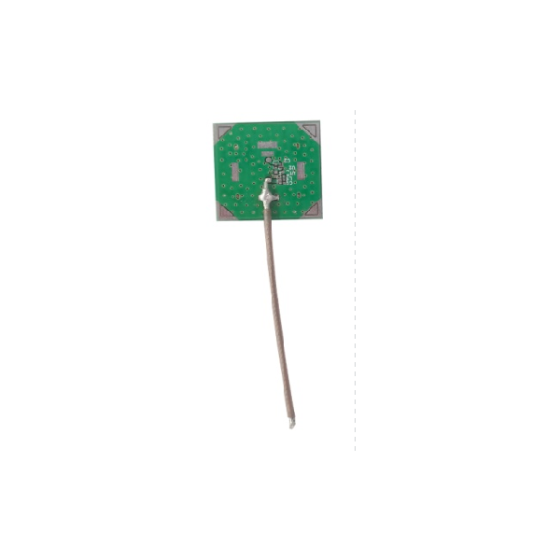
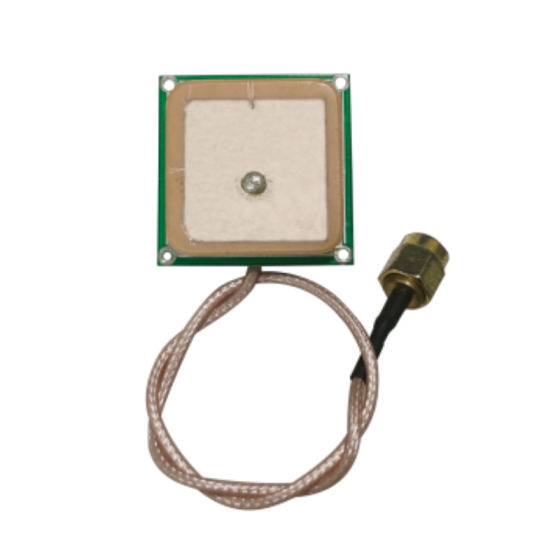
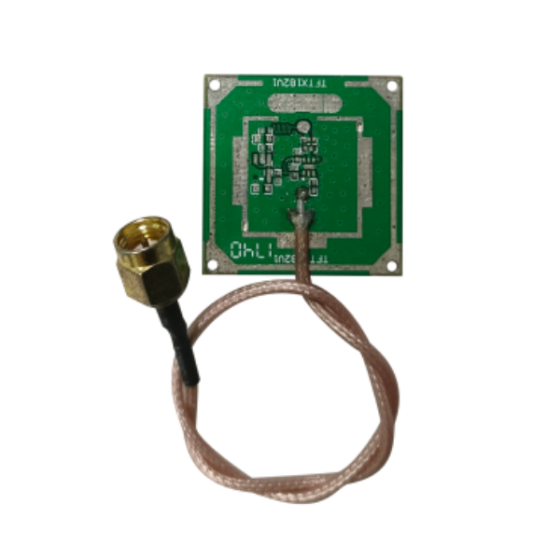
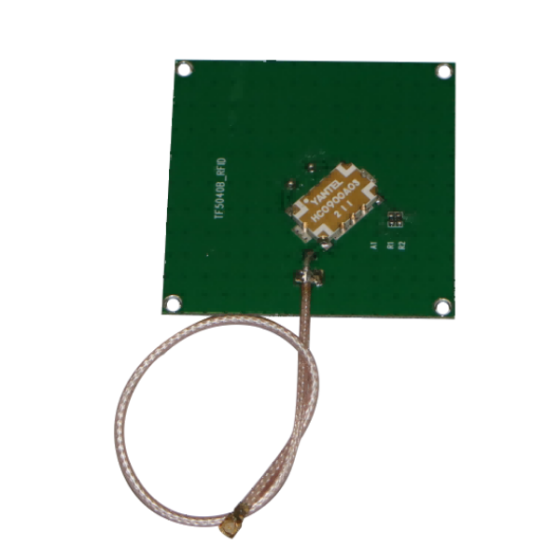


What Are UHF RFID Tags? How They Work, Read Range, and Applications
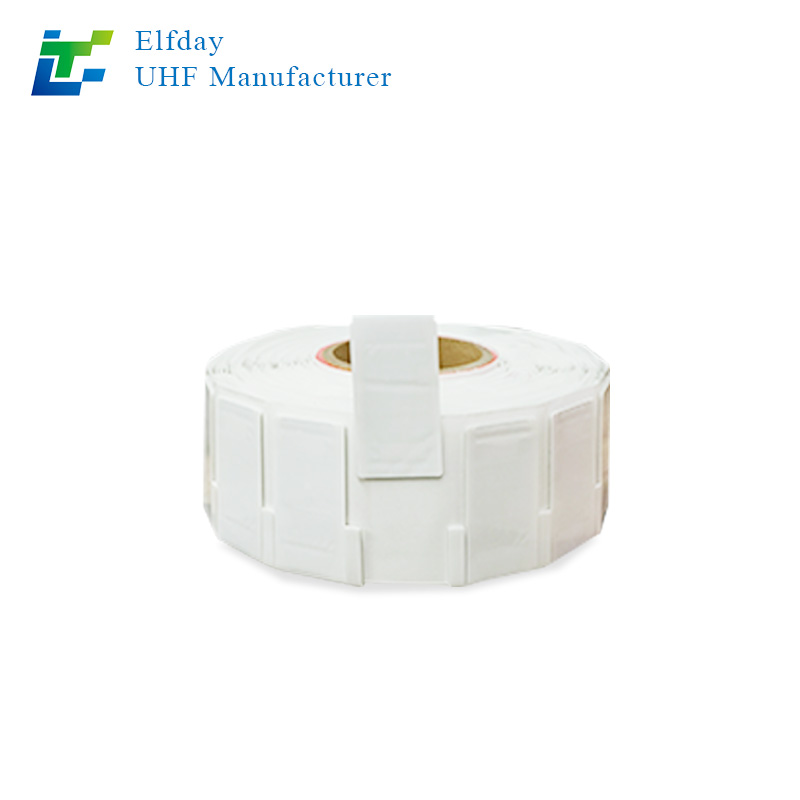
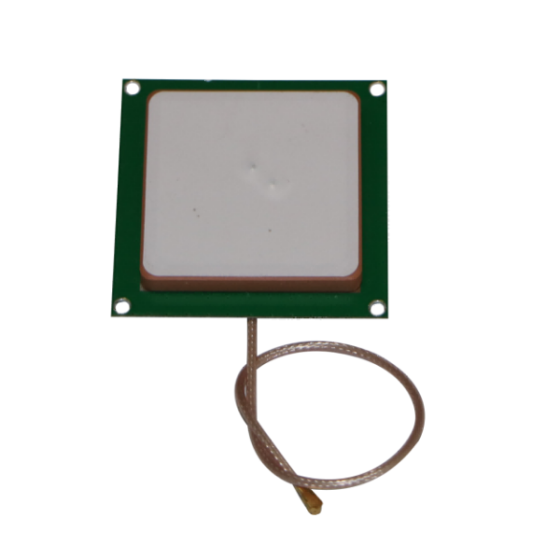
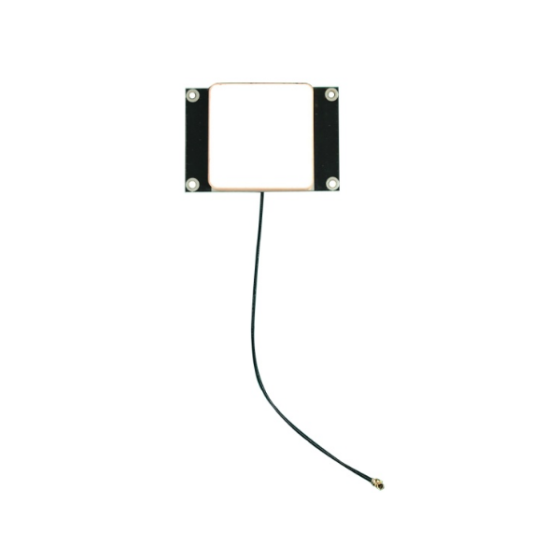
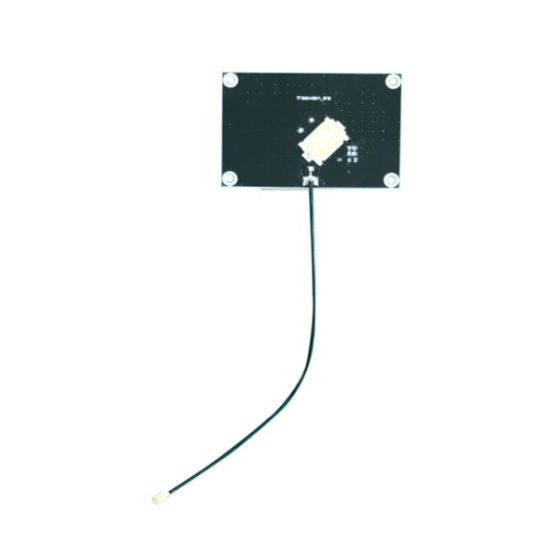
UHF RFID tags are radio frequency identification tags designed to operate in the ultra-high-frequency range. They are widely used for inventory management, warehouse operations, retail, logistics, manufacturing, asset tracking, and supply chain applications.
One of the main reasons UHF RFID tags are popular is their ability to support relatively long read ranges and fast identification of multiple tagged items.
Unlike barcode labels, UHF RFID tags communicate wirelessly with RFID readers and generally do not require direct line of sight.
Most UHF RFID tags used for inventory and supply chain applications are passive, meaning they do not contain an internal battery. Instead, they receive energy from the RFID reader's RF signal.
This guide explains what UHF RFID tags are, how they work, how far they can be read, where they are used, and how to choose the right UHF RFID tag.
What Is a UHF RFID Tag?
A UHF RFID tag is an RFID tag that operates using ultra-high-frequency radio waves.
UHF RFID systems are commonly used for applications that require:
-
Longer read distances
-
Fast tag identification
-
Multiple-tag reading
-
Automated inventory collection
-
High-volume item tracking
A typical UHF RFID tag consists of:
-
RFID chip
-
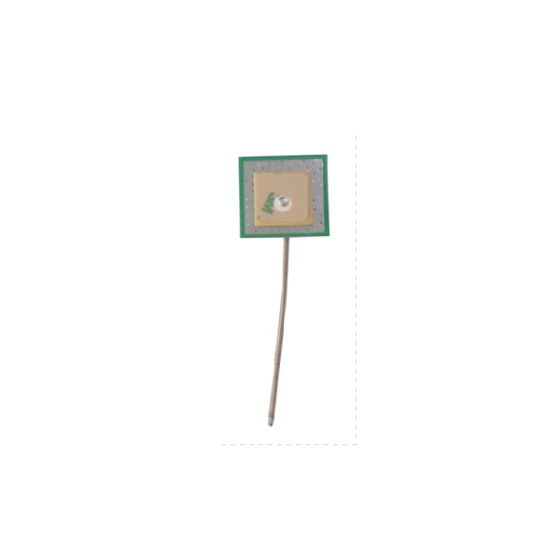
UHF antenna
-
Substrate or inlay
-
Label, adhesive, or protective housing
The exact construction depends on the application.
For example, a thin UHF RFID label may be suitable for cardboard products, while a rugged UHF RFID tag may be required for industrial equipment.
What Frequency Does UHF RFID Use?
UHF RFID operates in the ultra-high-frequency portion of the radio spectrum.
In many commercial RFID systems, UHF RFID operates in the region of approximately 860–960 MHz, with the specific operating band depending on the country or region.
For example, RFID regulations and operating frequencies can differ between North America, Europe, and other markets.
When deploying a UHF RFID system internationally, the reader and tags should be selected according to the applicable regional requirements.
How Do UHF RFID Tags Work?
Most UHF RFID tags used in inventory and logistics are passive.
The basic communication process is:
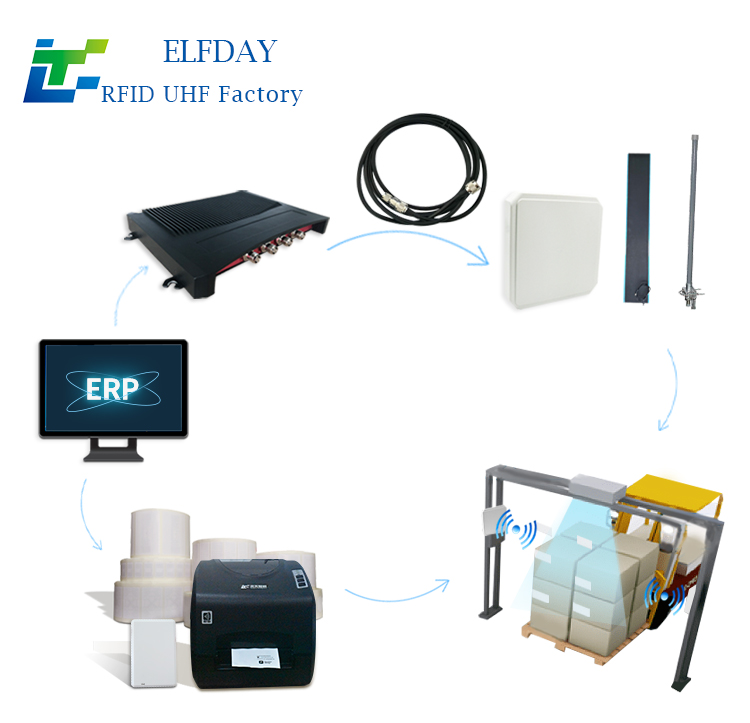
UHF RFID Reader → RF Signal → UHF RFID Tag → RFID Chip → Backscatter → Reader
Step 1: The Reader Sends an RF Signal
The UHF RFID reader transmits radio frequency energy through its antenna.
This creates an RF field in the reader's operating area.
Step 2: The Tag Receives Energy
When a passive UHF RFID tag enters the RF field, its antenna captures energy from the signal.
The captured energy powers the RFID chip.
Step 3: The RFID Chip Processes the Request
The chip processes the reader's communication and accesses the information stored in its memory.
This may include an electronic product code or another unique identifier.
Step 4: The Tag Responds Using Backscatter
The UHF RFID tag does not normally generate a powerful radio signal of its own.
Instead, it changes the way it reflects the reader's signal.
This process is called backscatter.
The reader detects these changes and decodes the information transmitted by the tag.
Step 5: The Reader Sends the Data to Software
The reader processes the tag information and sends it to the connected software system.
The software can then associate the tag ID with product, asset, inventory, or logistics information.
What Is a Passive UHF RFID Tag?
A passive UHF RFID tag does not contain a battery.
It receives energy from the UHF RFID reader and uses that energy to activate the chip and communicate.
Passive UHF RFID tags are popular for large-scale identification because they can be manufactured in many different formats and do not require battery maintenance.
Common examples include:
-
UHF RFID labels
-
UHF RFID asset tags
-
UHF RFID pallet tags
-
UHF RFID on-metal tags
-
UHF RFID laundry tags
-
UHF RFID industrial tags
How Far Can UHF RFID Tags Be Read?
UHF RFID tags are generally associated with longer read ranges than many LF and HF RFID applications.
However, there is no single read range for all UHF RFID tags.
Actual performance depends on:
-
RFID chip
-
Antenna design
-
Reader power
-
Reader antenna
-
Tag orientation
-
Mounting surface
-
Product material
-
Environmental conditions
-
Reader configuration
A UHF RFID tag may perform well at a certain distance in an open environment but provide a shorter read range when attached to a challenging material.
Therefore, the advertised maximum read range should not be treated as a guaranteed operating distance.
What Factors Affect UHF RFID Read Range?
Tag Antenna Design
The antenna is one of the most important parts of a UHF RFID tag.
Antenna dimensions, geometry, tuning, and design influence how efficiently the tag communicates with the reader.
RFID Chip
Different UHF RFID chips have different performance characteristics, memory capacities, and features.
Chip selection should match the requirements of the RFID system.
Reader Power
The power transmitted by the RFID reader affects the strength of the RF field.
However, increasing reader power does not automatically solve every RFID performance problem.
Reader Antenna
The type, position, polarization, and orientation of the reader antenna can affect the read zone.
Tag Orientation
UHF RFID tags can be sensitive to orientation.
If the tag antenna and reader antenna are poorly aligned, read performance may decrease.
Tagged Material
The material underneath or around the tag can have a significant impact.
Metal and liquids are particularly important considerations.
Installation Environment
Machinery, metal structures, electromagnetic interference, and other nearby objects can affect RFID performance.
Can UHF RFID Tags Be Used on Metal?
Yes, but standard UHF RFID tags are not always suitable for direct attachment to metal.
Metal can interfere with the antenna and change the RF characteristics of the tag.
For metal assets, on-metal UHF RFID tags are designed specifically for this type of installation.
They may be used on:
-
Machinery
-
Metal tools
-
Steel containers
-
Automotive components
-
IT equipment
-
Industrial equipment
-
Metal pallets
The construction of an on-metal tag helps the antenna operate more effectively when mounted on a conductive metal surface.
However, actual performance should always be tested on the target asset.
Can UHF RFID Tags Be Used Near Liquids?
UHF RFID performance can also be affected by liquids.
Water and other liquids can absorb or interact with RF energy, potentially reducing communication performance.
For example, a UHF RFID tag attached to a dry cardboard box may perform differently when attached directly to a bottle filled with liquid.
Applications involving liquids may require:
-
Specialized antenna designs
-
Different tag placement
-
Additional spacing
-
Application-specific testing
The actual product and packaging should be tested before large-scale deployment.
What Are UHF RFID Tags Used For?
UHF RFID tags are used in many industries.
UHF RFID Tags for Inventory Management
Inventory management is one of the most common applications.
Businesses can attach UHF RFID tags to individual products, cartons, or assets.
RFID readers can then identify multiple tagged items within the reader's operating area.
This can make inventory counting faster and provide better visibility into item locations.
UHF RFID Tags for Warehouses
Warehouses can use UHF RFID tags throughout receiving, storage, picking, and shipping operations.
Typical tagged items include:
-
Products
-
Cartons
-
Pallets
-
Containers
-
Returnable assets
UHF RFID can help reduce manual scanning and improve the visibility of goods moving through a warehouse.
UHF RFID Tags for Retail
Retailers can attach UHF RFID tags to products to improve inventory accuracy and product visibility.
Potential applications include:
-
Stock counting
-
Product location
-
Replenishment
-
Receiving
-
Inventory audits
-
Loss prevention support
The exact benefits depend on how the RFID system is integrated into store operations.
UHF RFID Tags for Logistics
UHF RFID tags can be used to identify pallets, cartons, containers, and shipments.
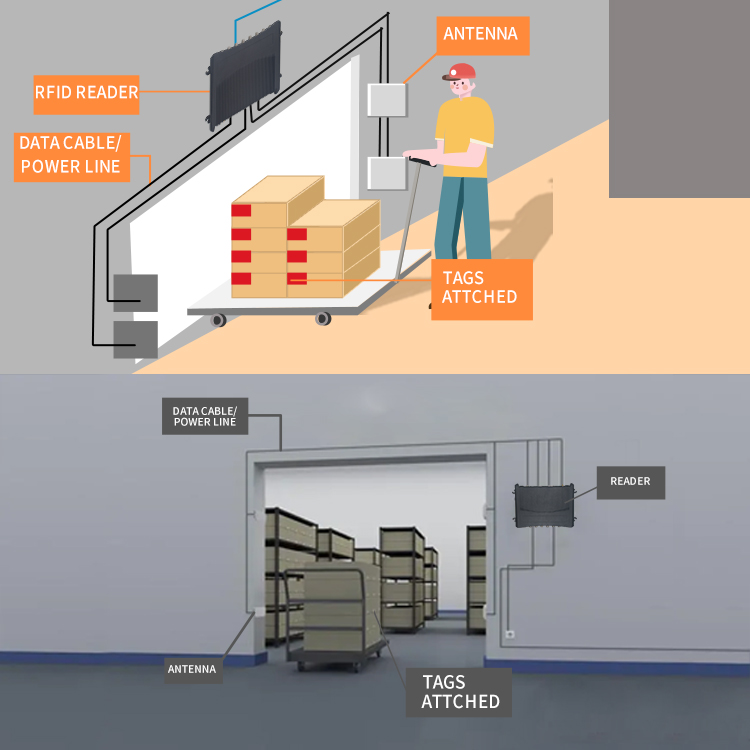
Readers installed at warehouse doors, conveyor systems, or other checkpoints can capture tag information automatically.
UHF RFID Tags for Manufacturing
Manufacturers can use UHF RFID tags to identify materials and products throughout production.
Possible applications include:
-
Raw material tracking
-
Work-in-progress tracking
-
Component identification
-
Finished goods tracking
-
Tool tracking
-
Production container tracking
UHF RFID Tags for Asset Tracking
UHF RFID can provide unique digital identities for physical assets.
Businesses can use readers to locate and identify tagged equipment, tools, containers, and other assets.
What Are the Advantages of UHF RFID Tags?
UHF RFID tags offer several advantages for automated identification.
Longer Read Range
UHF RFID can support relatively long read ranges compared with many short-range RFID technologies.
This can be useful for warehouse and logistics applications.
Fast Identification
UHF RFID systems can communicate with tags quickly, making them suitable for high-volume inventory operations.
Multiple-Tag Reading
A reader can potentially identify multiple UHF RFID tags within its operating area.
This is particularly useful when many products or cartons need to be counted.
No Line of Sight
UHF RFID does not normally require direct visual contact between the reader and tag.
This can allow tags to be identified inside suitable packaging or containers.
Many Tag Formats
UHF RFID technology can be integrated into many tag constructions.
Examples include:
-
Paper labels
-
Plastic tags
-
Hard tags
-
Flexible tags
-
On-metal tags
-
Industrial tags
-
Textile tags
Suitable for Automation
UHF RFID can be integrated with fixed readers, handheld readers, portals, conveyor systems, and other automated equipment.
What Are the Limitations of UHF RFID Tags?
UHF RFID is not suitable for every environment.
Metal Interference
Metal can interfere with standard UHF RFID tags.
Specialized on-metal tags may be required.
Liquid Sensitivity
Liquids can affect UHF RF communication.
Tag placement and design become particularly important for products containing liquids.
Tag Orientation
Performance can vary depending on how the tag is positioned relative to the reader antenna.
Environmental Complexity
Large amounts of metal, machinery, RF interference, and densely packed products can make RFID deployment more challenging.
Application Testing Is Important
A UHF RFID tag that works well in one application may not provide the same performance in another.
Testing should be performed using the actual:
-
Product
-
Packaging
-
Tag location
-
Reader
-
Antenna
-
Environment
UHF RFID Tags vs HF RFID Tags
UHF and HF RFID are both widely used, but they are designed for different types of applications.
| Feature | UHF RFID | HF RFID |
|---|---|---|
| Typical frequency | Approximately 860–960 MHz | 13.56 MHz |
| Typical read range | Longer | Shorter |
| Multi-tag identification | Strong capability | Application-dependent |
| Common applications | Inventory, logistics, retail | Libraries, access control, ticketing |
| Metal sensitivity | Requires careful tag design | Different behavior |
| Liquid sensitivity | Can be significant | Different behavior |
| High-volume inventory | Well suited | Less commonly selected |
The best choice depends on the application rather than simply selecting the technology with the longest read range.
UHF RFID Tags vs Barcodes
UHF RFID tags and barcodes can both be used for product identification.
However, RFID uses radio communication while barcodes use optical scanning.
| Feature | UHF RFID Tag | Barcode |
|---|---|---|
| Line of sight | Generally not required | Usually required |
| Multiple-item reading | Possible | Usually individual scanning |
| Data storage | Electronic | Visual code |
| Automated reading | Strong capability | Requires scanning |
| Read distance | Potentially longer | Typically short |
| Tag cost | Generally higher | Generally lower |
Many businesses use RFID and barcodes together rather than treating them as mutually exclusive technologies.
How Do You Choose a UHF RFID Tag?
Selecting a UHF RFID tag should begin with the application.
1. Identify the Tagged Object
Determine whether the tag will be attached to:
-
Cardboard
-
Plastic
-
Wood
-
Glass
-
Metal
-
Fabric
-
Industrial equipment
2. Determine the Required Read Distance
Define how far the reader needs to identify the tag.
Consider both the minimum and maximum expected distances.
3. Check the Tagging Surface
If the tag will be attached directly to metal, select an appropriate on-metal design.
If the object contains liquids, application testing becomes particularly important.
4. Define the Operating Environment
Consider:
-
Temperature
-
Moisture
-
Chemicals
-
Dust
-
Impact
-
Outdoor exposure
-
Washing
-
Mechanical stress
The tag housing should match these conditions.
5. Select the Appropriate RFID Chip
Consider:
-
Memory
-
EPC requirements
-
Read/write functionality
-
Security features
-
Reader compatibility
6. Choose the Correct Tag Size
The available mounting area and required performance should both be considered.
A smaller tag may be easier to install but can have different RF characteristics from a larger tag.
7. Test Before Large-Scale Deployment
Testing is critical.
The tag should be evaluated with the actual product, surface, packaging, reader, antenna, and installation position.
Can UHF RFID Tags Be Customized?
Yes.
UHF RFID tags can often be customized according to the requirements of a particular application.
Customization may include:
-
Tag dimensions
-
Shape
-
RFID chip
-
Antenna design
-
Material
-
Adhesive
-
Housing
-
Printing
-
Encoding
-
Mounting method
For specialized applications, customized tag designs can help address challenging surfaces, environmental conditions, or installation requirements.
Frequently Asked Questions About UHF RFID Tags
What is a UHF RFID tag?
A UHF RFID tag is an RFID tag that operates in the ultra-high-frequency range and is commonly used for longer-range identification and high-speed tracking applications.
Are UHF RFID tags passive?
Many UHF RFID tags used for inventory, retail, logistics, and warehouse applications are passive. They receive energy from the RFID reader rather than using an internal battery.
How far can a UHF RFID tag be read?
The read range varies according to the tag, reader, antenna, tag orientation, mounting surface, reader settings, and environment. There is no universal read distance for every UHF RFID tag.
Can UHF RFID tags be read through cardboard?
Yes. Cardboard is generally suitable for many UHF RFID applications, which is why UHF RFID tags are commonly used on cartons and packages.
Can UHF RFID tags work on metal?
Standard UHF RFID tags may have difficulty when mounted directly on metal. On-metal UHF RFID tags are specifically designed for metal surfaces.
Can UHF RFID tags be used on products containing liquids?
They can be used in some applications, but liquids can affect UHF RFID performance. Tag design, placement, and testing are important.
Can a UHF RFID reader read multiple tags?
Yes. UHF RFID systems are designed to support multi-tag identification, making them useful for inventory and logistics applications involving many tagged items.
Do UHF RFID tags need batteries?
Passive UHF RFID tags do not require internal batteries. They receive energy from the RFID reader's RF signal.
Can UHF RFID tags be rewritten?
Some UHF RFID chips provide writable memory. The exact write capability depends on the chip and system configuration.
Are UHF RFID tags waterproof?
Some UHF RFID tags are designed to be water-resistant or waterproof. The level of protection depends on the tag construction and intended application.
UHF RFID tags are widely used for automated identification, inventory management, logistics, retail, manufacturing, and asset tracking.
Their ability to support relatively long read ranges, fast communication, and multi-tag identification makes UHF RFID particularly useful for applications involving large numbers of products and assets.
Most UHF RFID tags used in these applications are passive and obtain energy from the RFID reader. However, actual performance depends on much more than the RFID chip itself.
Tag antenna, reader, reader antenna, tag orientation, mounting material, distance, and environmental conditions all influence the final result.
For the best performance, choose a UHF RFID tag based on the actual application and test it with the intended product, surface, reader, and environment before large-scale deployment.