



What Components Are Inside an RFID Tag? A Simple Guide
What components are inside an RFID tag? Although an RFID tag may look like a simple label or small piece of plastic, it contains several components that work together to identify and track physical objects.
The exact construction varies depending on the RFID technology, tag type, size, and application.
A typical passive RFID tag includes an RFID chip, antenna, inlay or substrate, and a label or protective housing.
Some specialized tags may also include additional layers, spacers, encapsulation materials, adhesives, or mechanical mounting features.
Understanding the different RFID tag components makes it easier to select the right tag for products, cartons, pallets, tools, machinery, and other assets.
What Are the Main Components of an RFID Tag?
A typical RFID tag can contain the following components:
-
RFID chip
-
RFID antenna
-
Inlay or substrate
-
Protective layer or housing
-
Adhesive or mounting system
Not every RFID tag uses exactly the same construction.
A thin RFID label may contain only a few basic layers, while a rugged industrial RFID tag can contain multiple protective materials.
The main components can be understood through this simple structure:
RFID Tag = Chip + Antenna + Supporting Material + Protection + Mounting
1. RFID Chip
The RFID chip is the electronic component that stores and processes RFID information.
It is sometimes called the RFID integrated circuit, or IC.
The chip can perform several functions, including:
-
Storing identification information
-
Receiving commands from the reader
-
Processing RFID communication
-
Controlling the tag's response
-
Managing memory
-
Supporting certain security functions
For many inventory applications, the chip contains a unique identifier that allows the physical item to be associated with a digital record.
For example:
RFID Tag ID → Inventory Database → Product Information
The amount of memory and available functions depend on the specific RFID chip.
2. RFID Antenna
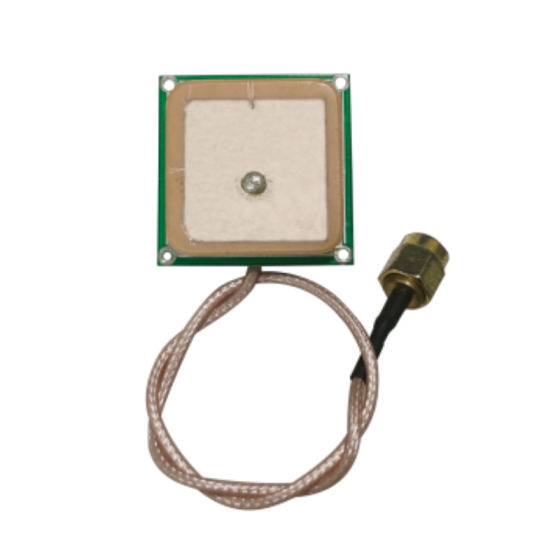
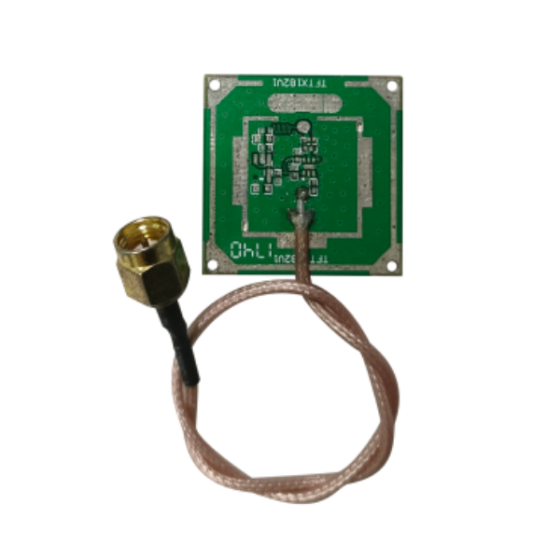
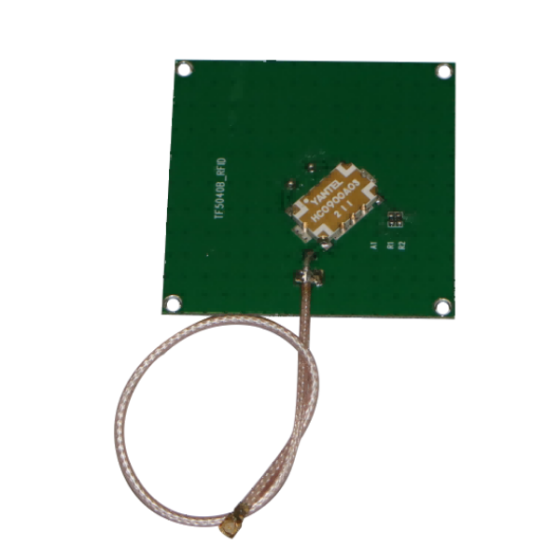
The RFID antenna is another essential component.
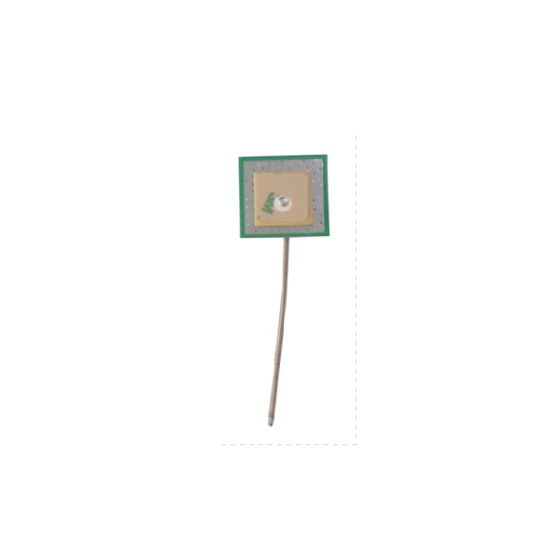
It allows the tag to communicate with the RFID reader.
For passive RFID tags, the antenna performs two important roles:
-
Capturing RF energy from the reader
-
Supporting communication between the tag and reader
The antenna design has a major effect on RFID performance.
Factors such as antenna shape, dimensions, material, and frequency affect how the tag behaves in a particular environment.
For example, a UHF RFID antenna is designed differently from an HF RFID antenna.
An antenna can also be specially designed for challenging surfaces.
This is why on-metal RFID tags use antenna structures that are optimized for operation near metal.
3. RFID Inlay
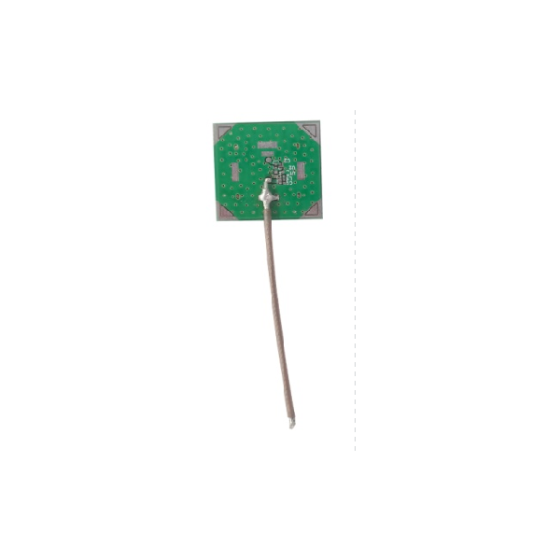
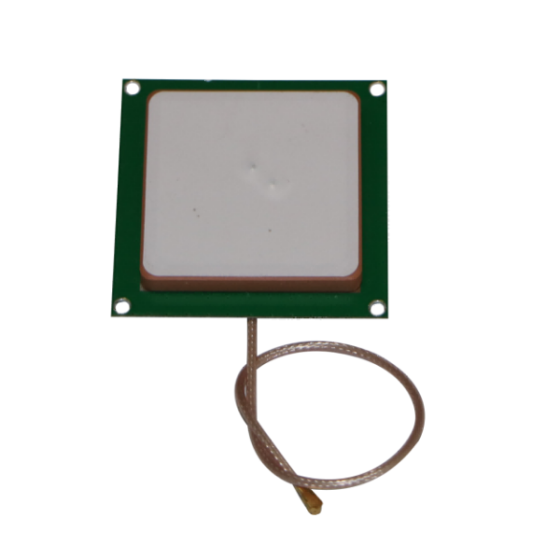
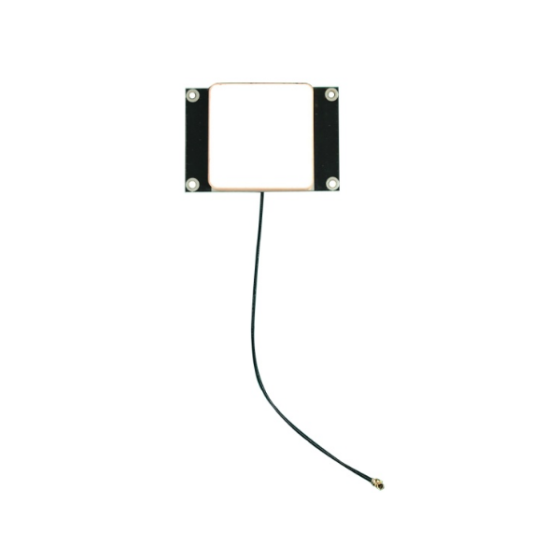
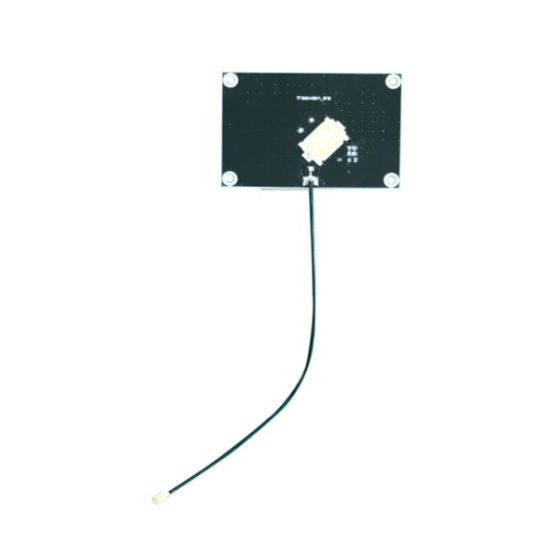
The RFID inlay is the core assembly containing the RFID chip and antenna.
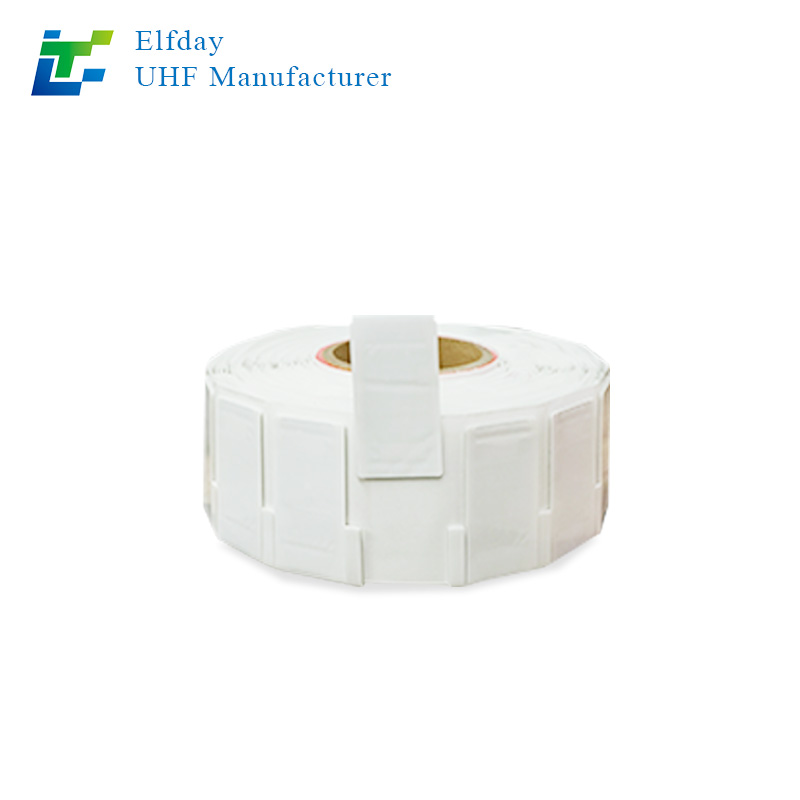
In many RFID labels, the inlay is placed between layers of label material.
A simplified structure may look like:
Top Label Layer
RFID Inlay
Adhesive
Release Liner
The inlay provides the basic RFID functionality, while the surrounding materials provide printing, protection, and attachment.
RFID inlays can be produced in different sizes and designs depending on the intended application.
4. Substrate
The substrate is the material that supports the RFID antenna and chip.
It provides a physical base for the electronic components.
Depending on the tag design, substrate materials can include different types of:
-
Plastic films
-
Paper-based materials
-
Foam
-
Synthetic materials
-
Other engineered substrates
The substrate can also influence the electrical characteristics of the RFID antenna.
For specialized applications, a particular substrate may be selected to improve performance on challenging surfaces.
5. Protective Layer or Housing
Not all RFID tags need the same level of physical protection.
A simple RFID label may use a thin paper or synthetic covering.
An industrial RFID tag may use a much stronger housing.
Protective materials can help protect the RFID chip and antenna from:
-
Water
-
Dust
-
Impact
-
Chemicals
-
Temperature changes
-
Mechanical stress
-
Outdoor exposure
Rugged RFID tags may use materials such as engineered plastics or other protective constructions.
The housing is particularly important when RFID tags are used on industrial equipment, tools, machinery, or outdoor assets.
6. Adhesive
Many RFID labels use an adhesive layer to attach the tag to a product or asset.
The adhesive needs to be compatible with the intended surface.
Common surfaces include:
-
Cardboard
-
Plastic
-
Glass
-
Wood
-
Metal
-
Painted surfaces
Different environments may require different adhesive characteristics.
For example, an industrial asset exposed to heat, moisture, oil, or chemicals may require a more durable adhesive than an indoor retail product.
7. Spacer Layer
Some RFID tags, particularly tags designed for metal surfaces, may include a spacer layer.
The spacer helps create separation between the RFID antenna and the conductive surface.
This can be important because metal can significantly affect RFID antenna behavior.
Materials such as foam or other dielectric materials may be used for this purpose.
The exact construction depends on the tag design.
8. Mechanical Mounting Features
Rugged RFID tags may use mechanical mounting instead of, or in addition to, adhesive.
Examples include:
-
Screw holes
-
Rivet holes
-
Bolt mounting
-
Cable ties
-
Brackets
Mechanical mounting can be useful for assets exposed to vibration, impact, outdoor conditions, or repeated handling.
Industrial equipment and machinery may therefore use a rigid RFID tag with screw or rivet mounting.
How Do RFID Tag Components Work Together?
The individual components do not operate independently.
They work together as a complete RFID system.
For a passive RFID tag, the process can be simplified as:
1. RFID Reader Sends RF Energy
↓
2. Antenna Captures the Energy
↓
3. RFID Chip Activates
↓
4. Chip Processes Information
↓
5. Antenna Communicates the Tag Response
↓
6. RFID Reader Receives the Information
The chip provides the intelligence, while the antenna provides the communication interface.
The substrate, housing, adhesive, and other materials support the physical and electrical requirements of the tag.
What Is the Most Important Part of an RFID Tag?
There is no single component that determines all RFID performance.
However, the RFID chip and antenna are the two core functional components.
The chip determines functions such as:
-
Memory
-
Identification
-
Communication capabilities
-
Certain security features
The antenna strongly influences:
-
Read range
-
Frequency performance
-
Orientation sensitivity
-
Interaction with the mounting surface
The physical construction also matters.
A high-performance RFID chip cannot compensate for an antenna that is poorly matched to the application.
Similarly, a well-designed antenna may not meet requirements if the RFID chip or surrounding materials are unsuitable.
How Does the RFID Chip Affect Performance?
The RFID chip can influence several aspects of the tag.
Important specifications may include:
-
Memory capacity
-
Operating characteristics
-
Sensitivity
-
Read/write capabilities
-
Security functions
-
Compatibility
Different RFID chips are designed for different applications.
For a simple identification application, basic memory may be sufficient.
For more advanced applications, additional memory or security features may be useful.
How Does the Antenna Affect RFID Performance?
The antenna is one of the most important factors affecting read performance.
Its design influences how effectively the tag interacts with the reader's RF field.
Important considerations include:
-
Antenna dimensions
-
Antenna geometry
-
Frequency
-
Material
-
Orientation
-
Mounting surface
This is particularly important when the tag is installed on metal or near liquids.
A tag designed for cardboard may not perform the same way when placed on a steel machine.
What Components Are Inside a Passive RFID Tag?
A typical passive RFID tag can be represented as:
| Component | Main Function |
|---|---|
| RFID chip | Stores and processes tag information |
| Antenna | Receives RF energy and communicates with reader |
| Inlay | Combines the core RFID components |
| Substrate | Supports the chip and antenna |
| Protective layer | Protects internal components |
| Adhesive | Attaches tag to a surface |
| Spacer | Helps separate antenna from certain surfaces |
| Housing | Provides additional physical protection |
Not every tag contains all of these components.
The construction depends on the intended application.
What Components Are Inside a UHF RFID Tag?
A typical passive UHF RFID tag includes:
-
UHF RFID chip
-
UHF antenna
-
Substrate or inlay
-
Protective material or label layer
-
Adhesive or mounting system
UHF RFID tags are widely used for:
-
Inventory management
-
Warehouse tracking
-
Retail
-
Logistics
-
Manufacturing
-
Asset tracking
The antenna is specifically designed for the UHF frequency range.
What Components Are Inside an On-Metal RFID Tag?
An on-metal RFID tag usually has additional design considerations because it must operate effectively near a conductive surface.
It may include:
-
RFID chip
-
Specialized antenna
-
Spacer or dielectric layer
-
Protective housing
-
Adhesive or mechanical mounting system
The spacer and antenna construction can help the tag maintain more reliable performance when mounted directly on metal.
This makes on-metal RFID tags useful for:
-
Machinery
-
Tools
-
Equipment
-
Metal containers
-
Vehicles
-
Industrial assets
What Is an RFID Inlay Made Of?
An RFID inlay generally consists of the RFID chip and antenna mounted on a supporting substrate.
The antenna can be manufactured using different conductive materials and production methods.
The specific construction depends on:
-
RFID frequency
-
Tag design
-
Manufacturing process
-
Required performance
-
Intended application
The inlay is then integrated into a label, card, adhesive tag, or rugged RFID housing.
Does RFID Tag Size Affect Its Components?
Yes.
A smaller RFID tag has less physical space for the antenna.
This can create trade-offs between:
-
Tag size
-
Read range
-
Antenna design
-
Mounting surface
-
Operating frequency
A larger tag may provide more room for an antenna design optimized for longer read distances.
However, the largest tag is not necessarily the best tag.
The physical dimensions should match the application.
Why Does RFID Tag Construction Matter?
Two RFID tags using the same general RFID technology can perform differently because their physical construction is different.
For example, consider two UHF RFID tags:
Tag A: designed for cardboard packaging
Tag B: designed for direct metal mounting
Even if both use the same general UHF RFID technology, their antenna structures and surrounding materials may be very different.
This is why RFID tag selection should consider the actual surface and operating environment.
RFID Tag Components for Different Applications
Different applications require different tag constructions.
Retail Products
A thin RFID label may be sufficient.
Typical construction:
Chip + Antenna + Inlay + Label Material + Adhesive
Cardboard Cartons
A paper or synthetic RFID label can often be used.
Metal Equipment
An on-metal RFID tag may require:
Chip + Specialized Antenna + Spacer + Protective Housing + Mounting
Outdoor Machinery
A rugged RFID tag may require:
Chip + Antenna + Protective Housing + Durable Mounting System
Industrial Tools
A compact rugged RFID tag may be preferred when installation space is limited.
Frequently Asked Questions About RFID Tag Components
What are the main components of an RFID tag?
The main components are the RFID chip and antenna. Depending on the design, the tag may also contain a substrate, inlay, protective layer, adhesive, spacer, and housing.
What is the RFID chip used for?
The RFID chip stores and processes identification information and manages communication with the RFID reader.
What is the RFID antenna used for?
The antenna receives RF energy from the reader and supports communication between the RFID tag and reader.
What is an RFID inlay?
An RFID inlay is the core RFID assembly that generally contains the chip and antenna on a supporting substrate.
Do all RFID tags have a battery?
No. Passive RFID tags do not require an internal battery. They receive energy from the RFID reader.
What protects the RFID chip?
Depending on the tag design, the chip can be protected by label materials, plastic layers, epoxy, encapsulation, or a rugged housing.
Why do some RFID tags have a spacer?
A spacer can help separate the antenna from metal and other challenging surfaces, allowing the tag to operate more effectively.
Are all RFID tags made from the same materials?
No. RFID tag materials vary depending on the frequency, application, mounting surface, environmental conditions, durability requirements, and manufacturing design.
Does the antenna determine RFID read range?
The antenna is an important factor, but read range also depends on the RFID chip, reader, reader antenna, power, tag orientation, mounting surface, and environment.
What is inside a rugged RFID tag?
A rugged RFID tag generally contains the same basic RFID electronics—a chip and antenna—but uses additional protective materials or housing to withstand demanding environments.
How to Choose an RFID Tag Based on Its Construction
When selecting an RFID tag, do not look only at the RFID chip.
Consider the complete tag construction.
Surface
What will the tag be attached to?
-
Cardboard
-
Plastic
-
Glass
-
Wood
-
Metal
-
Liquid-containing products
Read Range
How far away does the reader need to identify the tag?
Size
How much physical space is available?
Environment
Will the tag be exposed to:
-
Water?
-
Heat?
-
Chemicals?
-
Dust?
-
Impact?
-
Outdoor conditions?
Mounting Method
Will the tag use:
-
Adhesive?
-
Screws?
-
Rivets?
-
Bolts?
-
Other mechanical mounting?
RFID Technology
Choose the appropriate:
-
LF RFID
-
HF RFID
-
UHF RFID
based on the application's requirements.
An RFID tag typically contains an RFID chip and antenna, supported by materials that provide structure, protection, and mounting.
The chip stores and processes RFID information, while the antenna receives RF energy and communicates with the RFID reader.
Other components, including the inlay, substrate, protective layer, adhesive, spacer, and housing, help adapt the RFID tag to different products, surfaces, and environments.
Simple RFID labels may use a thin construction for products and packaging, while rugged or on-metal RFID tags can use specialized antennas, spacers, and protective housings for industrial applications.
Understanding the complete RFID tag construction is important when selecting tags for inventory, logistics, retail, manufacturing, warehouse, and asset tracking applications.
The best RFID tag is not simply the one with the strongest chip. It is the one whose chip, antenna, physical construction, mounting method, and environmental protection are properly matched to the application.