



What Customization Options Are Available for RFID Tags?
RFID tags can be customized in several ways to meet the identification and tracking requirements of different applications. Businesses can choose suitable tag dimensions, materials, chips, antenna designs, encoding formats, mounting methods, and levels of environmental protection.
The best configuration depends on what the tag will be attached to, where it will operate, how far away it needs to be read, and how the RFID system will collect and use its data. Understanding these options helps businesses select RFID tags that work reliably within their existing processes.
What Does RFID Tag Customization Mean?
RFID tag customization involves selecting or modifying a tag's physical design, electronic components, data settings, and installation features to suit a particular use case.
Some applications can use standard RFID tags with minor adjustments, such as printed labels or pre-encoded data. Others may require specialized designs for metal surfaces, outdoor equipment, reusable containers, or products exposed to challenging conditions.
Customization does not always mean developing a completely new tag. In many cases, choosing the right combination of existing features is enough.
1. Tag Size and Shape
The size and shape of an RFID tag affect where it can be installed and how well it fits the target item.
Common options include:
-
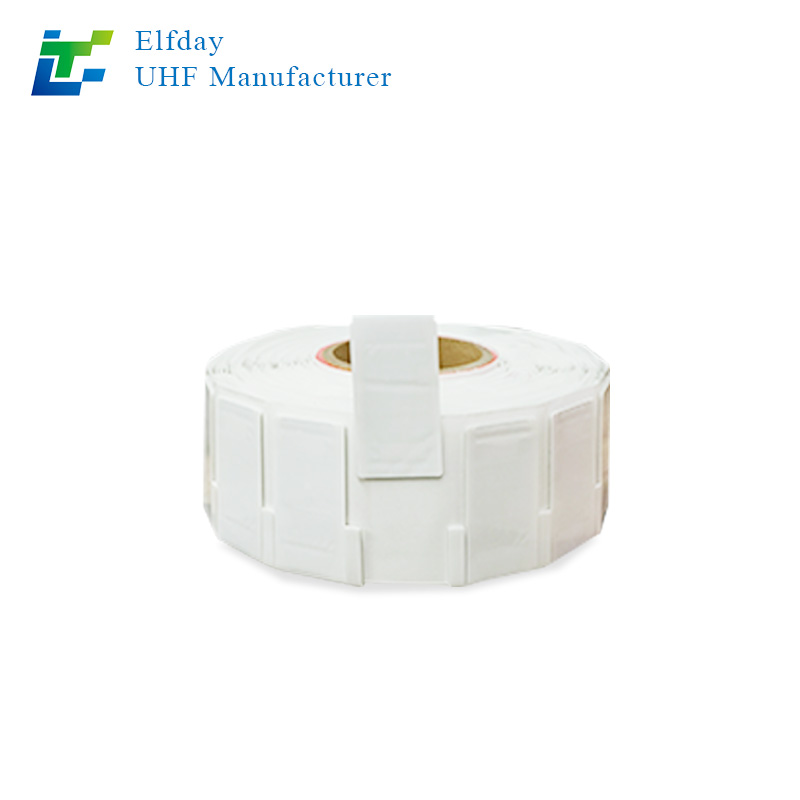
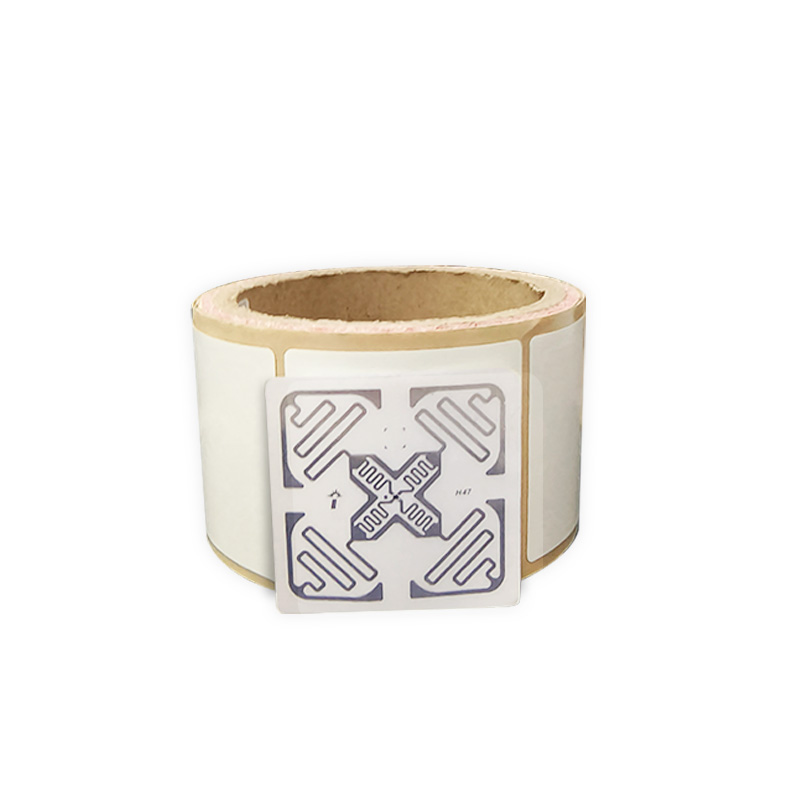
Small labels: Suitable for compact products, individual components, and items with limited attachment space.
-
Larger labels: Offer more room for antennas, printed information, or particular design requirements.
-
Rigid tags: Useful for equipment, tools, containers, and reusable assets that need a more durable housing.
-
Specially shaped tags: Designed to fit particular mounting locations or product surfaces.
Tag dimensions should be considered alongside performance requirements. A smaller tag may be easier to attach to a compact product, but its antenna design may limit read performance compared with a larger design.
Before selecting a size, evaluate the available mounting area, the material of the target object, and the required reading distance.
2. RFID Chip and Frequency Selection
The RFID chip and operating frequency influence how a tag communicates with readers and what applications it can support.
The main frequency categories include:
| RFID type | Common applications | Key consideration |
| LF RFID | Animal identification and specialized access applications | Short-range identification |
| HF RFID | Product identification, smart cards, and item-level applications | Near-field communication requirements |
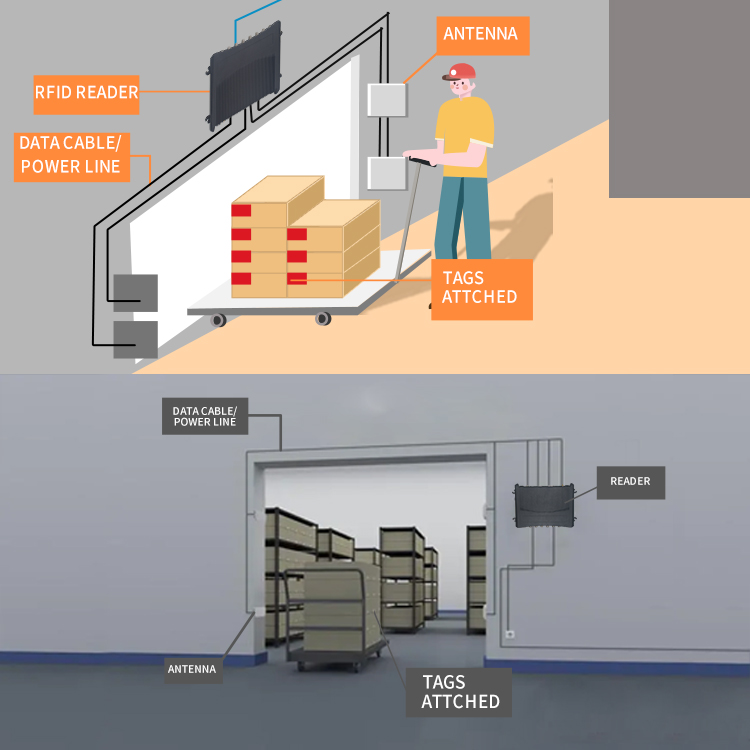
| UHF RFID | Warehousing, logistics, retail inventory, and asset tracking | Efficient reading of multiple tags at suitable distances |
UHF RFID is widely used for inventory and supply chain applications because compatible systems can identify multiple tags quickly. However, the actual reading range and reliability depend on the tag, reader, antenna, environment, and installation.
Chip selection also matters. Different chips can offer different memory capacities, identification capabilities, and supported features. The appropriate option depends on whether the application needs a basic unique identifier, additional stored data, or specific system compatibility.
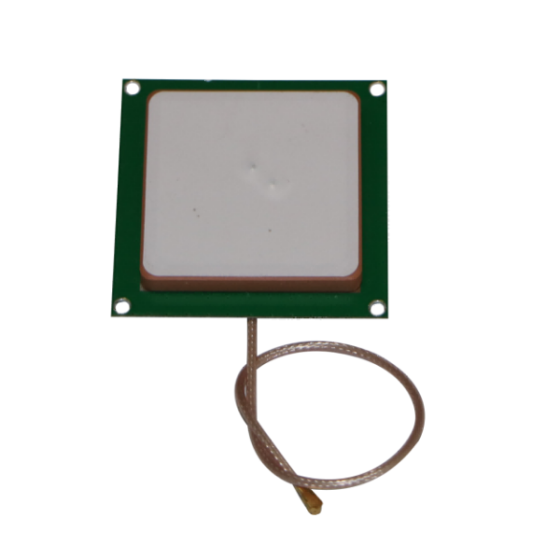
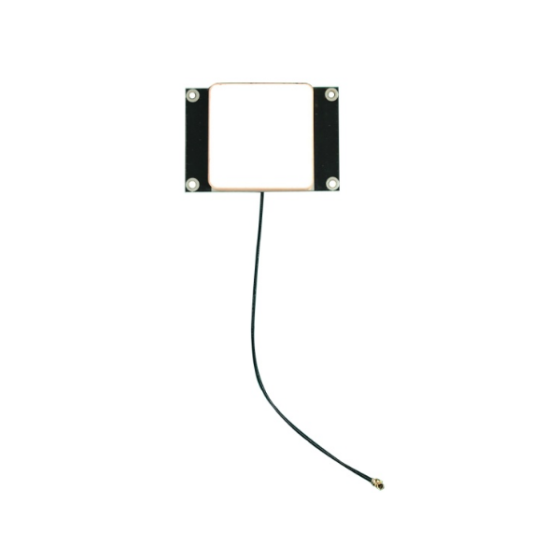
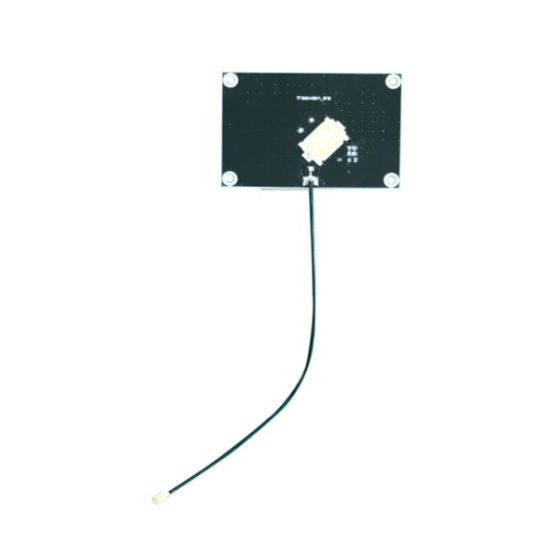
3. Antenna Design and Read Performance
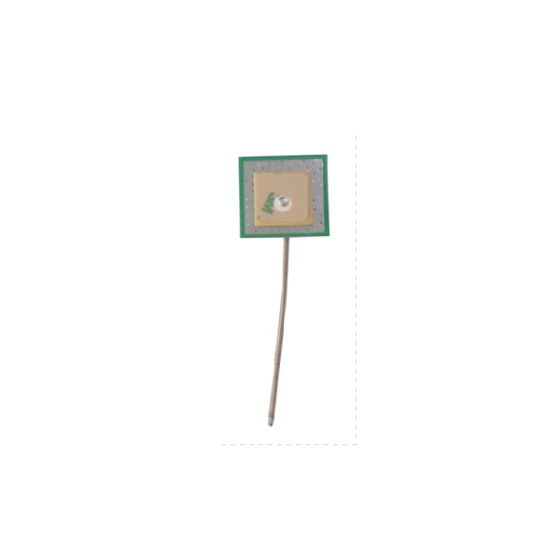
The antenna is a key part of an RFID tag because it enables communication with the reader. Its design affects how the tag performs in the intended environment.
Customization may involve antenna dimensions, layout, shape, and design characteristics that suit the available space and target material.
For example, a tag attached to a small plastic product may need a compact antenna. A tag designed for a larger asset may allow a different antenna configuration to meet its read-range requirements.
Antenna performance can also change when the tag is mounted near metal, liquids, or other materials that interfere with radio-frequency communication. For this reason, antenna selection should be tested on the actual object rather than evaluated in isolation.
4. Materials and Protective Housing
RFID tags are available in different materials and constructions to match their operating conditions.
Common options include:
-
Paper: Often used for short-term labels and general product identification.
-
PET and other synthetic films: Useful for labels that need greater resistance to tearing or moisture than ordinary paper.
-
Plastic housings: Suitable for many reusable tags and asset-tracking applications.
-
Industrial protective materials: Used in designs that need greater resistance to impact, dust, moisture, or other environmental factors.
The right material depends on the expected service life, handling conditions, exposure risks, and attachment surface.
For example, a disposable retail label may prioritize low cost and easy application, while a tag on reusable industrial equipment may need a more durable construction.
Environmental protection should be specified according to actual requirements. Water resistance, chemical resistance, temperature tolerance, and impact resistance are separate performance considerations and should not be assumed from the tag's appearance alone.
5. Mounting Methods and Adhesives
A tag must remain securely attached to the item throughout its intended service life. Customization can therefore include different mounting methods and adhesive options.
Common installation methods include:
-
Pressure-sensitive adhesive: Suitable for many packaging, label, and smooth-surface applications.
-
Screws or rivets: Useful for certain rigid tags attached to equipment or reusable assets.
-
Cable ties or straps: Practical for items that cannot be permanently marked or drilled.
-
Embedded installation: Used in selected products where the tag can be incorporated into the object during manufacturing.
-
Specialized attachment structures: Designed for particular asset shapes or installation constraints.
Surface preparation, temperature, moisture, vibration, and repeated handling can affect attachment reliability. An adhesive that works on a smooth plastic surface may not perform equally well on textured metal or a dusty industrial component.
Test the selected mounting method under realistic conditions before large-scale deployment.
6. On-Metal and Application-Specific Designs
Metal can interfere with the operation of conventional RFID tags. When tagging metal tools, machinery, racks, or containers, an on-metal RFID tag may be more appropriate.
These tags are designed to operate when mounted on or near metal surfaces, often through specialized antenna structures, spacing, or housing designs.
Other applications may need different adaptations:
-
Plastic products: Standard labels or compact tags may be suitable, depending on the product and reading requirements.
-
Liquid-filled products: Tag placement and antenna design should account for the effect of nearby liquid.
-
Outdoor equipment: Weather resistance, UV exposure, temperature changes, and mechanical durability may need to be considered.
-
Reusable containers: Tags may require durable housings and attachment methods that withstand repeated handling and cleaning.
There is no single RFID tag design that performs equally well on every material. Testing the tag on the intended asset is essential.
7. Printing, Encoding, and Data Customization
RFID tags can also be customized to support inventory processes and information systems.
Printing options may include human-readable identifiers, barcodes, QR codes, product references, or asset numbers. Combining visual identification with RFID can help staff handle exceptions or identify items when RFID equipment is unavailable.
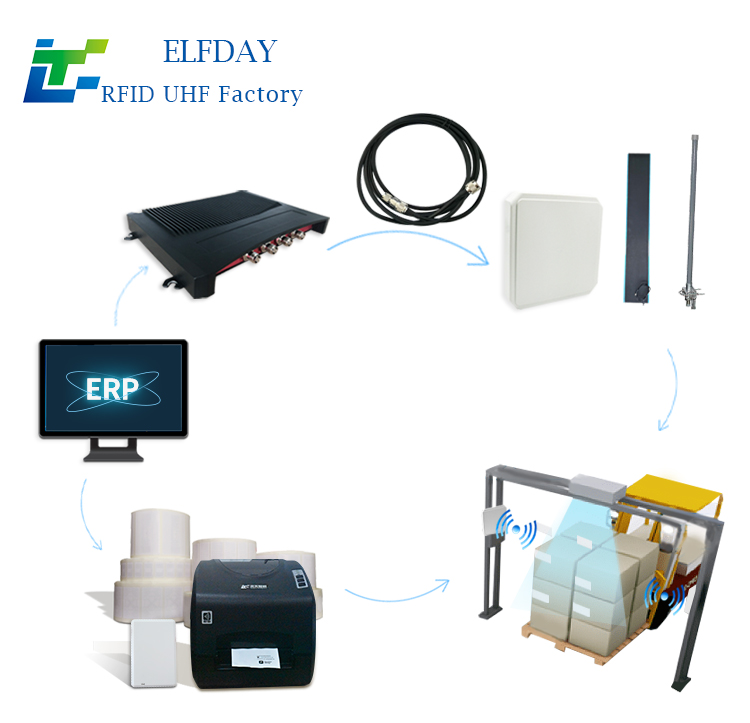
Encoding options determine what information is written to the tag. Many applications store a unique identifier on the tag and maintain detailed product or asset information in a connected database. Other use cases may require additional data in the tag's available memory.
Before encoding tags, define:
-
The identifier format and uniqueness requirements.
-
Whether data will be written once or updated during use.
-
How the identifier maps to records in the inventory or asset system.
-
Whether access controls or memory protection are required.
-
How duplicate identifiers and encoding errors will be detected.
Keeping detailed records in a database rather than trying to store every product attribute on the tag can simplify data maintenance in many deployments.
8. How to Choose the Right Customization Options
A practical selection process starts with the application rather than with a particular tag model.
| Requirement | What to evaluate |
| Target object | Size, shape, material, and available mounting space |
| Reading needs | Required distance, reading speed, and number of tags read together |
| Operating environment | Moisture, dust, temperature, chemicals, and physical impact |
| Installation | Adhesive, screws, ties, embedding, or another mounting method |
| Data requirements | Unique identifier, encoding format, and system integration |
| Service life | Disposable, reusable, or long-term asset identification |
| Budget | Unit cost, installation cost, replacement frequency, and system requirements |
Once these requirements are clear, shortlist suitable tag configurations and test them with the intended readers, antennas, software, and tagged objects.
A small pilot can reveal issues such as inconsistent reads, poor adhesion, interference from nearby materials, or incompatibility with existing data workflows before a larger investment is made.
9. Does RFID Tag Customization Increase Cost?
Customization costs depend on the type and degree of modification.
Selecting a standard tag with a different adhesive, printed layout, or encoding format may be relatively straightforward. Specialized housings, unique dimensions, application-specific antenna designs, or extensive environmental testing may involve additional engineering and production costs.
The lowest unit price is not always the most economical choice. A tag that fails frequently, detaches from assets, or requires repeated manual identification can increase operating costs over time.
Compare options based on total deployment cost, expected service life, reliability, and compatibility with the tracking process.
Frequently Asked Questions
Can RFID tags be customized with a company logo or barcode?
Yes. Depending on the tag format and printing process, labels can include logos, text, barcodes, QR codes, or asset identifiers alongside RFID functionality.
Can RFID tags be customized for metal surfaces?
Yes. On-metal RFID tags are designed for applications involving metal equipment, tools, racks, and containers. The appropriate design depends on the available mounting space and required read performance.
Can RFID tags be made waterproof?
Some RFID tags are built with water-resistant or waterproof constructions. The required protection level should be selected according to the actual exposure conditions and verified against the manufacturer's specifications and test results.
Can an RFID tag store customized information?
Yes, within the limits of the selected chip's memory and supported functions. Many systems use a unique tag identifier to retrieve detailed information from a connected database rather than storing every detail directly on the tag.
Should customized RFID tags be tested before ordering in bulk?
Yes. Testing representative tags on actual products or assets helps verify reading performance, mounting reliability, environmental suitability, and compatibility with the intended RFID system.
RFID tag customization can cover physical dimensions, chip selection, antenna design, materials, protective housing, printing, encoding, and mounting methods. The right combination depends on the target object, reading requirements, operating environment, and data workflow.
By defining these requirements first and testing candidate tags in realistic conditions, businesses can select RFID solutions that support reliable identification, practical installation, and long-term tracking needs.