



What Determines Whether Multiple RFID Tags Can Be Read Efficiently?
Reading multiple RFID tags efficiently is essential for applications such as warehouse inventory, logistics, retail stock management, industrial asset tracking, and automated sorting. Instead of scanning each item individually, an RFID system can identify many tagged items within a reader's interrogation zone.
However, the number of tags a system can identify and the speed at which it can identify them depend on several factors. Tag density, reader performance, antenna configuration, radio-frequency interference, tag orientation, and system settings all influence the results.
Understanding these factors helps businesses select suitable RFID equipment and build reliable multi-tag identification workflows.
1. RFID Anti-Collision Protocols
One of the most important factors in multiple RFID tag reading is the anti-collision protocol.
When several RFID tags respond to a reader at the same time, their responses may overlap. Without a suitable communication protocol, the reader could have difficulty distinguishing individual tag responses.
Many UHF RFID systems use anti-collision mechanisms designed to inventory multiple tags within the reader's field. For example, EPC Gen2 and ISO/IEC 18000-63 systems use a protocol that organizes tag responses into slots, allowing the reader to identify tags over successive rounds.
The efficiency of this process depends on factors such as:
-
The number of tags responding within the same inventory area
-
The reader's inventory algorithm and configuration
-
The distribution of tags across response slots
-
The time required for each communication exchange
-
Whether the application needs only tag identification or additional data operations
An anti-collision protocol allows a reader to handle multiple tags, but it does not eliminate all delays. A large tag population may require more inventory rounds, particularly when tags enter or leave the reading area continuously.
When evaluating RFID equipment, confirm that the reader supports the required RFID standard and can handle the expected tag population under realistic operating conditions.
2. Tag Population and Tag Density
The number of tags within a reading zone directly affects inventory performance.
A reader may identify a small group of tags quickly, while a much larger population can require more time to complete an inventory round. High tag density can also make reliable identification more challenging when tags are closely packed or positioned near materials that affect radio-frequency performance.
For example, a warehouse counting a few dozen cartons may have different requirements from a conveyor system processing hundreds of tagged items in a short period.
Several factors should be considered:
-
Total tag population: How many tags must be identified during each inventory cycle?
-
Tag spacing: Are tags separated or packed tightly together?
-
Tag movement: Are items stationary, moving slowly, or passing through quickly?
-
Inventory frequency: Does the system need one complete count or repeated updates?
-
Read completeness: Must every tag be identified before the process continues?
A high tag count does not automatically mean poor performance. The outcome depends on the reader, tags, RF environment, configuration, and required processing time.
During system design, test the expected number of tags in a representative reading zone rather than relying only on a reader's advertised maximum tag capacity.
3. RFID Reader Performance and Configuration
The reader controls communication with RFID tags and plays a central role in multi-tag identification.
Reader performance depends not only on hardware capability but also on how the device is configured for the application.
Important considerations include:
Transmit power: Higher transmit power may help the reader energize distant passive tags, but excessive power can expand the reading zone and increase unwanted reads. The correct setting depends on tag sensitivity, antenna gain, regulatory limits, and the installation environment.
Inventory settings: Some readers allow users to configure inventory parameters, session settings, or other protocol options. Suitable settings can improve inventory performance for a particular tag population, but the best configuration depends on the application.
Reader processing capability: The reader must process tag responses and deliver identification data at a rate that meets the system's requirements.
Data reporting configuration: Reporting every tag observation may generate substantial data traffic. Depending on the application, duplicate filtering and event processing can help reduce unnecessary downstream processing without hiding important inventory information.
A practical setup should balance identification speed, coverage, accuracy, and data processing requirements.
4. Antenna Design and Reading-Zone Coverage
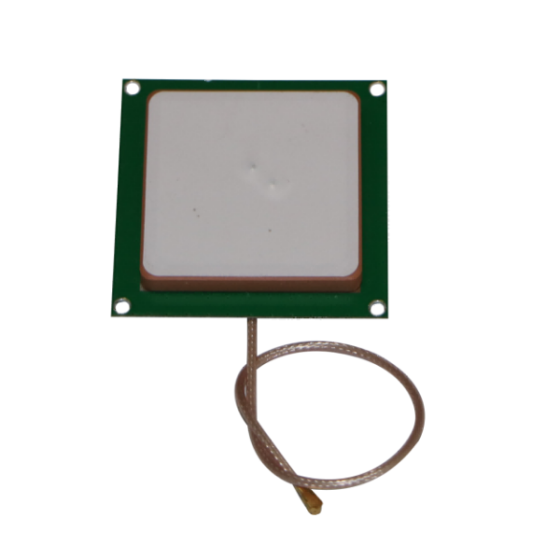
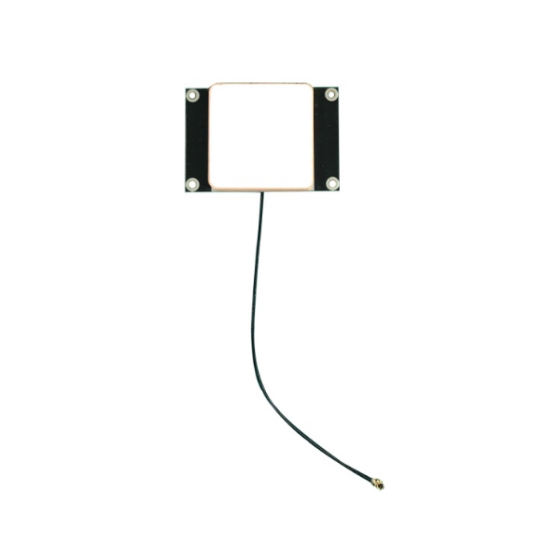
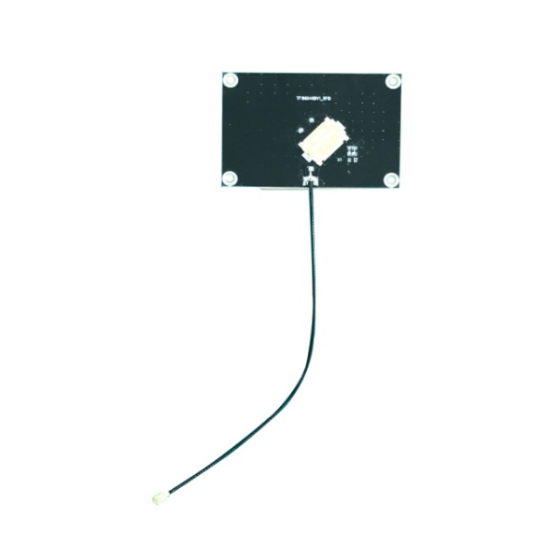
The antenna determines how radio-frequency energy is transmitted and received within the reading area. Its design and placement can strongly influence how efficiently multiple tags are identified.
Antenna selection should match the physical layout and movement of the items being tracked.
For example:
-
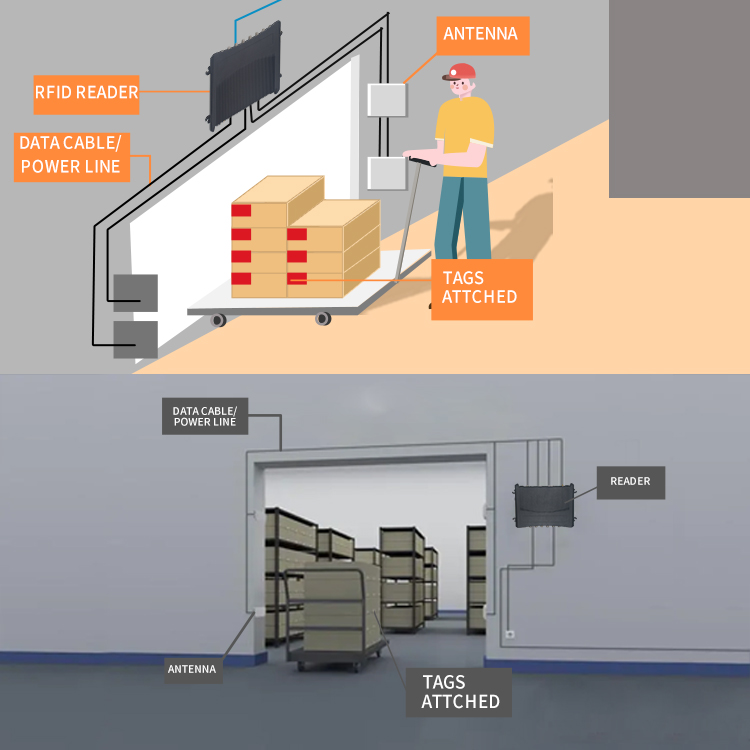
Warehouse portals: Antenna placement should cover the intended passage while limiting reads from adjacent storage areas.
-
Conveyor systems: Antenna coverage must account for item speed, spacing, orientation, and the available reading time.
-
Storage shelves: Antenna positions should provide coverage across the relevant shelf levels and item locations.
-
Workstations: A controlled reading zone can help identify the intended group of items while reducing reads from nearby tagged objects.
Polarization also matters. Circularly polarized antennas can help accommodate tags with varying orientations, while linearly polarized antennas may provide useful performance when tag orientation is controlled. The appropriate choice depends on the application and tag design.
Adding more antennas does not necessarily increase throughput. Poorly coordinated antennas can create interference or overlapping reading zones. Antenna placement and reader coordination should therefore be tested as part of the complete system.
5. Tag Orientation, Spacing, and Mounting Surface
Even when a reader supports rapid multi-tag inventory, individual tags must still receive sufficient RF energy and return readable responses.
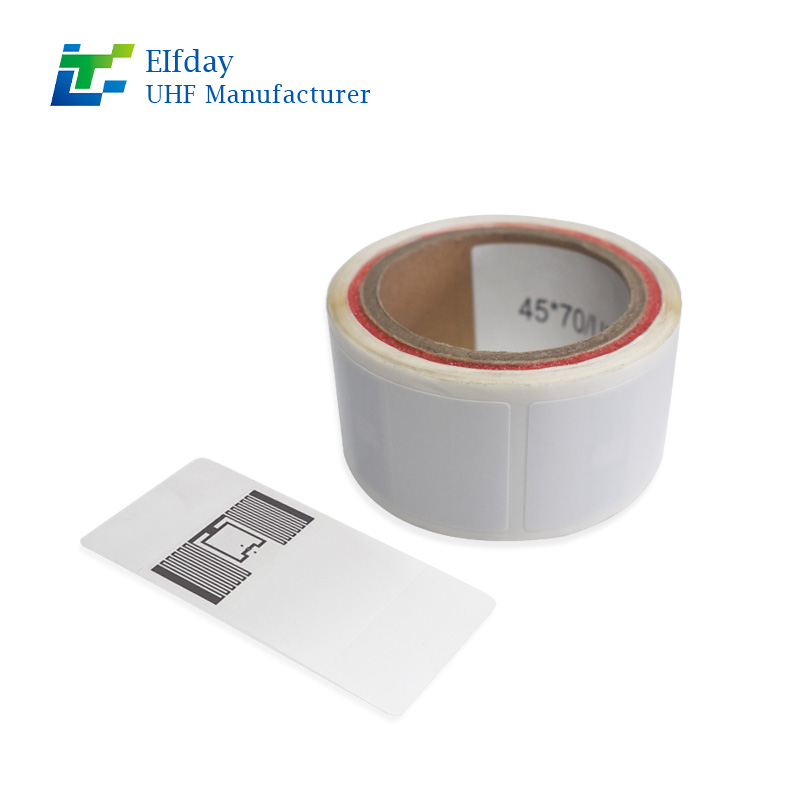
Tag orientation affects the coupling between the tag antenna and the reader's RF field. Closely packed tags may also experience different RF conditions depending on their antenna design, surrounding materials, and arrangement.
Mounting surfaces are particularly important. Metal can detune conventional RFID tag antennas, while liquids and other materials can absorb or alter RF energy. Specialized on-metal tags may be necessary for metal tools, equipment, containers, or industrial assets.
To improve multi-tag identification:
-
Keep tag placement consistent where the workflow allows it.
-
Select tags designed for the item's material and mounting surface.
-
Evaluate spacing when tags are packed closely together.
-
Test different tag orientations and item arrangements.
-
Confirm performance with the actual packaging and contents.
The objective is not simply to maximize the number of tags in a small space. It is to ensure that each required tag can communicate reliably within the available reading time.
6. Radio-Frequency Interference and the Surrounding Environment
RFID systems operate in a real radio-frequency environment, where reflections, nearby equipment, and other radio sources can affect performance.
Metal structures may reflect RF energy and create multipath conditions. Depending on the installation, these reflections can produce areas of stronger or weaker signal. Nearby RFID readers can also interfere with one another if their operation is not properly coordinated.
Potential sources of performance problems include:
-
Poorly controlled overlap between reading zones
-
Nearby readers operating without suitable coordination
-
Metal racks, machinery, and enclosures
-
Changes in item placement or the surrounding layout
-
RF noise or interference from other equipment
Useful mitigation measures include adjusting antenna placement, controlling reader transmit power, coordinating reader operation, and testing the system with its actual surroundings in place.
Physical RF shielding may help in some applications, but it should be designed carefully. An enclosure that reduces unwanted reads can also weaken the intended reading field if implemented incorrectly.
7. Item Movement and Available Reading Time
The speed at which tagged items move through a reading zone determines how much time the system has to identify them.
A stationary inventory area may allow repeated inventory rounds until the required tags have been identified. By contrast, a fast-moving conveyor or vehicle portal provides a limited reading window.
For moving applications, performance depends on several combined factors:
-
Item speed and the length of the reading zone
-
Distance between successive items
-
Tag position and orientation
-
Reader and antenna configuration
-
Number of tags carried by each item or group
-
Required identification completeness
A system that performs well with stationary items may not deliver the same results on a high-speed conveyor.
Testing should therefore reproduce realistic movement speeds, item spacing, and tag populations. If the process requires every tag to be identified before an item leaves the zone, the system must be designed around that requirement.
8. Reader Coordination and Data Processing
Multi-tag reading efficiency is not determined by RF performance alone. The way the system handles reader observations also affects the overall workflow.
In installations with multiple readers, coordinated operation can help reduce interference and improve coverage. Depending on the equipment and application, coordination may involve scheduling reader activity, managing overlapping zones, or separating reading operations.
Software also influences the results presented to users. An RFID reader may report the same tag multiple times during repeated inventory rounds. An inventory application can consolidate these observations, apply event rules, and determine when an item should be considered present or processed.
It is important to distinguish between two performance measures:
-
RF identification performance: Whether the reader successfully identifies the required tags.
-
Application processing performance: Whether the software correctly processes, filters, stores, and uses the resulting data.
If the reader identifies tags successfully but the inventory application displays incomplete or delayed results, the problem may lie in data handling rather than the RF layer.
9. How to Evaluate Multi-Tag Reading Efficiency
A reliable evaluation should use measurable results rather than a single advertised read-rate figure.
Before selecting or configuring an RFID system, define the required operating conditions and success criteria.
Useful measurements include:
Tag identification completeness: The proportion of expected unique tags identified during a defined test.
Inventory cycle time: The time required to identify the required tag population under specified conditions.
Throughput: The number of items or tags processed per unit of time.
Repeatability: Whether the system achieves similar results across repeated trials.
False or unwanted reads: The frequency with which tags outside the intended group or zone are reported.
A practical test plan should include the expected tag population, actual tag types, mounting materials, item spacing, movement speed, reader settings, and surrounding RF environment.
Run multiple trials and compare results under consistent conditions. Also test difficult but realistic scenarios, such as densely packed items, different tag orientations, and changes in item movement.
This approach provides a more useful basis for equipment selection and system optimization than relying on maximum read-rate specifications alone.
10. A Practical Checklist for Improving Multi-Tag RFID Reading
Use the following checklist when designing or troubleshooting a multi-tag RFID system:
-
Confirm that the reader supports the required RFID standard and anti-collision protocol.
-
Define the expected tag population and the required inventory completion time.
-
Select tags that match the application, material, and mounting surface.
-
Optimize antenna placement, orientation, and reading-zone coverage.
-
Configure reader power and inventory parameters for the real environment.
-
Coordinate nearby readers and manage overlapping reading zones.
-
Test with actual item spacing, movement speeds, and packaging.
-
Separate RF identification problems from software and network processing issues.
-
Measure completeness, cycle time, throughput, and unwanted reads.
-
Validate the final configuration through repeated tests before full deployment.
Efficient multiple RFID tag reading depends on the interaction between tag population, anti-collision protocols, reader configuration, antenna design, tag placement, RF conditions, item movement, and data processing.
No single setting guarantees the best performance in every environment. A system designed for warehouse stocktaking may require different configuration choices from a conveyor or industrial tracking application.
By testing the complete RFID setup under realistic operating conditions and measuring both identification completeness and throughput, businesses can choose suitable RFID tags, readers, and antennas and improve the reliability of multi-tag identification.
Need help selecting RFID equipment for your application? Evaluate the tag type, reader, antenna, item material, tag population, and required processing speed together to identify a configuration suited to your operating environment.