



What Makes an RFID Asset Tracking System Reliable in Industrial Environments?
Industrial environments are often challenging places to manage physical assets. Equipment moves between production areas, warehouses, maintenance departments, and storage facilities. Metal surfaces, temperature changes, dust, moisture, and electromagnetic interference can also affect the performance of asset identification systems.
For businesses that rely on accurate equipment tracking, an RFID asset tracking system must do more than simply identify tagged items. It needs to deliver consistent reading performance, maintain reliable asset records, and support daily operations under demanding working conditions.
But what makes an RFID asset tracking system reliable in industrial environments?
The answer depends on several interconnected factors, including RFID tag selection, reader placement, environmental compatibility, data management, and system integration. Understanding these factors can help businesses build an RFID solution that performs consistently and delivers long-term value.
1. Choosing RFID Tags That Match Industrial Applications
RFID tags are the foundation of any RFID asset tracking system. If tags cannot perform reliably under actual operating conditions, the entire tracking process may be affected.
Industrial assets come in different shapes, sizes, and materials. A tag suitable for plastic containers may not work properly when attached directly to metal machinery.
Businesses should consider the following factors when selecting RFID tags.
On-Metal Compatibility
Metal surfaces can interfere with radio frequency communication by reflecting and detuning RFID signals. This can reduce reading distance or make tag identification inconsistent.
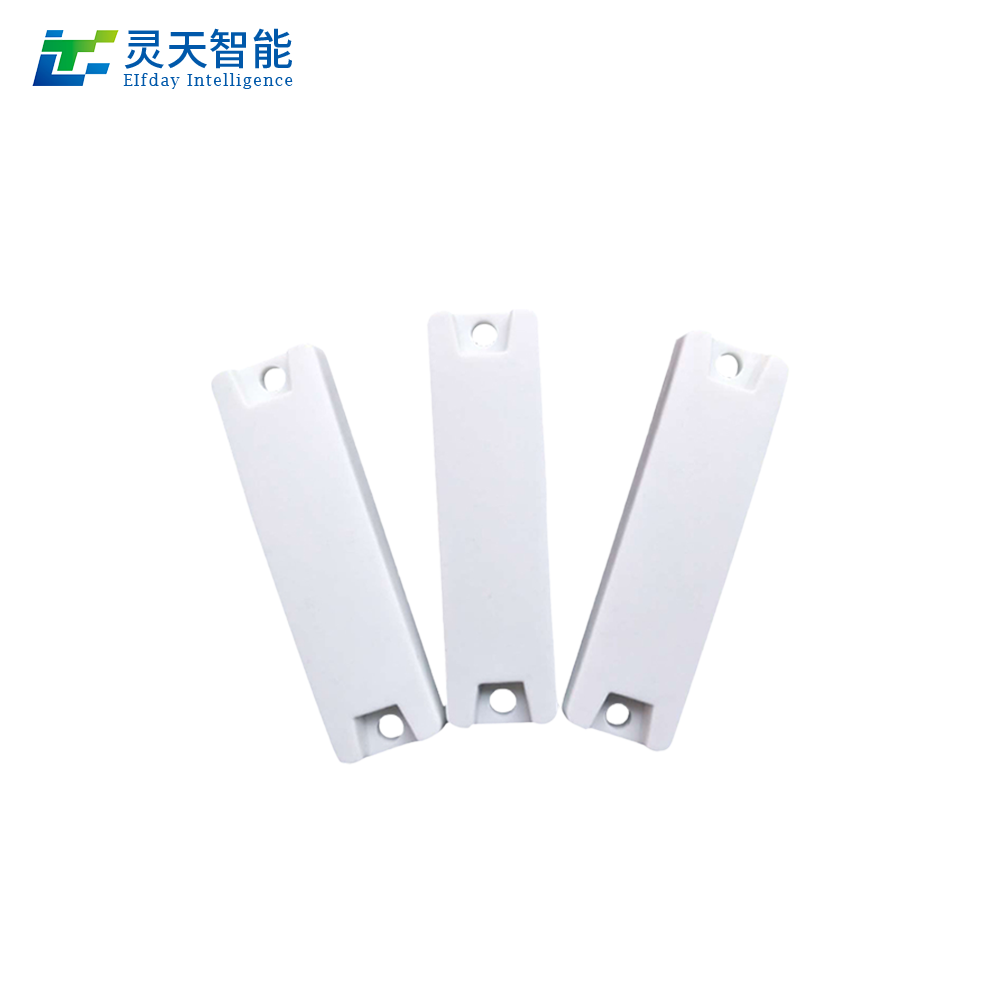
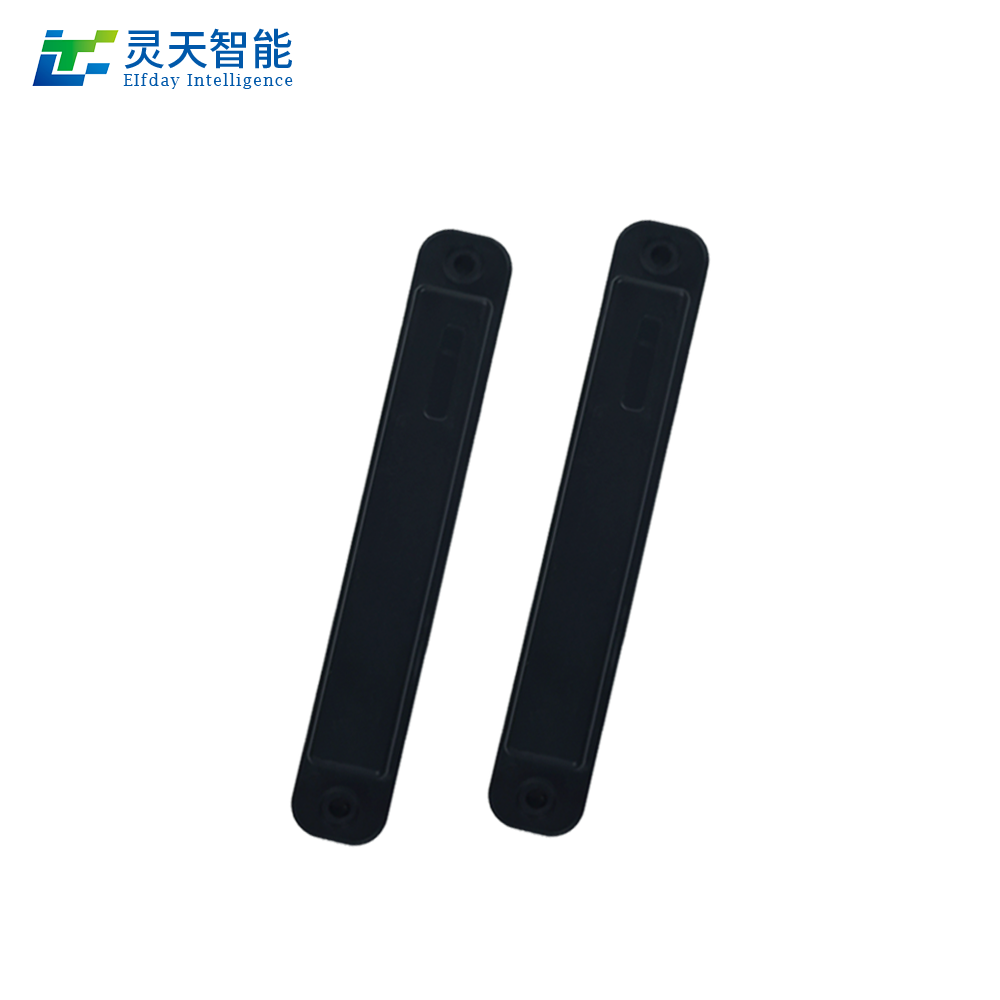
For tracking metal machinery, tools, and industrial equipment, specialized on-metal RFID tags are generally more suitable than conventional RFID labels.
These tags use specially designed structures to help maintain stable communication when mounted on metal surfaces.
Environmental Resistance
Industrial equipment may be exposed to dust, water, oil, chemicals, vibration, and physical impact.
RFID tags should be selected according to their actual operating environment.
For example:
Waterproof RFID tags are useful in areas exposed to moisture.
Impact-resistant hard tags are suitable for frequently handled equipment.
High-temperature RFID tags can support applications involving elevated temperatures.
Chemical-resistant tags may be needed in manufacturing and processing facilities.
The protection level and operating temperature range should always be checked against the manufacturer's specifications.
Attachment and Mechanical Stability
Even a high-performance RFID tag may become unreliable if it falls off during daily operations.
The mounting method should match the asset's surface and usage conditions. Adhesive mounting may work for smooth surfaces, while screws, rivets, or cable ties may be more appropriate for certain industrial applications.
A secure attachment helps prevent tag loss and reduces gaps in asset records.
2. Proper RFID Reader Placement and Coverage
Selecting the right RFID tags is only part of building a reliable system. RFID readers must also be installed in suitable locations.
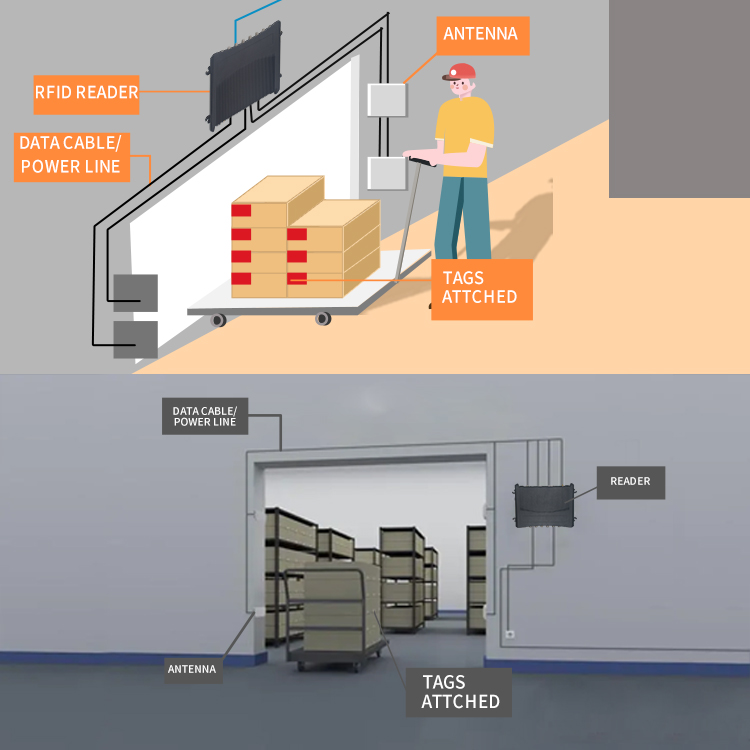
In industrial facilities, assets frequently move through different operational areas. If readers are installed without considering these movement patterns, some assets may not be detected consistently.
Identify Critical Reading Points
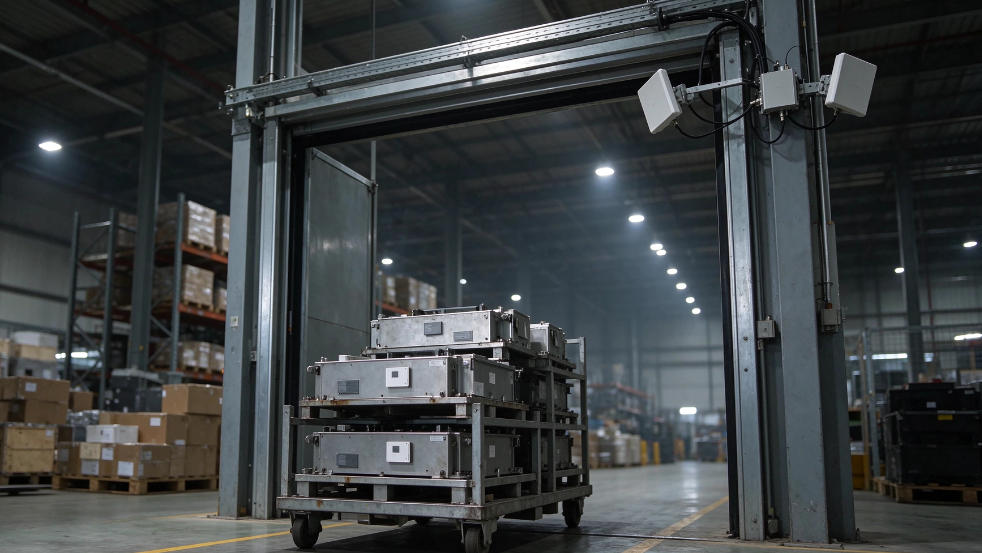
Common RFID reader installation locations include:
Warehouse entrances and exits.
Production line transfer points.
Equipment storage areas.
Maintenance workshops.
Loading and unloading zones.
Installing readers at these locations helps capture important asset movement events.
Consider Reading Angles and Distances
RFID reading performance depends on antenna orientation, tag position, reader power, surrounding materials, and the environment.
For example, a tag attached to the side of a metal machine may have a different reading performance from one mounted on a plastic container.
Businesses should test different antenna positions and tag orientations to determine the most effective configuration.
Reduce Reading Interference
Metal structures, liquids, other radio frequency devices, and nearby RFID systems can influence reading performance.
A reliable installation should include on-site testing to identify potential interference and adjust antenna positions, power settings, and reading zones accordingly.
3. Using the Right RFID Frequency for the Application
RFID systems operate across different frequency bands. Selecting the appropriate frequency is essential for achieving the required reading performance.
|
RFID Frequency |
Typical Applications |
Key Characteristics |
|
LF (Low Frequency) |
Animal identification, specialized industrial applications |
Short reading range, generally less sensitive to water |
|
HF (High Frequency) |
Access control, smart cards, item identification |
Short-range communication, commonly used for close-range identification |
|
UHF (Ultra-High Frequency) |
Industrial asset tracking, warehouse inventory, logistics |
Longer reading range and fast multi-tag identification |
UHF RFID is widely used in industrial asset tracking because it can identify multiple tags within a reading zone and support automated movement recording.
However, the best frequency depends on the application, required reading distance, local radio regulations, asset materials, and operating environment.
4. Ensuring Accurate and Consistent Data Collection
A reliable RFID asset tracking system must collect accurate information and convert it into useful asset records.
Even when RFID readers successfully detect tags, poor data processing can create inaccurate inventory information.
For example, the same asset may be detected multiple times as it passes through a reading area. Without appropriate processing, these repeated readings could create unnecessary records.
Use Unique Asset Identification
Each RFID tag should have a unique identifier associated with a corresponding asset record.
This helps businesses distinguish between similar equipment and retrieve the correct information.
Apply Data Filtering
RFID software can filter repeated reads, organize identification events, and distinguish meaningful asset movements from unnecessary detections.
This helps maintain cleaner asset records.
Maintain Consistent Asset Records
The management platform should keep relevant information associated with each asset, such as:
Asset ID and description.
Department or storage location.
Movement history.
Equipment status.
Maintenance records.
Responsible personnel.
Consistent records make it easier for employees to access accurate asset information.
5. Integrating RFID With Asset Management Software
RFID hardware alone cannot provide a complete industrial asset management solution.
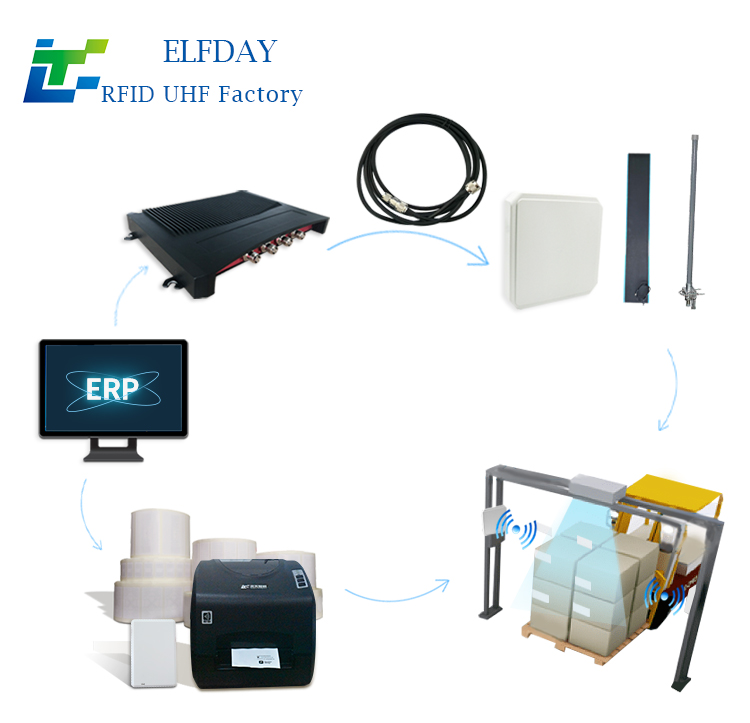
A reliable RFID system needs software that can receive reader data, process tag information, and connect each identification event with the correct asset record.
For example, when a tagged machine passes through a designated RFID checkpoint, the reader captures its tag ID and sends the data to the management platform.
The platform can then associate the identification event with the equipment's existing record and update its movement history.
Effective software integration can support:
Asset inventory management.
Equipment location and movement records.
Tool check-in and check-out.
Maintenance scheduling.
Equipment status monitoring.
Asset usage reporting.
Integration with existing ERP, WMS, or maintenance management systems can also help reduce disconnected data records across departments.
6. Testing RFID Performance Under Real Industrial Conditions
An RFID system that works well in a laboratory may perform differently in an actual factory or warehouse.
Industrial environments contain obstacles and interference sources that are difficult to reproduce in controlled testing conditions.
For this reason, field testing is an important part of RFID system implementation.
Businesses should evaluate several performance indicators:
|
Testing Factor |
What to Evaluate |
|
Read rate |
Whether intended tags are consistently identified |
|
Reading distance |
Whether the system meets application requirements |
|
Multi-tag reading |
Whether multiple assets can be identified effectively |
|
Environmental resistance |
Whether tags withstand actual operating conditions |
|
Attachment stability |
Whether tags remain securely mounted |
|
Data accuracy |
Whether asset records reflect actual movement events |
Testing should cover different asset positions, movement speeds, tag orientations, and operating conditions.
It is also useful to monitor system performance after deployment so that problems can be identified and corrected early.
7. Maintaining the RFID System for Long-Term Reliability
RFID asset tracking is not a one-time installation project. Hardware and software need ongoing maintenance to maintain consistent performance.
A practical maintenance strategy should include:
Regular RFID reader inspections: Check antenna connections, power supplies, cables, mounting structures, and network connectivity.
RFID tag condition checks: Inspect tags for physical damage, detachment, or deterioration, especially on frequently handled equipment.
Software and database maintenance: Keep asset records updated, review system logs, and address data synchronization issues.
Performance monitoring: Review missed reads, duplicate events, and unusual asset movement records to identify potential system problems.
Periodic system testing: Reassess reading coverage when warehouse layouts, production lines, or asset movement routes change.
These measures help businesses maintain stable RFID operations as their facilities and tracking requirements evolve.
Frequently Asked Questions About RFID Asset Tracking Reliability
1. Why do RFID tags sometimes fail to read in industrial environments?
Common causes include metal interference, incorrect tag selection, poor antenna positioning, unsuitable reading power settings, physical tag damage, and environmental conditions.
Choosing application-specific RFID tags and testing reader configurations under actual working conditions can help reduce these problems.
2. Are UHF RFID systems suitable for industrial asset tracking?
Yes. UHF RFID systems are widely used for industrial asset tracking because they support relatively long reading distances and multi-tag identification.
They are suitable for applications such as warehouse inventory, equipment tracking, tool management, and logistics asset identification.
However, system performance depends on the tag design, reader configuration, operating environment, and applicable frequency regulations.
3. How can RFID improve industrial asset tracking accuracy?
RFID can improve asset tracking accuracy by automating identification and reducing manual data entry.
Unique tag IDs, strategically positioned readers, software filtering, and properly maintained asset records help businesses create more consistent tracking information.
4. Can RFID work reliably around metal machinery?
Yes. Specialized on-metal RFID tags are designed for mounting on metal surfaces.
Proper tag selection, antenna positioning, and field testing are important to ensure reliable reading performance around industrial machinery.
5. How many RFID readers does an industrial asset tracking system need?
There is no fixed number. The required number depends on facility size, asset movement routes, reading coverage, application requirements, and the type of RFID readers used.
A small equipment storage area may need only a limited number of reading points, while a large manufacturing facility may require readers at multiple entrances, exits, and production checkpoints.
6. Does RFID provide continuous real-time asset location tracking?
Not necessarily. Conventional passive RFID systems generally identify assets when they enter a reader's detection area.
For continuous location tracking, businesses may need active RFID, real-time location systems (RTLS), or complementary positioning technologies.
A reliable RFID asset tracking system is built through the right combination of hardware, software, and implementation practices.
From selecting industrial RFID tags and positioning readers correctly to ensuring accurate data collection and integrating asset management software, every component contributes to overall system performance.
For industrial businesses, reliability is not simply about whether an RFID reader can detect a tag. It is about whether the entire system can consistently identify assets, record meaningful movement events, and provide dependable information for daily operations.
By considering these factors during system design and deployment, businesses can build RFID asset tracking solutions that support better asset visibility, more efficient inventory management, and smoother industrial operations.