



What Should You Consider When Ordering Custom RFID Tags?
Ordering custom RFID tags involves more than choosing a chip or specifying a label size. Businesses need to consider the target application, tag construction, reading performance, material compatibility, data requirements, production quantities, and quality standards before placing an order.
A tag that works well on cardboard packaging may perform differently on metal equipment. Similarly, a label that is suitable for short-term product identification may not withstand years of industrial handling.
To avoid unnecessary costs and production delays, define your requirements first, validate samples in real operating conditions, and confirm the final specifications before approving bulk production.
1. Define Your Application and Tracking Requirements
The first step is to explain what the RFID tags need to identify and how the tracking system will use them.
Custom RFID tags may be used for retail products, warehouse inventory, industrial equipment, reusable containers, tools, pallets, or other assets. Each application has different physical and operational requirements.
Before contacting a supplier, answer these questions:
-
What product or asset will the tag identify?
-
What material is the tag attached to?
-
Will the tag be used indoors, outdoors, or in an industrial environment?
-
How far away does the reader need to detect it?
-
Will tags be read individually or in groups?
-
How long must each tag remain functional?
-
Which RFID readers and software will process the data?
For example, a warehouse inventory project may prioritize consistent multi-tag reading, while a tool-tracking project may need a durable tag that remains attached to metal equipment.
A clear application description helps narrow down suitable designs before discussing detailed specifications.
2. Choose the Right RFID Frequency and Chip
RFID tags operate at different frequencies, and the correct option depends on the application and the reader system.
| Technology | Common applications | What to confirm |
| LF RFID | Animal identification and specialized identification systems | Compatible readers and required identification standards |
| HF RFID | Close-range identification and selected access applications | Frequency, protocol, and reading requirements |
| UHF RFID | Warehouse inventory, retail, logistics, and asset tracking | Regional frequency requirements, reader compatibility, and multi-tag performance |
| NFC | Smartphone-based product interactions and close-range applications | Compatibility with NFC-enabled devices and supported protocols |
The chip also determines which features the tag supports, including memory capacity, identification functions, and certain security capabilities.
If your system already uses a specific chip or RFID standard, communicate that requirement before ordering. If you do not know which chip is appropriate, provide the reader model, application, and expected reading workflow so the supplier can recommend compatible options.
Do not select a chip based on price alone. A lower-cost option is not useful if it cannot work with the existing system.
3. Confirm the Tag Size, Shape, and Material
Physical specifications determine whether a tag fits the target object and can be installed reliably.
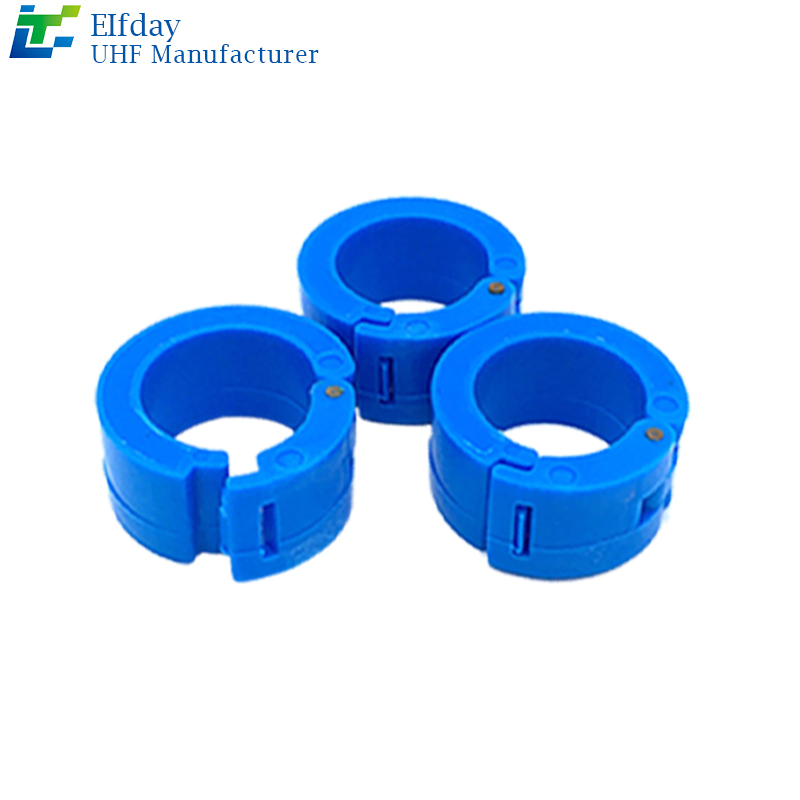
Depending on the application, custom RFID tags may use thin labels, compact inlays, rigid housings, flexible structures, or specialized mounting formats.
Consider the following factors:
-
Dimensions: Measure the available mounting area.
-
Shape: Check whether the tag needs to fit a flat, curved, narrow, or irregular surface.
-
Material: Identify whether the target surface is paper, cardboard, plastic, metal, glass, or fabric.
-
Construction: Decide whether a label, rigid tag, or protected housing is appropriate.
-
Service life: Establish whether the tag is disposable, reusable, or intended for long-term use.
Material compatibility is particularly important. Metal can interfere with conventional RFID tag performance, while liquids can affect radio-frequency communication in some configurations. On-metal designs or alternative tag placement may be needed for these applications.
Share a product drawing, photograph of the mounting area, or physical sample when the installation space is difficult to describe. This can help clarify the design requirements before production.
4. Evaluate Read Range and Reading Conditions
The required read range should be defined before selecting a custom tag.
Actual reading performance depends on several factors, including the tag antenna, chip, operating frequency, reader, reader antenna, tag orientation, mounting surface, and surrounding environment.
When discussing read performance, specify:
-
The approximate distance between the tag and reader.
-
Whether the reader is handheld or fixed.
-
The expected speed of tagged items moving through a reading zone.
-
The number of tags that may need to be read simultaneously.
-
The tag's installation position and orientation.
-
Any nearby metal, liquid, electronics, or other interfering materials.
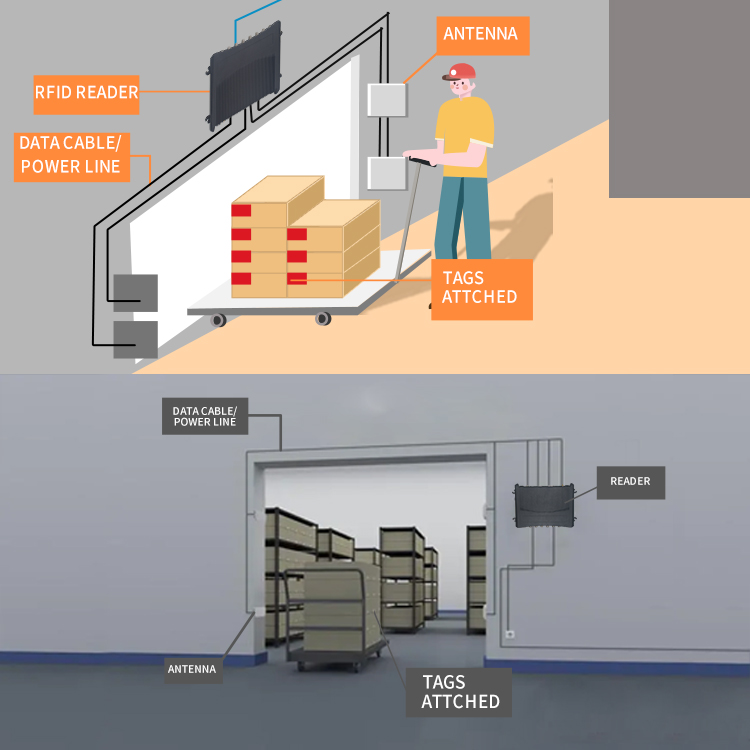
For example, a fixed reader at a warehouse entrance may need to identify multiple tagged cartons as they pass through a defined area. A handheld asset audit may have different requirements for distance and orientation.
Avoid relying on a maximum read-range figure alone. Ask how performance was measured and whether the test conditions resemble your application.
5. Specify Environmental and Durability Requirements
If the tags will operate in demanding conditions, describe those conditions in detail.
Potential requirements include:
-
Water or moisture resistance.
-
Dust protection.
-
High or low operating temperatures.
-
Exposure to sunlight or ultraviolet radiation.
-
Chemical resistance.
-
Resistance to abrasion, vibration, or impact.
-
Repeated washing or cleaning.
-
Adhesive performance under changing temperatures.
These properties should be assessed separately. A waterproof construction, for example, does not automatically guarantee resistance to solvents, heat, or mechanical stress.
If the tag will contact chemicals, identify the actual substances and relevant exposure conditions. If it will be used in cold storage, specify the operating temperature and whether the adhesive must be applied in a cold environment.
Request specifications or test evidence that apply to the proposed tag construction, rather than assuming that every product in a general category offers the same protection.
6. Clarify Printing and Encoding Requirements
RFID tags can combine electronic identification with visible information. However, printing information on a tag and writing data to its chip are separate processes.
Before ordering, determine whether you need:
-
Human-readable product or asset numbers.
-
Barcodes or QR codes.
-
Logos or other printed graphics.
-
Unique serial numbers.
-
Pre-encoded RFID identifiers.
-
Additional writable data where supported.
-
A defined relationship between printed and encoded information.
For example, an equipment label might display an asset number while its RFID chip stores a unique identifier used by the asset-management database.
If every tag needs different data, confirm the required data format, file structure, numbering rules, and verification process. If the printed number must match a specific encoded field, provide a clear mapping rule.
Also confirm how encoding errors and duplicate identifiers will be detected before the tags are delivered.
7. Ask for Samples Before Bulk Production
Sample testing is one of the most effective ways to reduce the risk of ordering unsuitable RFID tags.
A sample should represent the proposed production specification as closely as practical. Confirm whether it uses the intended chip, antenna design, material, adhesive, housing, printing, and encoding.
Test the sample using your actual products or assets and the RFID readers that will be used in deployment.
A practical evaluation should include:
-
Reading consistency: Check whether the tag can be read repeatedly under the intended conditions.
-
Read range: Verify performance at the required working distance.
-
Orientation: Test realistic tag positions and angles.
-
Multi-tag reading: Evaluate the system if several tags must be identified together.
-
Mounting: Confirm that the tag stays attached to the target surface.
-
Durability: Apply relevant temperature, moisture, cleaning, or mechanical tests.
-
Encoding: Verify that identifiers are correct and unique.
-
System integration: Confirm that the reader and software process the data correctly.
Set acceptance criteria before testing. For example, define the required read success rate at a specified reading point and the acceptable conditions for attachment and durability.
If a sample fails, adjust the design and retest it before approving production.
8. Understand Minimum Order Quantity and Pricing
Custom RFID tags do not have one universal minimum order quantity. MOQ and unit pricing depend on the specific design and manufacturing process.
Factors that may affect the quotation include:
-
Chip type and availability.
-
Tag dimensions and materials.
-
Antenna or housing customization.
-
Printing and encoding requirements.
-
Special adhesives or mounting features.
-
Tooling or setup requirements.
-
Order volume and packaging.
-
Testing, inspection, and documentation.
A standard tag with custom printing may be easier to order in a small quantity than a design requiring a new housing or specialized antenna.
When requesting a quote, ask for pricing at several relevant order quantities if your project is expected to grow. This makes it easier to compare the cost of a pilot run with the cost of future production.
Evaluate total cost rather than unit price alone. Installation time, replacement frequency, failed reads, and maintenance can all affect the long-term cost of an RFID deployment.
9. Confirm Lead Time, Sampling, and Delivery
A custom order may involve several stages, including specification review, design confirmation, sample preparation, testing, artwork approval, production, inspection, and shipping.
The timeline depends on the design's complexity, material and chip availability, order quantity, and approval process.
Ask the supplier to confirm:
-
Sample preparation time.
-
Whether sample approval is required before production.
-
Production lead time for the exact specification and quantity.
-
Whether new tooling or setup is needed.
-
Packaging and shipping arrangements.
-
The expected delivery date.
-
How schedule changes will be communicated.
Distinguish production time from shipping time. A quotation that lists only a general lead time may not include sample development, approval delays, or international transport.
If your project has a fixed launch date, work backward from that date and allow time for sample testing and possible design changes.
10. Check Quality Control and Supplier Support
The approved tag specification should be supported by a clear quality-control process.
Before placing an order, ask how the supplier verifies that tags match the agreed requirements.
Relevant checks may include:
-
Chip and material conformity.
-
Dimensions and visual appearance.
-
Printing accuracy.
-
Encoding accuracy and identifier uniqueness.
-
RFID read testing.
-
Adhesive or mounting quality.
-
Batch identification and traceability.
-
Packaging and shipment inspection.
Not every project requires the same inspection plan. The quality checks should reflect the tag's function and the consequences of a failure.
Also clarify what happens if the delivered batch does not meet the agreed specification. Confirm the process for reporting defects, evaluating replacement requests, and resolving discrepancies.
Good supplier communication is particularly important for repeat orders, when consistent materials, chip selection, encoding, and construction help prevent unexpected changes in system performance.
11. Create a Clear Custom RFID Tag Specification
A written specification reduces misunderstandings and makes quotations easier to compare.
Use the following checklist when preparing a request for quotation.
| Specification item | Information to provide |
| Application | Product identification, inventory, asset tracking, or another task |
| Target surface | Material, shape, and mounting location |
| RFID technology | Frequency or standard, if known |
| Reader system | Reader model, antenna setup, or existing system |
| Tag dimensions | Required size and shape, or available space |
| Materials | Label substrate, housing, adhesive, or mounting method |
| Performance | Required reading distance and workflow |
| Environment | Temperature, moisture, chemicals, impact, and service life |
| Printing | Artwork, barcode, serial number, or other visible information |
| Encoding | Data format, uniqueness rules, and verification method |
| Quantity | Sample quantity, initial order, and estimated future demand |
| Testing | Required tests and acceptance criteria |
| Delivery | Required date, destination, and packaging needs |
If some technical details are unknown, mark them as undecided and describe the application instead. A supplier may be able to propose options, but the final selection should be validated before production.
Common Mistakes to Avoid When Ordering Custom RFID Tags
Choosing the cheapest tag without testing
A low unit price may not represent good value if the tag performs poorly or needs frequent replacement. Compare verified performance and expected service life as well as price.
Providing incomplete specifications
Missing details about the mounting surface, reader, data format, or operating conditions can lead to unsuitable samples and repeated quotation revisions.
Assuming all samples are production-equivalent
Confirm how the sample was made and whether its materials, chip, antenna, and construction match the proposed production version.
Skipping sample approval
A tag may appear correct but fail when attached to the actual product. Testing before bulk production helps identify these issues earlier.
Leaving delivery and quality terms unclear
Confirm the agreed specification, lead time, acceptance criteria, and defect-resolution process in writing before placing the order.
Frequently Asked Questions
What information should I provide when ordering custom RFID tags?
Provide the application, target surface, available mounting area, reading equipment, performance requirements, environment, data needs, quantity, and required delivery date. If you do not know the exact chip or tag model, explain the application and let the technical requirements guide the selection.
Can I order custom RFID tags in small quantities?
Small orders may be possible, particularly when the design uses existing tag formats and commonly available components. MOQ depends on the specific customization, production process, and supplier's terms, so confirm it during quotation.
Should I test custom RFID tag samples before ordering in bulk?
Yes. Test samples on the actual products or assets with the intended readers. Check reading consistency, mounting reliability, environmental suitability, encoding accuracy, and system compatibility.
How do I compare quotes from different suppliers?
Send each supplier the same specification, target quantity, sample requirements, testing criteria, and delivery expectations. Compare the quoted scope and confirmed lead time, not just the unit price.
What should I do if I do not know which RFID tag to choose?
Describe the application, target material, available mounting space, reader system, and operating conditions. These details provide a practical starting point for identifying suitable tag options and planning sample tests.
Ordering custom RFID tags successfully starts with a clear understanding of the application. Chip selection, tag dimensions, materials, read performance, mounting, encoding, durability, quantity, and delivery all need to match the intended tracking process.
Before committing to bulk production, document the requirements, evaluate samples in realistic conditions, confirm the final specification, and agree on quality and delivery expectations in writing.
This approach helps businesses reduce ordering risks, compare suppliers more accurately, and select RFID tags that support reliable identification over the intended service life.