



How to Choose Durable RFID Tags for Heavy-Duty Equipment?
If you’ve ever spent half a morning hunting for a missing forklift, a pressure washer, or a generator that was supposed to be in the maintenance bay, you already know the pain. Equipment walks. It gets borrowed without permission. It gets left on another job site. And when you finally find it, the barcode label has faded into a ghost.
That’s why more and more operations teams are turning to RFID tags for equipment. But here’s the catch—not all RFID tags are built the same. Stick a flimsy plastic tag on a concrete vibrator or an excavator bucket, and it’ll be gone in a week. Maybe less.
So how do you pick the right rugged tag that survives the real world? Let’s walk through what actually matters.
Start with the environment – because reality is rough
Before you even look at frequencies or read ranges, think about where your equipment lives. Indoors in a clean warehouse? Outdoors in rain and mud? Near welding sparks or chemical spills?
For heavy-duty equipment, you’re almost always dealing with vibration, impact, moisture, and temperature swings. A tag that works perfectly on a server rack will fail on a bulldozer track.
The best RFID tags for equipment in harsh conditions are usually encapsulated in tough materials like epoxy, polyurethane, or ceramic. These can handle being whacked by a wrench, sprayed with a pressure washer, or left under the sun for months.
One of my clients once attached a standard retail-grade tag to a concrete mixer. Three days later, they found it half-melted near the engine block. Don’t be that person.
Metal is not your friend – unless you get on-metal tags
Here’s a secret that surprises a lot of people: most RFID tags hate metal. When you stick a standard tag directly onto a steel tool cabinet or an iron roller, the metal reflects the signal and kills the read range. You might have to hold the reader two inches away.
The solution? On-metal or “mount-on-metal” RFID tags for equipment. These have a special ferrite or foam layer that isolates the antenna from the metal surface. They’re a little thicker, but they work. You can read them from several feet away even on a steel shipping container.
If your equipment is mostly metal (and let’s face it, most heavy gear is), don’t skip this. You’ll save yourself hours of frustration.
Think about how you’ll actually read the tags
Reading a tag on a pallet rack in a quiet storeroom is easy. Reading a tag on a dump truck driving past a gate is a different story.
Passive UHF tags are the usual choice for equipment tracking. They don’t need batteries, and you can read them from 10 to 30 feet away with a good reader. But the read distance drops if the tag is embedded in grease, covered in mud, or mounted at a weird angle.
For heavy equipment, look for RFID tags for equipment with a wide beam angle and high sensitivity. Some rugged tags are designed specifically for forklift masts or crane hooks – they work even when the tag is sideways.
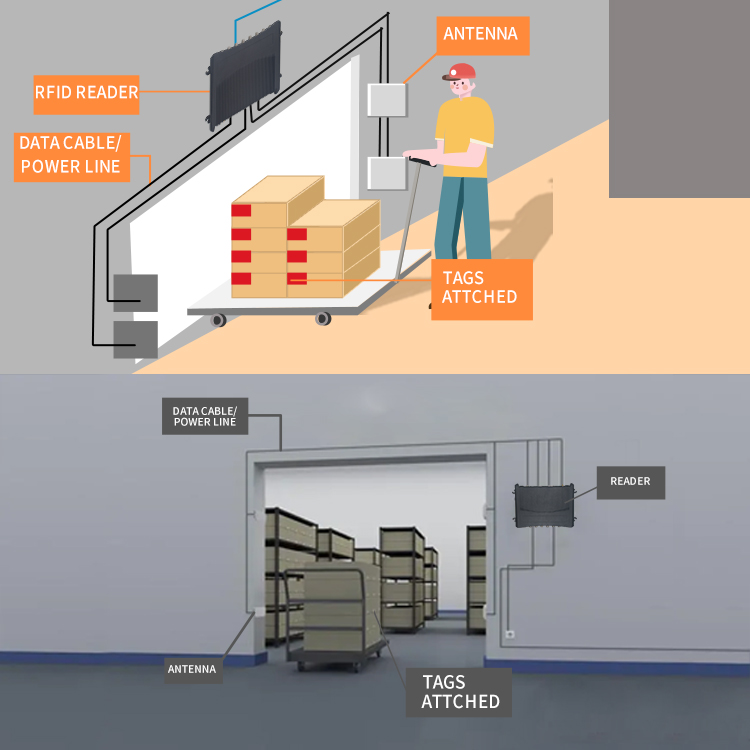
Also, consider whether you’ll be reading with a handheld reader (walking around the yard) or a fixed reader (driving through a portal). Handhelds are more forgiving. Fixed portals need consistently good tag placement.
Size and shape matter more than you think
You might be tempted to pick the smallest tag possible so it stays out of sight. That’s a mistake. Small tags have tiny antennas, which means shorter read range. And on heavy equipment, a tiny tag is easier to knock off or cover in dirt.
A good rule of thumb: for outdoor or rugged use, choose a tag that’s at least the size of a quarter, ideally larger. Disk-shaped or brick-shaped tags are popular for a reason. They have more surface area for the antenna, and they’re harder to lose.
That said, you don’t want a tag so big that it gets caught on branches or conveyor belts. Look for low-profile designs with rounded edges. Some RFID tags for equipment are embedded in flexible silicone or hard plastic housings that can be zip-tied or bolted on. That’s a big plus – screws and cable ties are much more secure than adhesive alone.
Adhesive vs. mechanical attachment – pick your fighter
Adhesive-backed tags are fast to install, but on heavy equipment, they often fail. Oil, dust, and vibration work under the glue. After a few freeze-thaw cycles, the tag peels off like a dead leaf.
For anything that moves, shakes, or gets washed, choose tags with mounting holes. You can use stainless steel zip ties, rivets, or small bolts. It takes an extra minute to install, but the tag will stay on for years.
There are also high-bond tapes designed for industrial use (like VHB), but even those struggle on rough or curved surfaces. If you absolutely must use adhesive, clean the surface with alcohol first and let it cure for 24 hours before putting the equipment to work.
Temperature and chemical resistance – don’t overlook them
A tag that survives impact might still fail when it’s -20°C in a freezer or 120°C near a kiln. Read the spec sheet carefully. Look for operating temperature ranges, not just storage ranges.
Similarly, if your equipment is exposed to diesel, hydraulic fluid, solvents, or bleach, make sure the tag housing is chemically resistant. Polyamide and PPS (polyphenylene sulfide) are good choices. Cheap ABS plastic will crack or soften.
I’ve seen entire fleets of RFID tags for equipment turn yellow and brittle after a few months in a maintenance shop with degreasers. Don’t learn that lesson the hard way.
Read range and frequency – keep it practical
Most equipment tracking uses UHF (860–960 MHz). It gives the best balance of range and speed. HF (13.56 MHz) works better near liquids or very dense metal, but the range is shorter – usually under three feet.
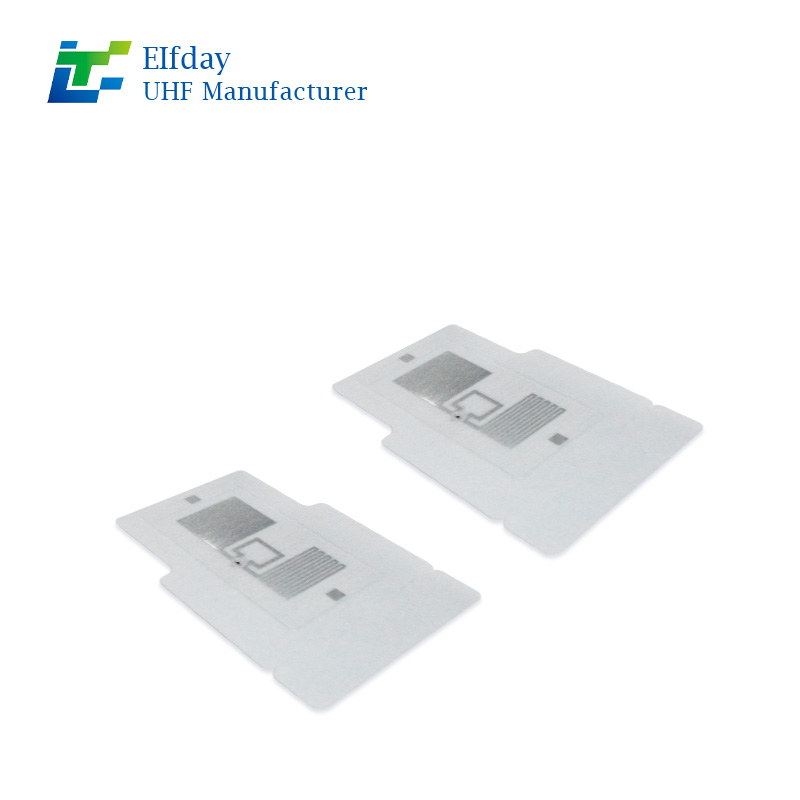
Unless you have a specific reason to use HF, stick with UHF. And when you compare tags, don’t trust the “max read range” on the box. That number is usually measured in a perfect lab with the tag facing directly at a high-power reader. Real-world range is often half of that.
A good durable UHF tag on metal equipment should give you a reliable 6 to 10 feet with a standard handheld reader. That’s enough to scan a row of parked machines without climbing onto each one.
Testing before bulk buying – non-negotiable
Here’s the step most people skip, and it always costs them. Buy a small sample of two or three different RFID tags for equipment. Attach them to your dirtiest, most beat-up pieces of gear. Use the same readers and software you plan to deploy. Then test for two weeks.
Walk by every day. See if the tags still read. Check if the adhesive holds. Try reading at different angles. Spray water on them. Let them sit in the sun.
You’ll quickly discover which tag survives and which one fails. That small sample cost is nothing compared to re-tagging a thousand pieces of equipment later.
The long game – reusability and reprogramming
Heavy equipment gets sold, retired, or repurposed. Can you remove the tag and reuse it? Some rugged tags are reusable if you unbolt them. Others are one-time stick-on.
If you’re managing a large fleet, choose tags that can be rewritten or reprogrammed. That way, when you sell a generator, you can wipe the tag and assign it to a new asset. It’s a small feature that adds huge flexibility over time.
Also, check if the tag has a writable memory bank. You can store maintenance dates, last inspection, or even a simple “do not use” flag right on the tag. That’s much faster than looking up everything in a database.
Real-world example that changed my mind
A few years ago, a construction rental company came to me frustrated. They had tried cheap RFID tags for equipment on their fleet of compactors and light towers. Within six months, over 40% of the tags were gone. Workers said they fell off or stopped scanning.
We switched to a rugged on-metal tag with a bolt-hole mount and an IP68 rating. Same readers, same software. One year later, less than 3% of tags had failed. The crew actually started using the system because it worked every time. Their equipment utilization went up by nearly 20% simply because they could find things faster.
That’s the difference durability makes. It’s not about the upfront price. It’s about what keeps working when the job gets hard.
Final checklist before you order
Before you hit “buy” on any RFID tags for equipment, ask yourself:
Is the environment wet, dusty, hot, or chemically aggressive?
Will the tag go on metal? If yes, get on-metal rated.
Can you bolt or tie it on, or are you relying on glue?
Does the read range match your real scanning distance?
Have you tested samples on your worst equipment?
Is the tag reprogrammable for future asset changes?
If you can answer all six with confidence, you’re ready to move forward.
Your next step – start small, then scale
You don’t need to tag every wrench and wheel loader tomorrow. Pick one category of equipment that gives you the most trouble – maybe the portable generators or the scissor lifts. Tag ten units. Run the system for a month. Measure how much less time you spend searching and how much less equipment gets lost.
Once you see the results, you’ll wonder why you waited so long. And with the right durable RFID tags for equipment, you won’t have to do it twice.
If you’re not sure which tag fits your specific machines, drop a comment below or reach out directly. I’ve seen what works on bulldozers, forklifts, and even cherry pickers. Sometimes the best choice isn’t the most expensive one – it’s the one that matches your dirt, your weather, and your workflow.
Choose wisely. Your equipment (and your sanity) will thank you.
Need help finding the right rugged RFID tag for your fleet? Contact our team for a no-pressure sample recommendation – tell us your equipment type and environment, and we’ll point you to the tags that actually last.