



How to Choose the Right RFID Tag for Your Cold Chain Needs?
If you manage temperature-sensitive goods—think vaccines, fresh seafood, or frozen berries—you already know the nightmare: one broken link in the cold chain and thousands of dollars spoil before reaching the customer.
That’s where a reliable RFID tag for cold chain management becomes your silent guardian. But not all RFID tags are created equal, especially when ice, condensation, and extreme temperatures come into play. Pick the wrong one, and you’ll get missed reads, dead batteries, or tags that literally fall apart.
So how do you choose the right one? Let’s walk through the real-world factors that matter.
1. Start with the temperature range – don’t guess
Your Cold Chain might see anything from -30°C (-22°F) in a freezer to +40°C (104°F) during loading dock delays. A standard UHF RFID tag that works fine in a warehouse will often fail when frost builds up on its surface.
Look for tags explicitly rated for your lowest and highest extremes. A true RFID tag for cold chain management should operate without signal drift or memory loss across the whole span. Many cheap tags lose read sensitivity below -20°C, meaning your pallet of insulin simply vanishes from the system.
Ask for datasheets that show performance at -25°C and at +25°C after thaw cycles. If the vendor hesitates, move on.
2. Moisture is the silent killer
Condensation is the number one reason RFID tags fail in cold logistics. When a frozen box moves to a warmer truck, water droplets form on the tag’s antenna. That water absorbs RF energy, and suddenly your read range drops from 5 meters to 50 centimeters.
You need tags with IP rating of at least IP67 – fully waterproof. But even better are tags that are encapsulated or overmolded with materials like polyurethane or epoxy. These seal out humidity and frost entirely.
Some operators use on-metal tags on reusable plastic crates. If that’s you, ensure the tag design isolates the antenna from the metal surface and from any moisture trapped underneath.
3. Read range – close vs. long distance
Do you need to scan pallets passing through a dock door? Or are you scanning individual boxes inside a refrigerated truck with a handheld reader?
Long-range UHF tags (passive, no battery) can give you 6–8 meters under ideal conditions. But inside a metal freezer trailer, that range often drops by half. Active or semi-passive tags (with a small battery) can push range to 30 meters or more, and they maintain consistent performance in cold.
However, active tags cost more and have limited battery life – typically 2–5 years. For many cold chain applications, a high-quality passive RFID tag for cold chain management is sufficient if you position readers close to the goods. Think about your actual workflow before overspending.
4. Attachment method: glue, screw, or embed?
How will the tag physically stay on the asset?
Adhesive-backed tags are common but risky in freezing conditions. Standard acrylic adhesives turn brittle and crack. Look for tags with medical-grade or low-temperature acrylic adhesive rated to -40°C.
Cable-tie or screw-mount tags work well for reusable totes and pallets. They survive washdowns and repeated freezing without falling off.
Embeddable tags go inside plastic or rubber products (like meat trays or pharmaceutical shippers). They’re protected from physical abuse but require custom integration.
Never assume the adhesive will work. Ask for freezer test data or run your own trial: stick a sample tag on a frozen juice carton, leave it for 48 hours at -20°C, then pull. If the tag peels off easily, reject it.
5. Memory and sensor capabilities
A basic tag only stores an ID number. That tells you “this box is here.” But for true cold chain visibility, you often want more:
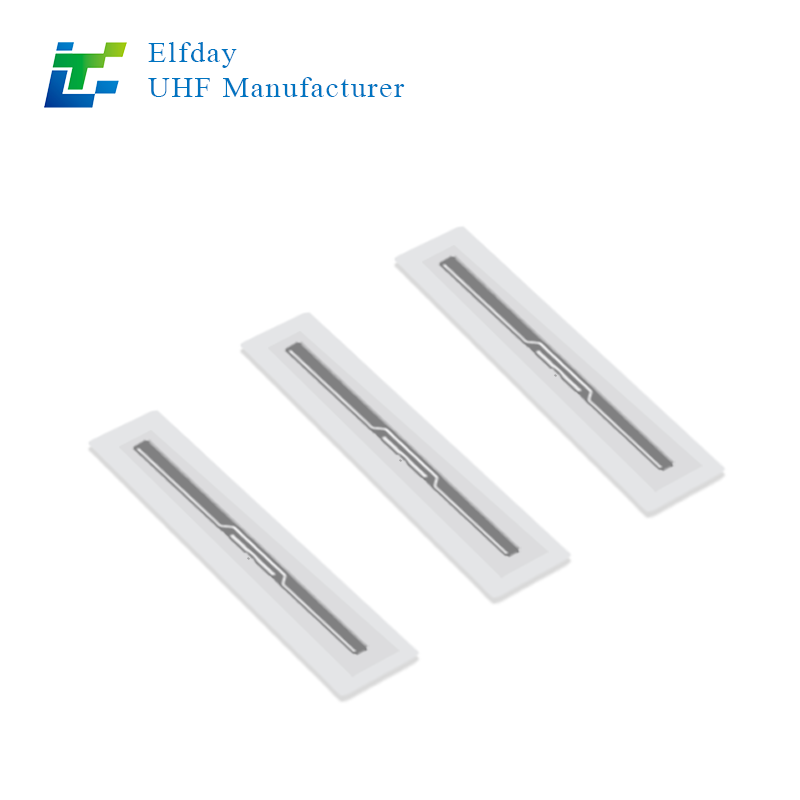
Sensor-enabled RFID tags can log temperature excursions. When the tag passes a reader, you instantly know if the product ever went above 8°C during transport.
Read/write memory allows you to update the tag at each checkpoint (e.g., “loaded at 09:32, temp 2°C”). This is invaluable for audits and recalls.
If you ship high-value items like biologics or lab reagents, don’t settle for a dumb tag. A smart RFID tag for cold chain management pays for itself the first time you avoid a rejected shipment because you have proof of proper handling.
6. Compliance with global standards
Are your goods crossing borders? Then your tags should follow ISO 18000-6C (EPC Gen2) for UHF. Some regions have slightly different frequency bands (e.g., 865–868 MHz in Europe vs. 902–928 MHz in North America). Choose tags that perform well on both if you ship internationally.
Also consider GS1’s TID and EPC memory standards. Using compliant tags makes it easier for your trading partners to read your tags without special equipment.
7. Real-world testing – your best friend
No datasheet tells the whole story. Before you buy 10,000 tags, order samples and run a pilot.
Put the tags on your actual product packaging – not a clean plastic card. Freeze them. Thaw them. Drive them around in a refrigerated truck. Scan them with the readers you actually use.
Take notes on read success rate and read distance at different temperatures. One logistics manager I know tested six different tags before finding one that survived 50 freeze-thaw cycles without adhesive failure. That upfront effort saved him $80,000 in spoilage over two years.
8. Avoid the “cheapest tag” trap
Yes, some passive UHF tags cost under $0.10 each. But a tag that fails halfway through a shipment doesn’t save you money – it costs you the entire product value.
For cold chain, you want reliability over rock-bottom price. A good RFID tag for cold chain management might cost $1–3 in volume, but it lasts through multiple cycles and gives you 99.9% read accuracy. Compare that to losing one pallet of seafood worth $5,000. The math is simple.
Final checklist before you buy
Rated for your lowest temperature (including safety margin)
IP67 or higher waterproofing
Adhesive or attachment method proven for freezing conditions
Read range matches your reader setup
Optional: temperature logging memory
Tested on your actual product and packaging
Your cold chain is only as strong as its weakest sensor. Choosing the right RFID tag means fewer surprises, less waste, and customers who trust you to deliver safe, fresh products every time.
So grab samples from two or three reputable vendors. Run those freezer tests. And then deploy a solution that finally lets you sleep at night – even when the temperature drops to -30°C.