



Why Do Some RFID Tags Read Reliably in One Location but Not Another?
RFID tags can perform consistently in one location and become difficult to read in another, even when the same tags and readers are used. This can be confusing for businesses that expect their RFID tracking systems to deliver similar results across warehouses, production areas, loading docks, and other operational spaces.
The difference is often caused by the surrounding conditions rather than a defect in the tag itself. Radio frequency signals interact with nearby materials, equipment, structures, and other wireless devices. Reader settings, antenna placement, tag orientation, and installation methods can also influence identification results.
Understanding these variables helps businesses identify the actual source of inconsistent RFID performance instead of replacing tags unnecessarily.
1. The Physical Environment Changes How RFID Signals Behave
RFID systems rely on radio frequency communication between tags and readers. Although the basic technology remains the same from one location to another, the physical environment can change how effectively that communication takes place.
Walls, shelving, machinery, metal structures, liquids, and other objects may absorb, reflect, or redirect RF energy. As a result, a reading zone that works well in an open area may behave differently inside a densely packed storage aisle.
For example, a tag attached to a plastic container may be read consistently at an open workstation. When the same container is placed between metal racks or next to other materials, the reader may receive a weaker or less predictable response.
Several environmental factors deserve attention:
-
Nearby metal surfaces and structural components.
-
Liquid-filled containers or products with high moisture content.
-
Dense storage arrangements and changing inventory levels.
-
Concrete walls, partitions, and other physical obstructions.
-
Moving equipment and changing positions of surrounding assets.
-
Differences in the layout of individual work areas.
These effects depend on the RFID frequency, tag design, reader configuration, and installation conditions. A location that presents few challenges for one tag type may be more demanding for another.
2. Metal and Liquid Materials Can Affect Tag Performance
Metal and liquid-containing materials are two common reasons RFID tags behave differently across locations.
Metal surfaces can change RF performance
Metal can reflect RF energy and interfere with the intended interaction between a tag antenna and the reader's signal. A conventional RFID label designed for ordinary packaging may therefore perform poorly when attached directly to metal equipment.
Consider an industrial facility that tracks plastic bins and metal tools. A tag on a plastic bin may work well throughout the warehouse, while a similar-looking label placed on a metal tool may produce inconsistent results.
The appropriate response is to check whether the tag is designed for its mounting surface. Depending on the application, an on-metal RFID tag or another specialized design may be more suitable.
Liquids can affect the signal
Water and other liquid-containing materials can absorb or alter RF energy, particularly in UHF RFID applications. This can affect communication between the reader and tag.
A tag may work well when a product is stored individually but become harder to read when surrounded by liquid-filled containers. Changes in the contents or arrangement of a storage area can also influence performance.
When investigating these conditions, compare the same tag in different positions and with different surrounding materials. This helps determine whether the issue is associated with the tag itself or the environment in which it operates.
3. Reader and Antenna Placement May Differ Between Locations
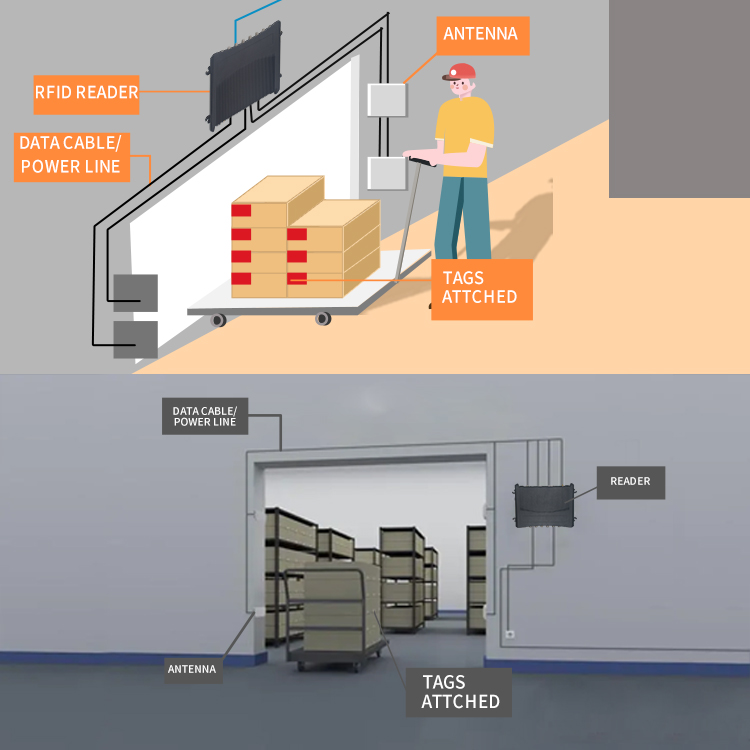
Two RFID reading zones can use the same model of reader and still produce different results because their antennas are installed differently.
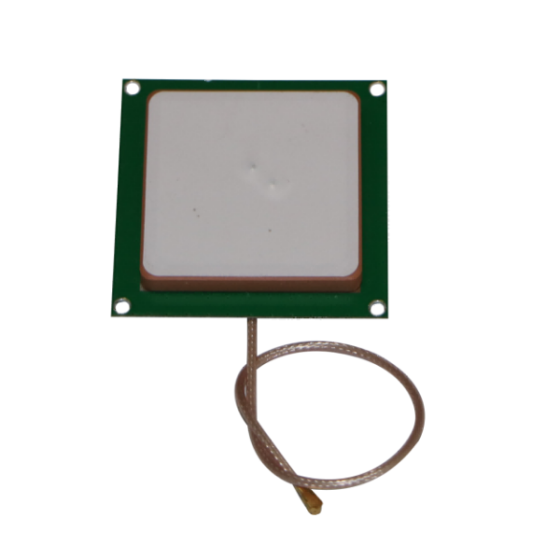
Antenna height, angle, polarization, orientation, and distance from tagged assets all influence the RF field within the reading area. Nearby structures may further change how the signal reaches a tag.
For example, a portal at one loading dock may provide good coverage because its antennas are positioned to capture tags as pallets pass through. Another portal may have gaps in coverage because its antennas are too high, poorly angled, or obstructed by nearby equipment.
When comparing locations, check:
-
Whether antennas cover the intended reading area.
-
Whether the antenna angles match the direction of asset movement.
-
Whether the antenna polarization is suitable for tag orientation.
-
Whether metal structures or other objects obstruct the reading zone.
-
Whether antenna cables and connections are functioning correctly.
-
Whether the reader and antenna settings are consistent with the intended application.
Do not assume that copying the physical layout from one location will produce identical results elsewhere. Even small differences in the surrounding environment may require adjustments.
4. Tag Orientation and Installation Position Can Change
RFID tags do not always respond equally well in every orientation.
The relationship between the tag antenna and the reader's antenna affects how efficiently the tag receives energy and communicates its identifier. Some tag designs are more sensitive to orientation than others.
A tag may be read reliably when its surface faces a reader antenna but become less reliable when the asset turns sideways or passes through the reading zone at a different angle.
Installation position also matters. A tag placed near a metal bracket, inside a recessed area, behind a dense panel, or close to another interfering material may perform differently from an identical tag mounted on an exposed surface.
This issue is particularly relevant when the same asset type is tagged at different facilities. If workers install tags in slightly different positions, reading performance may vary even though the tag model remains unchanged.
To investigate the problem:
-
Compare the installation position on assets that read consistently and inconsistently.
-
Check whether tags face the reader in similar ways during normal operations.
-
Identify nearby materials that could influence the tag antenna.
-
Standardize the mounting position where practical.
-
Test the tag in the actual installation position rather than relying only on bench results.
A documented installation guide can reduce variations caused by inconsistent mounting practices.
5. Reader Settings May Not Be Equivalent
A shared tag model does not guarantee identical performance when reader configurations differ.
RFID readers may have adjustable transmit power, antenna selection, session settings, inventory parameters, and other configuration options. These settings affect how tags are energized, inventoried, and identified.
For example, one reader may operate at a power level that provides adequate coverage for a workstation. Another may be configured for a different application and provide insufficient coverage for the intended reading zone.
Higher power is not always the best solution. Increasing power can expand the reading area, but it may also introduce unwanted reads from neighboring zones or increase interference with other systems.
Review the reader configurations at both locations and compare the settings relevant to the application. Also verify that regional radio regulations and equipment limits are respected.
Where possible, establish a documented baseline configuration for comparable reading zones. Any differences should have a clear operational reason rather than being left to individual installation preferences.
6. Nearby Equipment and RF Interference Can Create Inconsistent Reads
RFID performance may change when other electronic equipment or wireless systems operate nearby.
Depending on the environment, potential sources of problems include other RFID readers, wireless communication equipment, electrical systems, and devices that generate RF noise. Poorly managed reader zones may also interfere with each other when multiple readers operate in close proximity.
The result can be intermittent identification, missed reads, unexpected reads from neighboring areas, or performance that changes when equipment is switched on.
However, not every missed read is caused by RF interference. Similar symptoms can arise from weak antenna coverage, unsuitable tag placement, reader configuration, or software filtering.
A useful troubleshooting approach is to compare performance under controlled conditions. If practical, test the reading zone with nearby equipment operating normally and then investigate whether specific devices or reader configurations correlate with the problem.
For systems with multiple readers, review their operating schedules, power settings, antenna coverage, and coordination mechanisms. Avoid changing several parameters simultaneously, because doing so makes the source of improvement difficult to identify.
7. Changes in Inventory Density Can Affect Reading Results

A location's physical arrangement may change throughout the day. Incoming pallets, temporary storage, stacked containers, and moving equipment can alter the environment around an RFID reading zone.
These changes may affect RF propagation and the reader's ability to identify individual tags. A reading area that performs well when lightly loaded may become less predictable when it contains densely packed assets.
High tag density can also increase the complexity of identifying multiple tags during the same inventory operation. Although RFID protocols are designed to support multi-tag identification, the actual results depend on the system configuration, tag population, RF conditions, and operational timing.
When inconsistent reads occur only during busy periods, investigate:
-
Whether more tags are present in the reading zone.
-
Whether tagged items are packed or stacked differently.
-
Whether nearby inventory changes the signal environment.
-
Whether the reader has enough time to complete the required inventory process.
-
Whether the application filters or processes tag reads differently under load.
Testing only an empty workstation or a single isolated tag may not reveal these problems. Include realistic inventory density in performance validation.
8. Environmental Conditions and Tag Wear May Differ
Two locations may have different operating conditions even when they belong to the same organization.
One area may be temperature-controlled, while another experiences outdoor temperature changes. One may expose tags to regular cleaning, moisture, oils, or vibration, while another offers a relatively stable environment.
Over time, these differences can affect the physical condition of tags and their attachment methods. Damaged housings, worn labels, loose fasteners, or degraded adhesives may contribute to inconsistent identification.
Environmental suitability should therefore be considered alongside RF performance.
Check whether the tag is appropriate for the actual operating temperature, moisture exposure, cleaning chemicals, impact risks, and expected service life. Inspect tags that perform poorly for visible damage and compare them with samples that remain reliable.
If failures increase after repeated use or environmental exposure, conduct relevant durability tests before assuming that the reader system is responsible.
9. Software and Data Processing Can Make Good Reads Look Like Failures
Not every apparent RFID reading problem originates at the radio frequency level.
An RFID system typically includes readers, middleware or application logic, network connections, and a database or asset management platform. A tag may be successfully detected by the reader but fail to appear in the final application because the data is filtered, delayed, rejected, or associated with the wrong record.
For example, one workstation may display a tag immediately, while another may suppress duplicate reads or require a specific event sequence before updating the asset record.
When investigating inconsistent results, separate the process into distinct stages:
| Stage | What to verify |
| RF communication | Did the reader detect the tag? |
| Reader processing | Was the tag identifier captured and reported? |
| Data transmission | Did the identifier reach the next system component? |
| Application logic | Was the read filtered, delayed, or rejected? |
| Asset database | Was the identifier linked to the correct record? |
| User interface | Was the result displayed as expected? |
This separation is essential because changing tag hardware will not solve a software filtering or data mapping problem.
Where possible, compare raw reader events with application records. This helps identify the stage at which the expected identification event disappears.
10. How to Troubleshoot RFID Read Differences Between Locations
A structured comparison is more effective than changing equipment randomly.
Step 1: Establish a baseline
Choose a tag that reads consistently and another that performs poorly. Record the tag model, mounting surface, installation position, reader configuration, and operating conditions for both.
Step 2: Compare the physical setup
Review antenna placement, reader distance, tag orientation, nearby structures, and the materials surrounding each tag. Look for differences that could explain the performance gap.
Step 3: Standardize the test conditions
Use the same test procedure, reader configuration, asset position, and number of reading attempts where practical. This makes comparisons more meaningful.
Step 4: Check reader and system logs
Confirm whether the tag is missing at the RF stage or whether the identifier is being lost later in the data-processing workflow.
Step 5: Change one variable at a time
Adjust a single factor, such as tag placement, antenna angle, or reader power, and record the result. Avoid simultaneous changes that make the cause difficult to determine.
Step 6: Repeat the test under normal operating conditions
Test with realistic movement, asset density, and nearby equipment. A solution that works only under ideal conditions may not be suitable for routine operations.
Step 7: Document the corrective action
Record the final configuration, approved tag placement, test conditions, and measured results. This provides a repeatable reference for other locations.
11. How to Improve RFID Consistency Across Multiple Locations
Once the main causes of inconsistent reading have been identified, businesses can establish practices that make future deployments more predictable.
Standardize tag installation. Specify mounting locations, orientation, attachment methods, and any required spacing from nearby materials.
Create reader configuration standards. Maintain approved settings for comparable reading zones while allowing documented adjustments for different site conditions.
Validate each location separately. Treat previous successful deployments as useful references, not proof that the same configuration will work everywhere.
Use application-appropriate tags. Where metal surfaces, liquids, extreme conditions, or restricted mounting areas create different requirements, select tag designs suited to those conditions.
Monitor read performance over time. Track missed reads, unexpected reads, and changes in identification success. Compare results across locations to identify recurring problems.
Maintain installation and troubleshooting records. Document the conditions under which a configuration works, the corrective actions taken, and the acceptance criteria used.
Test after changes. Moving antennas, rearranging storage, adding readers, or changing tag placement can alter system behavior. Revalidate affected reading zones after significant modifications.
Consistency comes from controlling the complete RFID installation, not simply purchasing identical tags.
Frequently Asked Questions
Why does the same RFID tag work in one warehouse but not another?
The two warehouses may have different metal structures, inventory arrangements, antenna positions, reader settings, tag orientations, or sources of RF interference. These differences can change the conditions under which the tag communicates with the reader.
Can RFID tags become less reliable without being damaged?
Yes. A tag may remain physically intact while its surrounding environment or reading conditions change. For example, new shelving, additional inventory, a different antenna position, or altered reader settings may reduce identification reliability.
Does increasing RFID reader power solve inconsistent reads?
Not necessarily. More power may improve coverage in some situations, but it can also create unwanted reads or affect neighboring reading zones. Diagnose the underlying cause and adjust power only as part of a controlled test.
Why do RFID tags sometimes read well when stationary but fail during movement?
Movement changes the tag's position and orientation relative to the reader antenna. The tag may also pass through a limited coverage area too quickly or be surrounded by changing materials. Testing the full movement path helps reveal these issues.
How can businesses compare RFID performance across multiple sites?
Use a consistent test procedure, record the reader configuration and installation conditions, and measure relevant outcomes such as successful identification, missed reads, unintended reads, and data-processing delays. Compare results under representative operating conditions.
Should a business replace RFID tags when reading problems occur?
Not immediately. First determine whether the issue originates from the tag, mounting surface, antenna arrangement, reader settings, RF environment, or software workflow. Replace tags when testing identifies a tag-related limitation or when the existing design is unsuitable for the application.
RFID tags may read reliably in one location but inconsistently in another because RFID performance depends on the complete operating environment. Materials, antenna placement, tag orientation, reader settings, inventory density, environmental exposure, and software processing can all affect the final result.
The most effective troubleshooting method is to compare locations systematically, isolate one variable at a time, and test under realistic operating conditions. By documenting successful configurations and standardizing installation and validation practices, businesses can improve RFID identification consistency across facilities without replacing tags unnecessarily.